
Taiwan Stages Extensive Civil Defense Drills Amid Rising China Tensions
In This Article
HIGHLIGHTS
- Taipei conducted extensive civil defense drills amid heightened China-Taiwan tensions, simulating a potential Chinese invasion.
- The exercises are part of the larger Han Kuang military drills, involving urban resilience activities across Taiwan.
- Air raid sirens and evacuation drills were held, with residents required to seek shelter, halting city traffic.
- Despite the drills, a majority of Taiwanese remain skeptical about an imminent invasion by China.
- Taiwan's government is enhancing civilian defense strategies, including training volunteers and using convenience stores as wartime hubs.
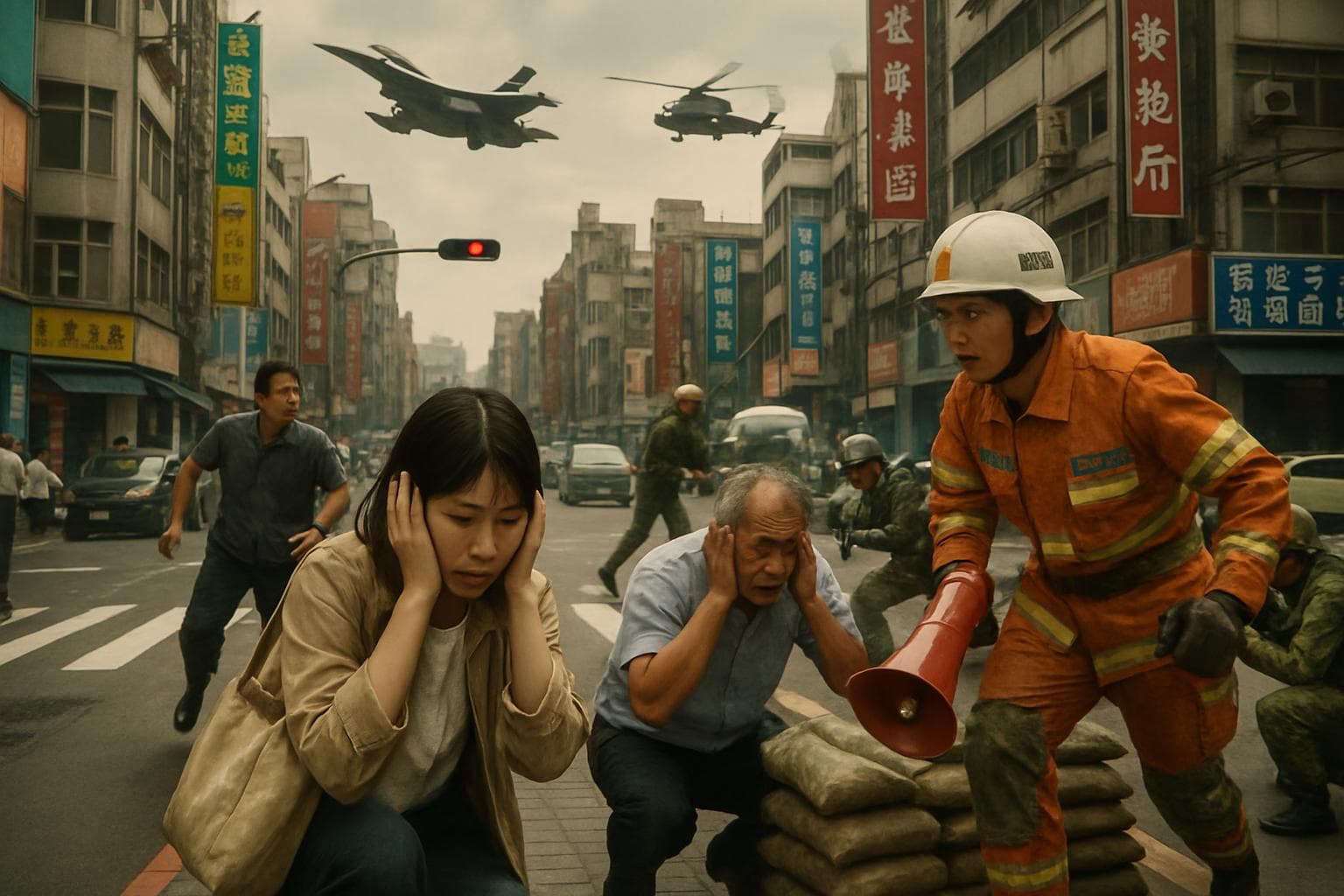
Taipei, the bustling capital of Taiwan, came to a standstill this week as it hosted one of its largest civil defense exercises in recent history, simulating a potential invasion by China. The drills, conducted in conjunction with the annual Han Kuang military exercises, underscore Taiwan's efforts to bolster its defenses amid escalating tensions with Beijing.
Simulating a Crisis
On Thursday, air raid sirens blared across Taipei, prompting residents to seek shelter indoors as part of the Urban Resilience exercise. The drills, which began on Tuesday and conclude on Friday, saw traffic halted and businesses temporarily closed as part of the simulation. Emergency workers and volunteers participated in mock evacuations and mass casualty events, practicing their response to potential attacks.
A Broader Defense Strategy
This year's exercises are part of a broader strategy to enhance Taiwan's military preparedness. The Han Kuang drills, traditionally confined to military bases, have expanded to include urban warfare simulations in city streets and on bridges. More than 20,000 reservists were mobilized, and about 52,000 civilians have been trained as disaster relief volunteers. The government is also exploring innovative defense strategies, such as using convenience stores as wartime hubs.
Public Sentiment and Political Context
Despite the heightened focus on defense, a significant portion of the Taiwanese population remains skeptical about the likelihood of an imminent Chinese invasion. A poll by the Institute for National Defence and Security Research found that over 60% of Taiwanese do not believe an invasion will occur in the next five years. However, the drills are seen as necessary by many, including Ben, a 29-year-old finance professional in Taipei, who stated, "Every country needs to practice its defense."
Leadership and Policy
Since taking office in May last year, President Lai Ching-te has continued to prioritize military and civilian defense, sharpening laws against Chinese aggression. This strategic shift reflects Taiwan's commitment to preparing for potential geopolitical challenges, as China, under President Xi Jinping, continues to assert its claim over the self-ruled island.
WHAT THIS MIGHT MEAN
As Taiwan continues to bolster its defenses, the geopolitical landscape in the region remains tense. The exercises highlight Taiwan's strategic shift towards involving civilians in defense preparations, a move that could deter potential aggression by showcasing the island's readiness. However, the skepticism among the Taiwanese public suggests a complex interplay between perceived threats and actual military preparedness. Experts suggest that while the drills are crucial, diplomatic efforts remain essential to de-escalate tensions and ensure regional stability. As Taiwan navigates these challenges, its approach to defense and diplomacy will likely shape the island's future security landscape.
Related Articles
Japan Seizes Chinese Fishing Vessel Amid Rising Diplomatic Tensions
US Supreme Court Ruling Sparks Trade Uncertainty in Asia and Beyond
China Sets Lowest GDP Growth Target in Decades Amid Economic Challenges

UK Faces Dilemmas Amid Iran Conflict and China Spying Allegations

Labour MP's Husband Arrested in UK-China Espionage Probe

Trump's New Tariff Strategy Sparks Global Trade Uncertainty
Taiwan Stages Extensive Civil Defense Drills Amid Rising China Tensions
In This Article
HIGHLIGHTS
- Taipei conducted extensive civil defense drills amid heightened China-Taiwan tensions, simulating a potential Chinese invasion.
- The exercises are part of the larger Han Kuang military drills, involving urban resilience activities across Taiwan.
- Air raid sirens and evacuation drills were held, with residents required to seek shelter, halting city traffic.
- Despite the drills, a majority of Taiwanese remain skeptical about an imminent invasion by China.
- Taiwan's government is enhancing civilian defense strategies, including training volunteers and using convenience stores as wartime hubs.
Taipei, the bustling capital of Taiwan, came to a standstill this week as it hosted one of its largest civil defense exercises in recent history, simulating a potential invasion by China. The drills, conducted in conjunction with the annual Han Kuang military exercises, underscore Taiwan's efforts to bolster its defenses amid escalating tensions with Beijing.
Simulating a Crisis
On Thursday, air raid sirens blared across Taipei, prompting residents to seek shelter indoors as part of the Urban Resilience exercise. The drills, which began on Tuesday and conclude on Friday, saw traffic halted and businesses temporarily closed as part of the simulation. Emergency workers and volunteers participated in mock evacuations and mass casualty events, practicing their response to potential attacks.
A Broader Defense Strategy
This year's exercises are part of a broader strategy to enhance Taiwan's military preparedness. The Han Kuang drills, traditionally confined to military bases, have expanded to include urban warfare simulations in city streets and on bridges. More than 20,000 reservists were mobilized, and about 52,000 civilians have been trained as disaster relief volunteers. The government is also exploring innovative defense strategies, such as using convenience stores as wartime hubs.
Public Sentiment and Political Context
Despite the heightened focus on defense, a significant portion of the Taiwanese population remains skeptical about the likelihood of an imminent Chinese invasion. A poll by the Institute for National Defence and Security Research found that over 60% of Taiwanese do not believe an invasion will occur in the next five years. However, the drills are seen as necessary by many, including Ben, a 29-year-old finance professional in Taipei, who stated, "Every country needs to practice its defense."
Leadership and Policy
Since taking office in May last year, President Lai Ching-te has continued to prioritize military and civilian defense, sharpening laws against Chinese aggression. This strategic shift reflects Taiwan's commitment to preparing for potential geopolitical challenges, as China, under President Xi Jinping, continues to assert its claim over the self-ruled island.
WHAT THIS MIGHT MEAN
As Taiwan continues to bolster its defenses, the geopolitical landscape in the region remains tense. The exercises highlight Taiwan's strategic shift towards involving civilians in defense preparations, a move that could deter potential aggression by showcasing the island's readiness. However, the skepticism among the Taiwanese public suggests a complex interplay between perceived threats and actual military preparedness. Experts suggest that while the drills are crucial, diplomatic efforts remain essential to de-escalate tensions and ensure regional stability. As Taiwan navigates these challenges, its approach to defense and diplomacy will likely shape the island's future security landscape.
Related Articles
Japan Seizes Chinese Fishing Vessel Amid Rising Diplomatic Tensions
US Supreme Court Ruling Sparks Trade Uncertainty in Asia and Beyond
China Sets Lowest GDP Growth Target in Decades Amid Economic Challenges
UK Faces Dilemmas Amid Iran Conflict and China Spying Allegations
Labour MP's Husband Arrested in UK-China Espionage Probe
Trump's New Tariff Strategy Sparks Global Trade Uncertainty