
Texas Floods Highlight Concerns Over Weather Agency Cuts
In This Article
HIGHLIGHTS
- Over 100 people are feared dead following devastating floods in Texas' Hill Country, with many more missing.
- The floods have sparked debate over the impact of staffing cuts at the National Weather Service and NOAA.
- Experts warn that reduced funding and staffing could hinder future disaster preparedness and response.
- The Trump administration has been criticized for its approach to dismantling federal agencies like FEMA.
- Political responses have varied, with some praising federal assistance and others questioning policy impacts.
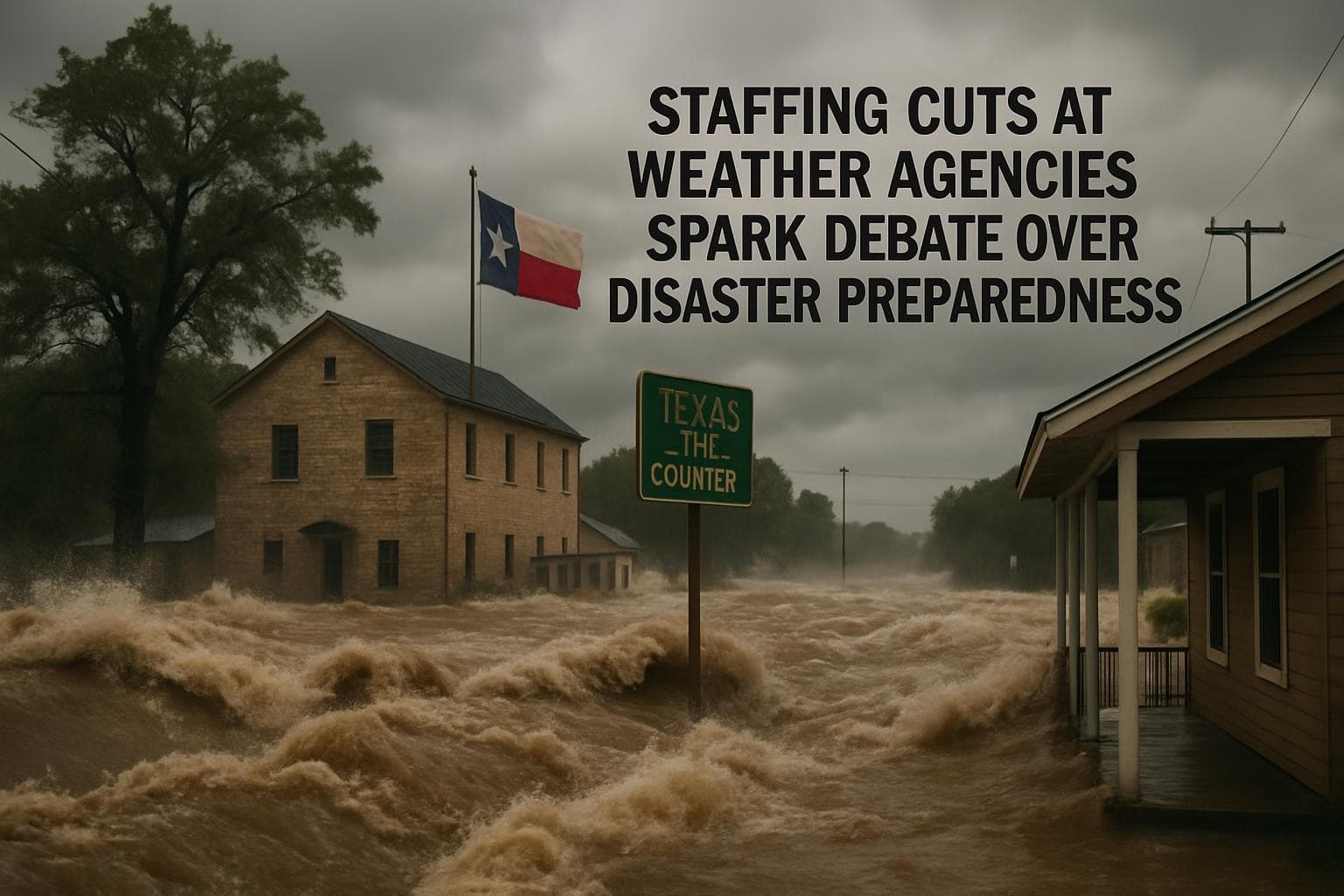
Catastrophic floods in Texas' Hill Country have left over 100 people feared dead and many more missing, raising urgent questions about the impact of recent staffing cuts at key federal weather agencies. The intense rainfall over the 4th of July holiday weekend resulted in flash floods that swept away homes and campsites, particularly affecting Camp Mystic on the Guadalupe River.
Impact of Staffing Cuts
The National Weather Service (NWS) and the National Oceanic and Atmospheric Administration (NOAA) have faced significant staffing reductions under the Trump administration. Since February, the NWS has lost approximately 600 staff members, affecting meteorologists, technical specialists, and hydrologists. Tom Fahy, legislative director of the National Weather Service Employees Organisation, highlighted that several offices are operating with high vacancy rates, which could compromise their ability to forecast and respond to extreme weather events effectively.
Political and Expert Reactions
The floods have reignited debate over the Trump administration's approach to federal agencies responsible for disaster preparedness. Samantha Montano, an emergency management expert, emphasized the importance of investing in these agencies to ensure effective responses to natural disasters. Critics argue that dismantling efforts and funding cuts could lead to inadequate preparedness and response capabilities.
Federal Assistance and Political Responses
Despite the criticism, some political figures have praised the federal response. Texas Governor Greg Abbott commended President Trump for swiftly approving a major disaster declaration, which provided additional resources for state and local governments. However, others, like Rick Wilson of the Lincoln Project, criticized Republican leaders for not addressing the potential policy impacts on disaster management.
WHAT THIS MIGHT MEAN
As recovery efforts continue, the debate over federal agency cuts and their impact on disaster preparedness is likely to intensify. Experts warn that without adequate funding and staffing, the ability to predict and respond to extreme weather events could be severely compromised. The political implications are significant, with potential shifts in policy and funding priorities depending on public and political pressure. Future discussions may focus on balancing efficiency with the need for robust emergency management systems in the face of increasing climate-related challenges.
Related Articles
Historic Nor'easter Storm Paralyzes US North-East with Blizzard Warnings and Travel Bans
California Avalanche Leaves Ten Skiers Missing Amid Severe Weather

Tech Giants Pledge to Cover AI Data Center Energy Costs Amid Rising Electricity Concerns

James Talarico Secures Democratic Nomination in Texas Senate Race Amidst Republican Runoff

US Military Strikes on Alleged Drug Boats Raise Legal Concerns

Geneva Peace Talks: Russia and Ukraine Seek Resolution Amid Ongoing Conflict
Texas Floods Highlight Concerns Over Weather Agency Cuts
In This Article
 Leila Hassan| Published
 HIGHLIGHTS
- Over 100 people are feared dead following devastating floods in Texas' Hill Country, with many more missing.
- The floods have sparked debate over the impact of staffing cuts at the National Weather Service and NOAA.
- Experts warn that reduced funding and staffing could hinder future disaster preparedness and response.
- The Trump administration has been criticized for its approach to dismantling federal agencies like FEMA.
- Political responses have varied, with some praising federal assistance and others questioning policy impacts.
Catastrophic floods in Texas' Hill Country have left over 100 people feared dead and many more missing, raising urgent questions about the impact of recent staffing cuts at key federal weather agencies. The intense rainfall over the 4th of July holiday weekend resulted in flash floods that swept away homes and campsites, particularly affecting Camp Mystic on the Guadalupe River.
Impact of Staffing Cuts
The National Weather Service (NWS) and the National Oceanic and Atmospheric Administration (NOAA) have faced significant staffing reductions under the Trump administration. Since February, the NWS has lost approximately 600 staff members, affecting meteorologists, technical specialists, and hydrologists. Tom Fahy, legislative director of the National Weather Service Employees Organisation, highlighted that several offices are operating with high vacancy rates, which could compromise their ability to forecast and respond to extreme weather events effectively.
Political and Expert Reactions
The floods have reignited debate over the Trump administration's approach to federal agencies responsible for disaster preparedness. Samantha Montano, an emergency management expert, emphasized the importance of investing in these agencies to ensure effective responses to natural disasters. Critics argue that dismantling efforts and funding cuts could lead to inadequate preparedness and response capabilities.
Federal Assistance and Political Responses
Despite the criticism, some political figures have praised the federal response. Texas Governor Greg Abbott commended President Trump for swiftly approving a major disaster declaration, which provided additional resources for state and local governments. However, others, like Rick Wilson of the Lincoln Project, criticized Republican leaders for not addressing the potential policy impacts on disaster management.
WHAT THIS MIGHT MEAN
As recovery efforts continue, the debate over federal agency cuts and their impact on disaster preparedness is likely to intensify. Experts warn that without adequate funding and staffing, the ability to predict and respond to extreme weather events could be severely compromised. The political implications are significant, with potential shifts in policy and funding priorities depending on public and political pressure. Future discussions may focus on balancing efficiency with the need for robust emergency management systems in the face of increasing climate-related challenges.
Related Articles
Historic Nor'easter Storm Paralyzes US North-East with Blizzard Warnings and Travel Bans
California Avalanche Leaves Ten Skiers Missing Amid Severe Weather
Tech Giants Pledge to Cover AI Data Center Energy Costs Amid Rising Electricity Concerns
James Talarico Secures Democratic Nomination in Texas Senate Race Amidst Republican Runoff
US Military Strikes on Alleged Drug Boats Raise Legal Concerns
Geneva Peace Talks: Russia and Ukraine Seek Resolution Amid Ongoing Conflict