
Thailand-Cambodia Border Tensions Escalate with Airstrikes and Evacuations
In This Article
HIGHLIGHTS
- Thailand launched airstrikes on Cambodian military targets, escalating a long-standing border dispute.
- The conflict has led to the evacuation of over 385,000 Thai civilians and 1,157 Cambodian families.
- Tensions have persisted despite a ceasefire brokered by Donald Trump in July, which both sides accuse each other of violating.
- The dispute dates back over a century, with recent clashes reigniting after a Cambodian soldier's death in May.
- International figures, including Malaysian PM Anwar Ibrahim, have urged restraint to prevent further escalation.
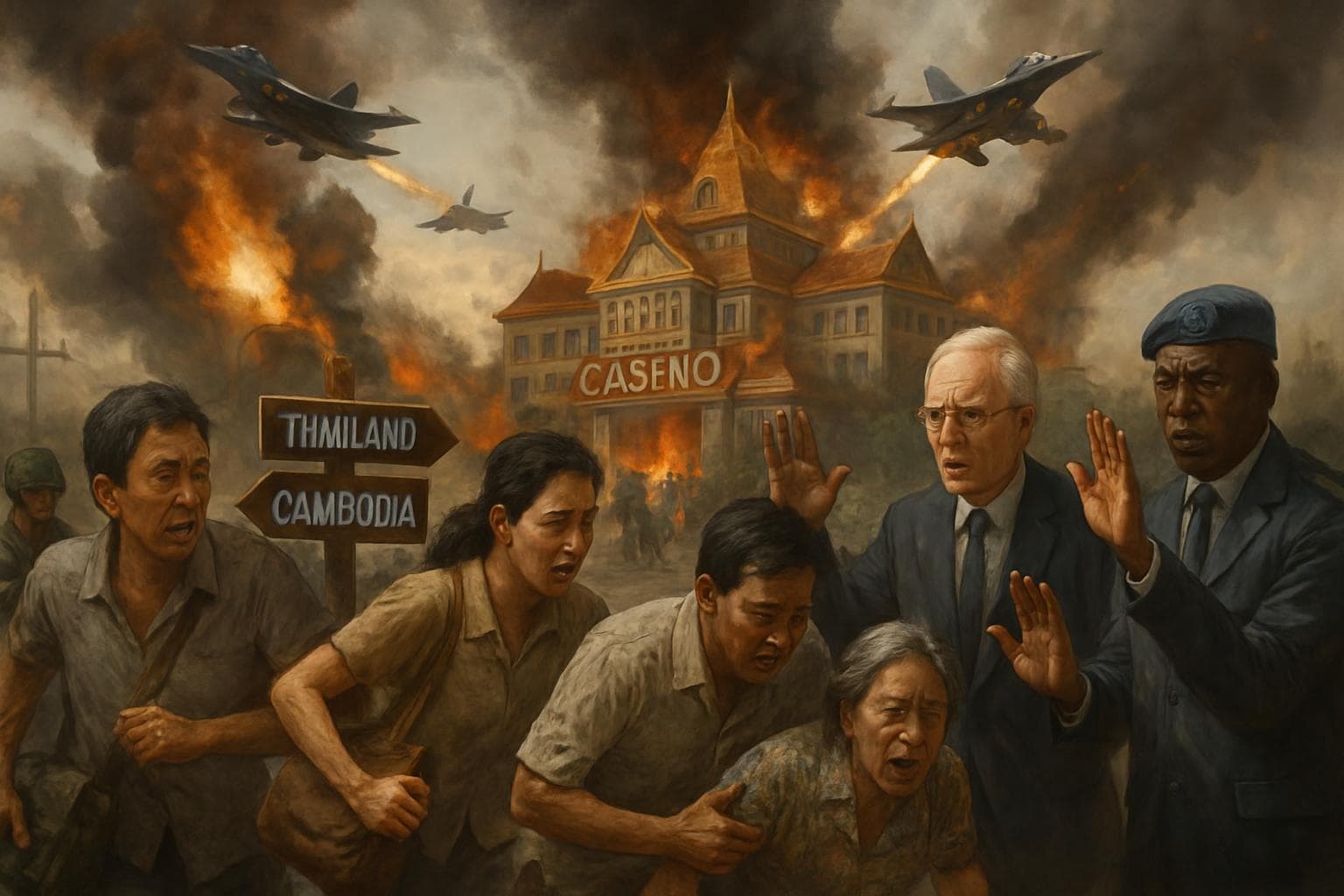
Tensions along the Thai-Cambodian border have intensified as Thailand launched airstrikes targeting Cambodian military facilities. The strikes, which Thai authorities claim were aimed at a Cambodian casino complex allegedly used for drone operations, mark a significant escalation in the long-standing border dispute. The conflict has forced the evacuation of over 385,000 Thai civilians and 1,157 Cambodian families, highlighting the severe humanitarian impact.
Historical Context and Recent Developments
The Thai-Cambodian border dispute traces back over a century, rooted in colonial-era territorial demarcations. Recent tensions reignited in May following the death of a Cambodian soldier during a border skirmish. This incident set off a series of retaliatory actions, culminating in heavy fighting in July that claimed more than 40 lives. A ceasefire brokered by former U.S. President Donald Trump temporarily halted hostilities, but accusations of violations have persisted, with Thailand suspending the agreement in November.
Military Actions and Political Reactions
Thailand's military justified the airstrikes as a response to Cambodian troop mobilizations and alleged ceasefire breaches. Thai Prime Minister Anutin Charnvirakul emphasized that while Thailand seeks peace, it will not tolerate sovereignty violations. Conversely, Cambodia's Ministry of National Defence accused Thailand of initiating the latest escalation, with former Prime Minister Hun Sen urging restraint to avoid further conflict.
Humanitarian Impact and International Mediation
The conflict's humanitarian toll is significant, with tens of thousands displaced on both sides of the border. In Thailand, two hospitals in Surin province have been closed due to the clashes, and authorities have set up shelters for evacuees. Internationally, Malaysian Prime Minister Anwar Ibrahim, who played a role in brokering the original ceasefire, has called for restraint and open communication to prevent further deterioration of relations.
WHAT THIS MIGHT MEAN
The ongoing conflict between Thailand and Cambodia poses significant risks for regional stability. If hostilities continue, there could be further displacement of civilians and potential economic repercussions due to disrupted trade and tourism. The involvement of international mediators, such as ASEAN, may be crucial in facilitating dialogue and de-escalation. Experts suggest that a renewed diplomatic effort, possibly involving neutral parties, could help both nations reach a sustainable resolution. However, the deep-rooted historical grievances and nationalistic sentiments on both sides present formidable challenges to achieving lasting peace.
Related Articles
US Supreme Court Ruling Sparks Trade Uncertainty in Asia and Beyond

Tech Giants Pledge to Cover AI Data Center Energy Costs Amid Rising Electricity Concerns

Congress Subpoenas Attorney General Bondi in Epstein Investigation
Cuba Faces Widespread Blackout Amid Deepening Fuel Crisis

UK Faces Dilemmas Amid Iran Conflict and China Spying Allegations
Senate Blocks Resolution to Limit Trump's Military Actions in Iran
Thailand-Cambodia Border Tensions Escalate with Airstrikes and Evacuations
In This Article
HIGHLIGHTS
- Thailand launched airstrikes on Cambodian military targets, escalating a long-standing border dispute.
- The conflict has led to the evacuation of over 385,000 Thai civilians and 1,157 Cambodian families.
- Tensions have persisted despite a ceasefire brokered by Donald Trump in July, which both sides accuse each other of violating.
- The dispute dates back over a century, with recent clashes reigniting after a Cambodian soldier's death in May.
- International figures, including Malaysian PM Anwar Ibrahim, have urged restraint to prevent further escalation.
Tensions along the Thai-Cambodian border have intensified as Thailand launched airstrikes targeting Cambodian military facilities. The strikes, which Thai authorities claim were aimed at a Cambodian casino complex allegedly used for drone operations, mark a significant escalation in the long-standing border dispute. The conflict has forced the evacuation of over 385,000 Thai civilians and 1,157 Cambodian families, highlighting the severe humanitarian impact.
Historical Context and Recent Developments
The Thai-Cambodian border dispute traces back over a century, rooted in colonial-era territorial demarcations. Recent tensions reignited in May following the death of a Cambodian soldier during a border skirmish. This incident set off a series of retaliatory actions, culminating in heavy fighting in July that claimed more than 40 lives. A ceasefire brokered by former U.S. President Donald Trump temporarily halted hostilities, but accusations of violations have persisted, with Thailand suspending the agreement in November.
Military Actions and Political Reactions
Thailand's military justified the airstrikes as a response to Cambodian troop mobilizations and alleged ceasefire breaches. Thai Prime Minister Anutin Charnvirakul emphasized that while Thailand seeks peace, it will not tolerate sovereignty violations. Conversely, Cambodia's Ministry of National Defence accused Thailand of initiating the latest escalation, with former Prime Minister Hun Sen urging restraint to avoid further conflict.
Humanitarian Impact and International Mediation
The conflict's humanitarian toll is significant, with tens of thousands displaced on both sides of the border. In Thailand, two hospitals in Surin province have been closed due to the clashes, and authorities have set up shelters for evacuees. Internationally, Malaysian Prime Minister Anwar Ibrahim, who played a role in brokering the original ceasefire, has called for restraint and open communication to prevent further deterioration of relations.
WHAT THIS MIGHT MEAN
The ongoing conflict between Thailand and Cambodia poses significant risks for regional stability. If hostilities continue, there could be further displacement of civilians and potential economic repercussions due to disrupted trade and tourism. The involvement of international mediators, such as ASEAN, may be crucial in facilitating dialogue and de-escalation. Experts suggest that a renewed diplomatic effort, possibly involving neutral parties, could help both nations reach a sustainable resolution. However, the deep-rooted historical grievances and nationalistic sentiments on both sides present formidable challenges to achieving lasting peace.
Related Articles
US Supreme Court Ruling Sparks Trade Uncertainty in Asia and Beyond
Tech Giants Pledge to Cover AI Data Center Energy Costs Amid Rising Electricity Concerns
Congress Subpoenas Attorney General Bondi in Epstein Investigation
Cuba Faces Widespread Blackout Amid Deepening Fuel Crisis
UK Faces Dilemmas Amid Iran Conflict and China Spying Allegations
Senate Blocks Resolution to Limit Trump's Military Actions in Iran