
Escalating Tensions: Thailand and Cambodia Clash Despite Ceasefire Claims
In This Article
HIGHLIGHTS
- Fighting between Thailand and Cambodia continues despite a claimed ceasefire agreement brokered by US President Donald Trump.
- Both nations accuse each other of violating international rules, with Thailand alleging Cambodian landmine use and Cambodia reporting Thai airstrikes.
- The conflict has resulted in at least 21 deaths and the evacuation of over 700,000 people from border areas.
- The border dispute stems from historical territorial claims, exacerbated by a 1962 court ruling favoring Cambodia.
- Local residents express fear and uncertainty as the conflict disrupts daily life and economic stability.
Fighting between Thailand and Cambodia has intensified, contradicting recent claims by US President Donald Trump that a ceasefire had been agreed upon. The ongoing conflict, rooted in a long-standing border dispute, has led to significant casualties and widespread evacuations.
Ceasefire Claims and Continued Conflict
On Friday, President Trump announced via social media that he had brokered a renewed ceasefire between Thailand and Cambodia, following discussions with their respective leaders. However, both Thai Prime Minister Anutin Charnvirakul and Cambodian Prime Minister Hun Manet have since indicated that no such agreement is currently in effect. Anutin emphasized that Thailand would continue military actions until it no longer perceives threats to its sovereignty, while Cambodia insists on defending its territorial integrity.
Historical Context and Military Escalation
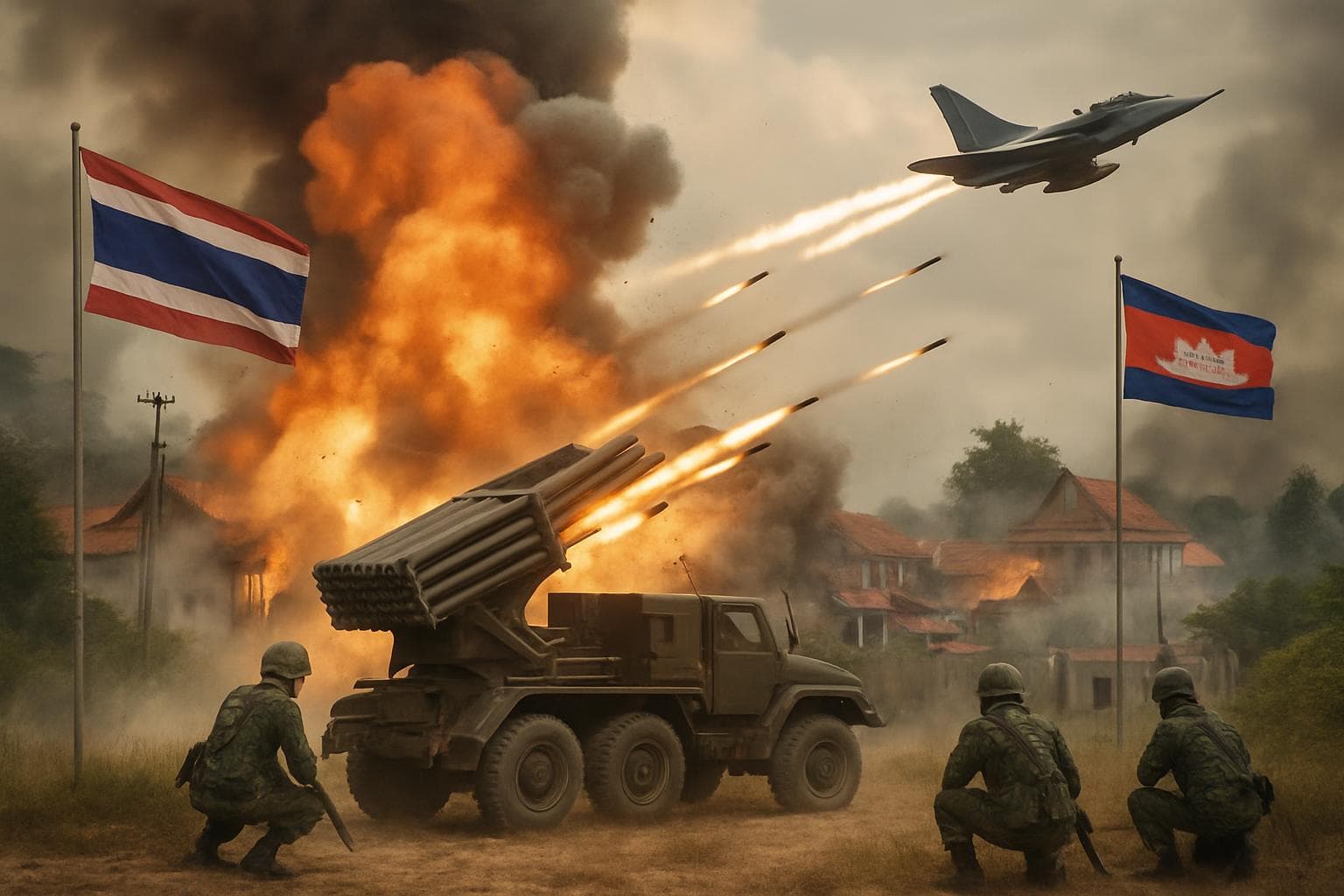
The Thai-Cambodian border conflict is deeply rooted in historical territorial claims, dating back to a 1907 map created during Cambodia's French colonial period. Tensions were further inflamed by a 1962 international court ruling that awarded sovereignty over disputed areas to Cambodia. Recent clashes have seen Thailand deploying fighter jets for airstrikes and Cambodia using rocket launchers, resulting in at least 21 deaths and the displacement of over 700,000 people.
Human Impact and Local Perspectives
The renewed hostilities have severely impacted residents in border areas, many of whom have been forced to evacuate. Rangsan Angda, a local resident, expressed his fears over the precarious ceasefire and the ongoing threat of violence. "Both sides are confronting one another all the time," he said. Patcharee Kotmakti, another evacuee, lamented the disruption to her livelihood, stating, "I won’t be able to make ends meet."
Diplomatic Efforts and Future Prospects
Despite Trump's previous success in brokering a ceasefire in July, which was formalized in October, the current situation remains volatile. The US president has previously used trade tariffs as leverage to encourage peace, a tactic that may be revisited. However, with upcoming elections in Thailand, Prime Minister Anutin may prioritize nationalist sentiments, complicating diplomatic efforts.
WHAT THIS MIGHT MEAN
The ongoing conflict between Thailand and Cambodia poses significant challenges for regional stability and international diplomacy. If the violence continues, it could lead to further humanitarian crises and economic disruptions in Southeast Asia. Experts suggest that renewed diplomatic efforts, possibly involving regional partners like Malaysia, could be crucial in de-escalating tensions. However, with nationalistic sentiments running high, particularly in Thailand, achieving a lasting resolution may prove difficult. The international community will need to carefully balance diplomatic pressure with respect for each nation's sovereignty to foster peace in the region.
Related Articles
US Supreme Court Ruling Sparks Trade Uncertainty in Asia and Beyond

Tech Giants Pledge to Cover AI Data Center Energy Costs Amid Rising Electricity Concerns

Congress Subpoenas Attorney General Bondi in Epstein Investigation
Cuba Faces Widespread Blackout Amid Deepening Fuel Crisis

UK Faces Dilemmas Amid Iran Conflict and China Spying Allegations
Senate Blocks Resolution to Limit Trump's Military Actions in Iran
Escalating Tensions: Thailand and Cambodia Clash Despite Ceasefire Claims
In This Article
HIGHLIGHTS
- Fighting between Thailand and Cambodia continues despite a claimed ceasefire agreement brokered by US President Donald Trump.
- Both nations accuse each other of violating international rules, with Thailand alleging Cambodian landmine use and Cambodia reporting Thai airstrikes.
- The conflict has resulted in at least 21 deaths and the evacuation of over 700,000 people from border areas.
- The border dispute stems from historical territorial claims, exacerbated by a 1962 court ruling favoring Cambodia.
- Local residents express fear and uncertainty as the conflict disrupts daily life and economic stability.
Fighting between Thailand and Cambodia has intensified, contradicting recent claims by US President Donald Trump that a ceasefire had been agreed upon. The ongoing conflict, rooted in a long-standing border dispute, has led to significant casualties and widespread evacuations.
Ceasefire Claims and Continued Conflict
On Friday, President Trump announced via social media that he had brokered a renewed ceasefire between Thailand and Cambodia, following discussions with their respective leaders. However, both Thai Prime Minister Anutin Charnvirakul and Cambodian Prime Minister Hun Manet have since indicated that no such agreement is currently in effect. Anutin emphasized that Thailand would continue military actions until it no longer perceives threats to its sovereignty, while Cambodia insists on defending its territorial integrity.
Historical Context and Military Escalation
The Thai-Cambodian border conflict is deeply rooted in historical territorial claims, dating back to a 1907 map created during Cambodia's French colonial period. Tensions were further inflamed by a 1962 international court ruling that awarded sovereignty over disputed areas to Cambodia. Recent clashes have seen Thailand deploying fighter jets for airstrikes and Cambodia using rocket launchers, resulting in at least 21 deaths and the displacement of over 700,000 people.
Human Impact and Local Perspectives
The renewed hostilities have severely impacted residents in border areas, many of whom have been forced to evacuate. Rangsan Angda, a local resident, expressed his fears over the precarious ceasefire and the ongoing threat of violence. "Both sides are confronting one another all the time," he said. Patcharee Kotmakti, another evacuee, lamented the disruption to her livelihood, stating, "I won’t be able to make ends meet."
Diplomatic Efforts and Future Prospects
Despite Trump's previous success in brokering a ceasefire in July, which was formalized in October, the current situation remains volatile. The US president has previously used trade tariffs as leverage to encourage peace, a tactic that may be revisited. However, with upcoming elections in Thailand, Prime Minister Anutin may prioritize nationalist sentiments, complicating diplomatic efforts.
WHAT THIS MIGHT MEAN
The ongoing conflict between Thailand and Cambodia poses significant challenges for regional stability and international diplomacy. If the violence continues, it could lead to further humanitarian crises and economic disruptions in Southeast Asia. Experts suggest that renewed diplomatic efforts, possibly involving regional partners like Malaysia, could be crucial in de-escalating tensions. However, with nationalistic sentiments running high, particularly in Thailand, achieving a lasting resolution may prove difficult. The international community will need to carefully balance diplomatic pressure with respect for each nation's sovereignty to foster peace in the region.
Related Articles
US Supreme Court Ruling Sparks Trade Uncertainty in Asia and Beyond
Tech Giants Pledge to Cover AI Data Center Energy Costs Amid Rising Electricity Concerns
Congress Subpoenas Attorney General Bondi in Epstein Investigation
Cuba Faces Widespread Blackout Amid Deepening Fuel Crisis
UK Faces Dilemmas Amid Iran Conflict and China Spying Allegations
Senate Blocks Resolution to Limit Trump's Military Actions in Iran