
Trump Delays Tariff Hikes, Announces New Rates for 14 Countries
In This Article
HIGHLIGHTS
- President Trump has delayed the implementation of higher US tariffs on imports until August 1, extending a previous 90-day pause.
- New tariffs ranging from 25% to 40% will affect 14 countries, including Japan, South Korea, and several Southeast Asian nations.
- Trump indicated flexibility in the August deadline, suggesting openness to further trade negotiations.
- The tariffs are part of a broader strategy to protect American businesses and jobs, though economists warn of potential price increases in the US.
- Global markets have shown resilience, with European stock markets opening higher amid hopes for trade deal resolutions.
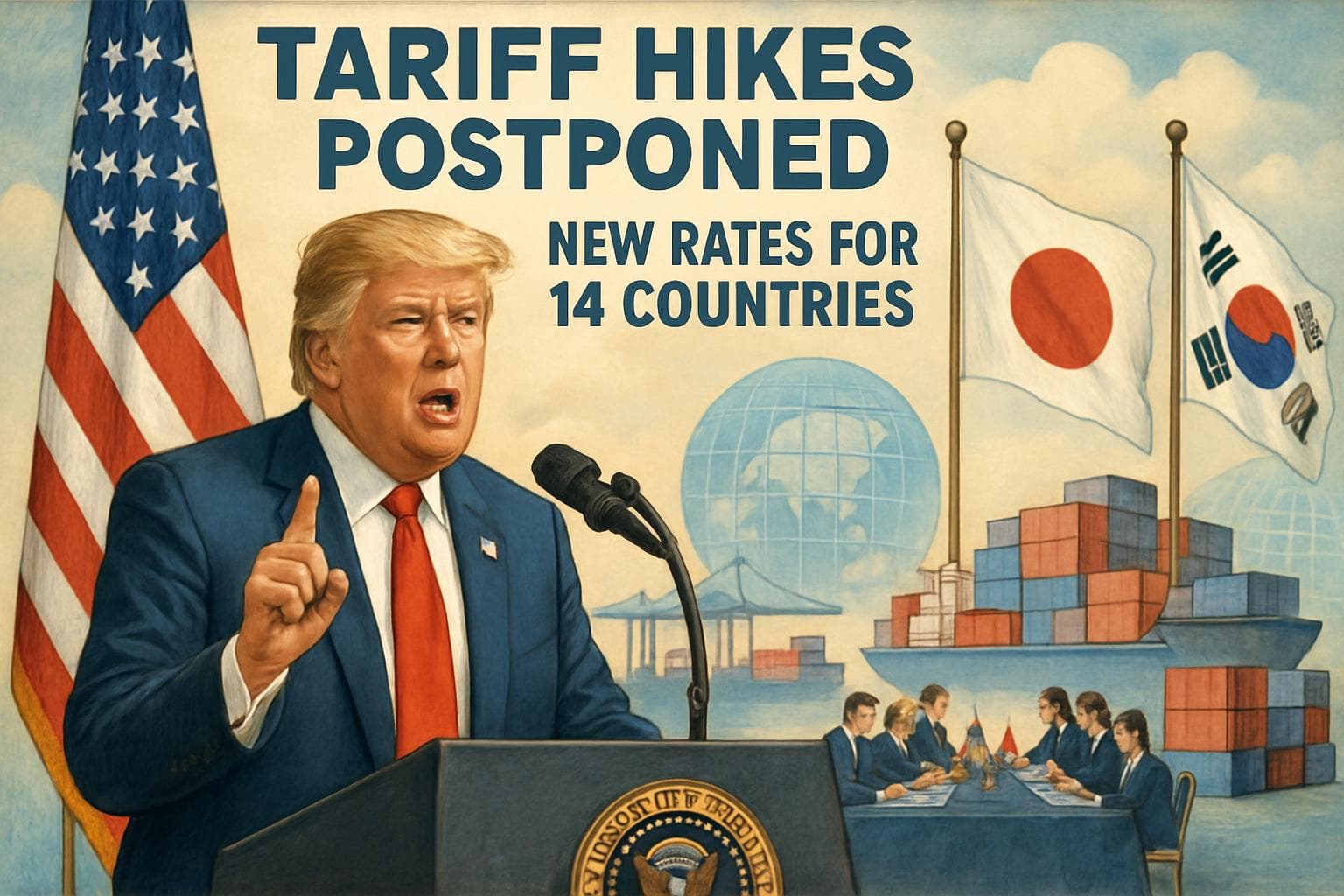
President Donald Trump has postponed the imposition of higher tariffs on US imports, extending a previous 90-day pause until August 1. This decision affects 14 countries, including major economies like Japan and South Korea, as well as several Southeast Asian nations. The new tariffs, which range from 25% to 40%, are part of Trump's ongoing strategy to protect American businesses and jobs by imposing import taxes on foreign goods.
Tariff Details and Economic Strategy
The tariffs, initially announced in April, were delayed to allow for trade negotiations. Despite the new August deadline, Trump has expressed a willingness to negotiate further, stating, "I would say firm, but not 100% firm." This suggests that the administration is open to alternative trade arrangements if countries propose them. The tariffs are intended to encourage foreign manufacturers to produce goods within the United States, thereby boosting domestic manufacturing.
Global Reactions and Market Impact
The announcement has caused concern among the affected countries, with some, like South Korea, intensifying trade talks to reach a "mutually beneficial result" before the deadline. Japan's Prime Minister Shigeru Ishiba noted progress in negotiations to avoid higher tariffs. Despite the looming tariffs, global markets have remained stable. European stock markets opened higher, reflecting optimism that trade deals can be reached before the new deadline.
Economic and Political Implications
Economists warn that while the tariffs aim to protect US industries, they could lead to higher consumer prices domestically. The International Chamber of Commerce has expressed hope for positive developments in trade talks, emphasizing the need for certainty in global trade relations. Trump's tariff strategy has drawn criticism for its potential to disrupt international trade, but markets appear to have adapted to the uncertainty.
WHAT THIS MIGHT MEAN
As the August 1 deadline approaches, the focus will be on whether affected countries can negotiate favorable trade deals with the US. The flexibility indicated by Trump may lead to last-minute agreements, reducing the impact of the tariffs. However, if negotiations stall, the tariffs could exacerbate trade tensions and lead to retaliatory measures from other nations. Economists and trade experts will be closely monitoring the situation, as the outcome could have significant implications for global trade dynamics and economic stability.
Related Articles
Trump's New Tariff Strategy Sparks Global Trade Uncertainty
China Sets Lowest GDP Growth Target in Decades Amid Economic Challenges

Tech Giants Pledge to Cover AI Data Center Energy Costs Amid Rising Electricity Concerns

Cuba Faces Widespread Blackout Amid Deepening Fuel Crisis

UK Faces Dilemmas Amid Iran Conflict and China Spying Allegations
US Supreme Court Ruling Sparks Trade Uncertainty in Asia and Beyond
Trump Delays Tariff Hikes, Announces New Rates for 14 Countries
In This Article
 Daniel Rivera| Published
 HIGHLIGHTS
- President Trump has delayed the implementation of higher US tariffs on imports until August 1, extending a previous 90-day pause.
- New tariffs ranging from 25% to 40% will affect 14 countries, including Japan, South Korea, and several Southeast Asian nations.
- Trump indicated flexibility in the August deadline, suggesting openness to further trade negotiations.
- The tariffs are part of a broader strategy to protect American businesses and jobs, though economists warn of potential price increases in the US.
- Global markets have shown resilience, with European stock markets opening higher amid hopes for trade deal resolutions.
President Donald Trump has postponed the imposition of higher tariffs on US imports, extending a previous 90-day pause until August 1. This decision affects 14 countries, including major economies like Japan and South Korea, as well as several Southeast Asian nations. The new tariffs, which range from 25% to 40%, are part of Trump's ongoing strategy to protect American businesses and jobs by imposing import taxes on foreign goods.
Tariff Details and Economic Strategy
The tariffs, initially announced in April, were delayed to allow for trade negotiations. Despite the new August deadline, Trump has expressed a willingness to negotiate further, stating, "I would say firm, but not 100% firm." This suggests that the administration is open to alternative trade arrangements if countries propose them. The tariffs are intended to encourage foreign manufacturers to produce goods within the United States, thereby boosting domestic manufacturing.
Global Reactions and Market Impact
The announcement has caused concern among the affected countries, with some, like South Korea, intensifying trade talks to reach a "mutually beneficial result" before the deadline. Japan's Prime Minister Shigeru Ishiba noted progress in negotiations to avoid higher tariffs. Despite the looming tariffs, global markets have remained stable. European stock markets opened higher, reflecting optimism that trade deals can be reached before the new deadline.
Economic and Political Implications
Economists warn that while the tariffs aim to protect US industries, they could lead to higher consumer prices domestically. The International Chamber of Commerce has expressed hope for positive developments in trade talks, emphasizing the need for certainty in global trade relations. Trump's tariff strategy has drawn criticism for its potential to disrupt international trade, but markets appear to have adapted to the uncertainty.
WHAT THIS MIGHT MEAN
As the August 1 deadline approaches, the focus will be on whether affected countries can negotiate favorable trade deals with the US. The flexibility indicated by Trump may lead to last-minute agreements, reducing the impact of the tariffs. However, if negotiations stall, the tariffs could exacerbate trade tensions and lead to retaliatory measures from other nations. Economists and trade experts will be closely monitoring the situation, as the outcome could have significant implications for global trade dynamics and economic stability.
Related Articles
Trump's New Tariff Strategy Sparks Global Trade Uncertainty
China Sets Lowest GDP Growth Target in Decades Amid Economic Challenges
Tech Giants Pledge to Cover AI Data Center Energy Costs Amid Rising Electricity Concerns
Cuba Faces Widespread Blackout Amid Deepening Fuel Crisis
UK Faces Dilemmas Amid Iran Conflict and China Spying Allegations
US Supreme Court Ruling Sparks Trade Uncertainty in Asia and Beyond