
Trump Extends TikTok Sale Deadline Amid National Security Concerns
In This Article
HIGHLIGHTS
- President Donald Trump has extended the deadline for TikTok's sale in the US by 90 days, pushing the new deadline to September 17, 2025.
- The extension marks the third delay in enforcing a law that mandates TikTok's sale or ban due to national security concerns.
- TikTok's parent company, ByteDance, must secure a buyer, with any deal requiring approval from Chinese authorities.
- Democratic Senator Mark Warner criticized the Trump administration for sidestepping national security findings with the executive order.
- TikTok, with 170 million US users, has been at the center of US-China relations, with Trump previously using tariffs as leverage in negotiations.
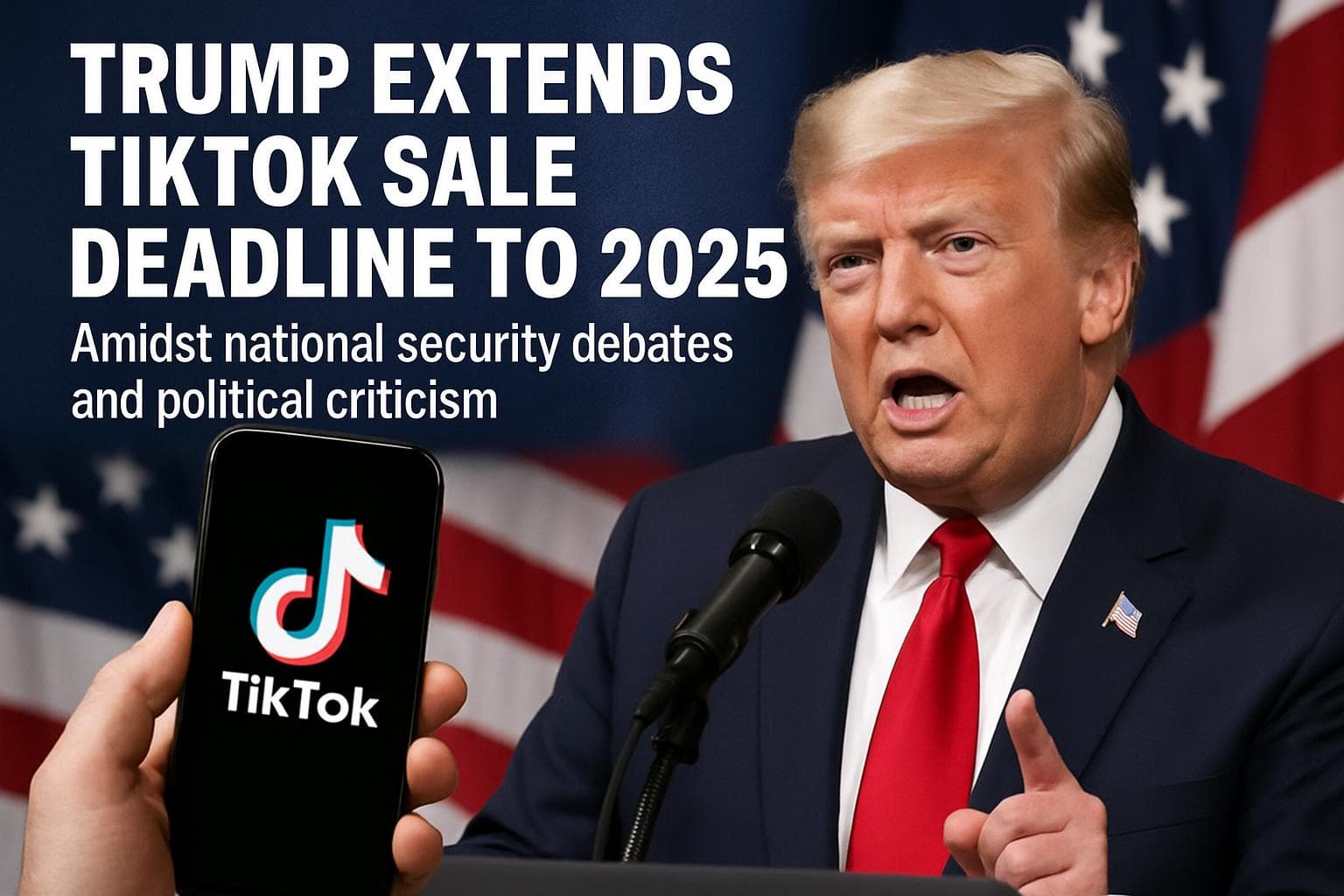
President Donald Trump has signed an executive order granting TikTok a third extension to find a buyer or face a ban in the United States. The popular social media app, owned by Chinese company ByteDance, now has until September 17, 2025, to secure a deal, amid ongoing national security debates.
Background and Legal Context
The extension follows a law passed last year requiring TikTok to be sold or banned due to fears that the Chinese government could access US user data. The Supreme Court upheld this law, originally set to take effect on January 19, 2025. Despite these concerns, Trump has delayed the enforcement of the ban multiple times, citing the need for a secure transaction that protects American users' data.
Political Reactions and Criticisms
The decision to extend the deadline has drawn criticism from some lawmakers. Democratic Senator Mark Warner, Vice Chairman of the Senate Intelligence Committee, accused the Trump administration of ignoring its own national security assessments. "An executive order can't sidestep the law, but that's exactly what the president is trying to do," Warner stated.
TikTok's Position and Future Prospects
TikTok, which boasts 170 million users in the US, expressed gratitude for the extension, emphasizing its commitment to working with US authorities. ByteDance has been in discussions with potential American buyers, but any agreement will require approval from Chinese regulators. The app's future remains uncertain, as it continues to navigate the complex landscape of US-China relations.
Trump's Evolving Stance
Initially, Trump pushed for TikTok's sale to an American entity, citing national security risks. However, his stance softened after the app played a role in his successful 2024 presidential campaign, helping him gain significant support among young voters. Trump has since expressed a fondness for the platform, which he credits for his electoral success.
WHAT THIS MIGHT MEAN
The extended deadline provides TikTok and ByteDance more time to negotiate a sale that satisfies both US and Chinese authorities. However, the ongoing geopolitical tensions between the two nations could complicate these efforts. If a deal is not reached by the new deadline, TikTok may face a ban in the US, potentially impacting its vast user base and market value.
Experts suggest that the situation could set a precedent for how the US handles foreign-owned tech companies in the future, particularly those with ties to China. The outcome may influence broader US-China relations, especially in the realm of technology and data privacy.
Related Articles

UK Faces Dilemmas Amid Iran Conflict and China Spying Allegations
Senate Blocks Resolution to Limit Trump's Military Actions in Iran
Spain's Sánchez Stands Firm Against Trump's Trade Threat Over Iran Stance

Iran Postpones Khamenei Funeral Amid Escalating US-Israeli Strikes
US Supreme Court Ruling Sparks Trade Uncertainty in Asia and Beyond
China Sets Lowest GDP Growth Target in Decades Amid Economic Challenges
Trump Extends TikTok Sale Deadline Amid National Security Concerns
In This Article
 Ethan Brooks| Published
 HIGHLIGHTS
- President Donald Trump has extended the deadline for TikTok's sale in the US by 90 days, pushing the new deadline to September 17, 2025.
- The extension marks the third delay in enforcing a law that mandates TikTok's sale or ban due to national security concerns.
- TikTok's parent company, ByteDance, must secure a buyer, with any deal requiring approval from Chinese authorities.
- Democratic Senator Mark Warner criticized the Trump administration for sidestepping national security findings with the executive order.
- TikTok, with 170 million US users, has been at the center of US-China relations, with Trump previously using tariffs as leverage in negotiations.
President Donald Trump has signed an executive order granting TikTok a third extension to find a buyer or face a ban in the United States. The popular social media app, owned by Chinese company ByteDance, now has until September 17, 2025, to secure a deal, amid ongoing national security debates.
Background and Legal Context
The extension follows a law passed last year requiring TikTok to be sold or banned due to fears that the Chinese government could access US user data. The Supreme Court upheld this law, originally set to take effect on January 19, 2025. Despite these concerns, Trump has delayed the enforcement of the ban multiple times, citing the need for a secure transaction that protects American users' data.
Political Reactions and Criticisms
The decision to extend the deadline has drawn criticism from some lawmakers. Democratic Senator Mark Warner, Vice Chairman of the Senate Intelligence Committee, accused the Trump administration of ignoring its own national security assessments. "An executive order can't sidestep the law, but that's exactly what the president is trying to do," Warner stated.
TikTok's Position and Future Prospects
TikTok, which boasts 170 million users in the US, expressed gratitude for the extension, emphasizing its commitment to working with US authorities. ByteDance has been in discussions with potential American buyers, but any agreement will require approval from Chinese regulators. The app's future remains uncertain, as it continues to navigate the complex landscape of US-China relations.
Trump's Evolving Stance
Initially, Trump pushed for TikTok's sale to an American entity, citing national security risks. However, his stance softened after the app played a role in his successful 2024 presidential campaign, helping him gain significant support among young voters. Trump has since expressed a fondness for the platform, which he credits for his electoral success.
WHAT THIS MIGHT MEAN
The extended deadline provides TikTok and ByteDance more time to negotiate a sale that satisfies both US and Chinese authorities. However, the ongoing geopolitical tensions between the two nations could complicate these efforts. If a deal is not reached by the new deadline, TikTok may face a ban in the US, potentially impacting its vast user base and market value.
Experts suggest that the situation could set a precedent for how the US handles foreign-owned tech companies in the future, particularly those with ties to China. The outcome may influence broader US-China relations, especially in the realm of technology and data privacy.
Related Articles
UK Faces Dilemmas Amid Iran Conflict and China Spying Allegations
Senate Blocks Resolution to Limit Trump's Military Actions in Iran
Spain's Sánchez Stands Firm Against Trump's Trade Threat Over Iran Stance
Iran Postpones Khamenei Funeral Amid Escalating US-Israeli Strikes
US Supreme Court Ruling Sparks Trade Uncertainty in Asia and Beyond
China Sets Lowest GDP Growth Target in Decades Amid Economic Challenges