
Trump's Praise of Liberian President Highlights Historical US-Liberia Ties
In This Article
HIGHLIGHTS
- US President Donald Trump praised Liberian President Joseph Boakai for his English, unaware that English is Liberia's official language.
- Liberia, founded by freed African-American slaves in 1822, maintains strong historical ties to the United States.
- Trump hosted African leaders, emphasizing a shift from aid to trade, aiming to strengthen US-Africa relations.
- Liberia's capital, Monrovia, and its flag reflect deep American influences, showcasing the country's unique heritage.
- African leaders at the meeting expressed a desire for US investment, highlighting Africa's rich raw materials.
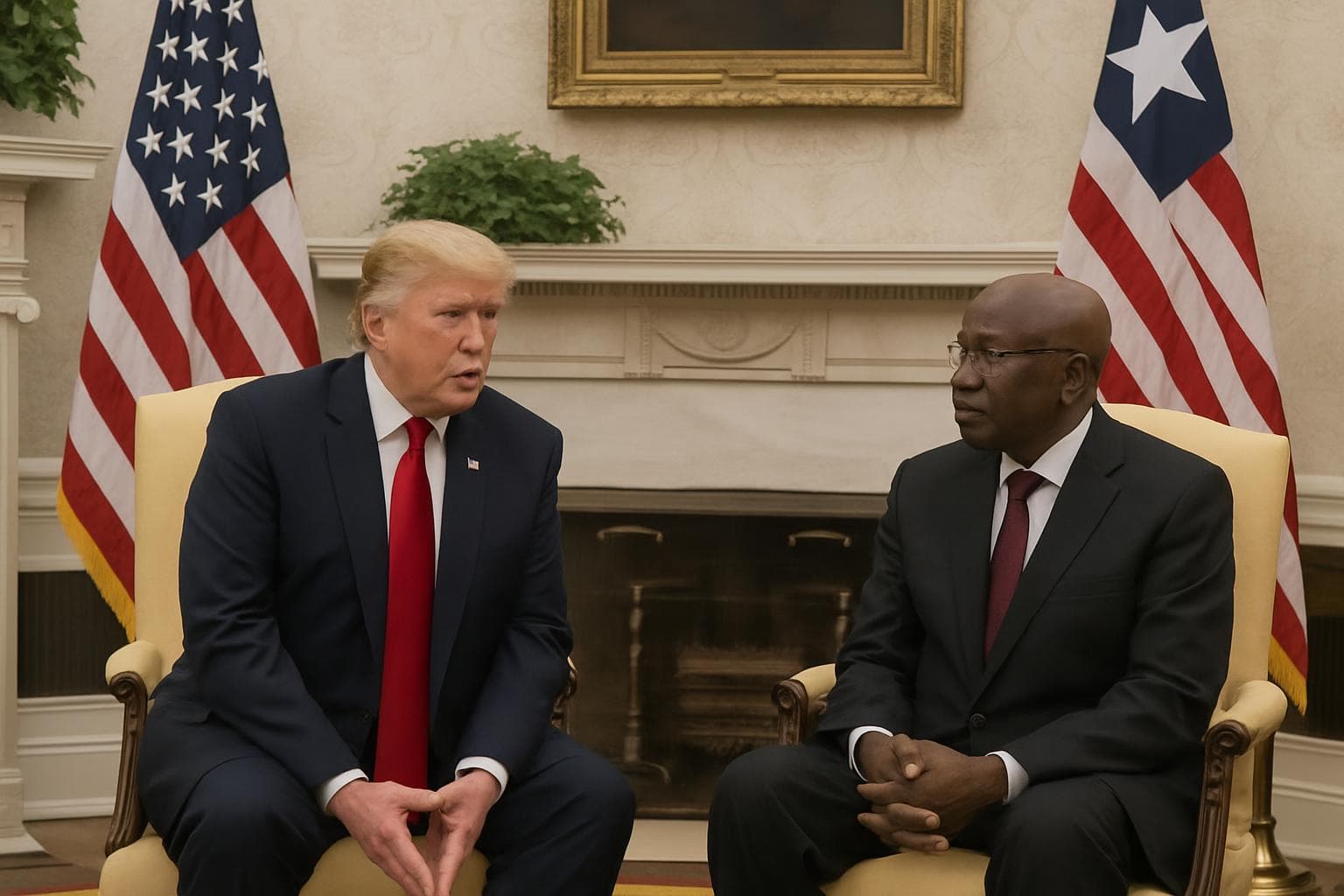
During a recent meeting at the White House, US President Donald Trump commended Liberian President Joseph Boakai for his command of English, seemingly unaware that English is the official language of Liberia. This interaction underscores the deep-rooted historical connections between the United States and Liberia, a nation founded in 1822 by freed African-American slaves.
Historical Ties and Cultural Influences
Liberia's foundation as a colony for free Black Americans was part of an initiative by white Americans to address the future of Black people in the US post-slavery. The country declared its independence in 1847, and its cultural and institutional landscape has been heavily influenced by American heritage. Monrovia, the capital, was named after US President James Monroe, and its architecture and street names reflect its American roots. The Liberian flag, designed by seven African-American women, bears a striking resemblance to the US flag, symbolizing the nation's status as Africa's first independent republic.
US-Africa Relations: A Shift from Aid to Trade
The meeting at the White House, which included leaders from Gabon, Guinea-Bissau, Mauritania, and Senegal, highlighted a strategic shift in US foreign policy towards Africa. President Trump emphasized moving from aid to trade, suggesting that economic partnerships would be more sustainable and beneficial in the long run. "There's great economic potential in Africa," Trump stated, positioning the US as a preferable partner over China.
Calls for Investment and Development
African leaders at the meeting expressed their support for Trump's policies and urged for increased US investment in the continent. Brice Clotaire Oligui Nguema, President of Gabon, noted, "We are rich countries when it comes to raw materials. But we need partners to support us and help us develop those resources." This sentiment reflects a broader desire among African nations to leverage their natural wealth for economic development.
WHAT THIS MIGHT MEAN
The recent dialogue between the US and African leaders could mark a pivotal shift in international relations, with potential economic and political implications. If the US successfully transitions from aid to trade, it could foster stronger economic ties and increase American influence in Africa, countering China's growing presence. However, the effectiveness of this strategy will depend on the US's ability to deliver tangible investment and development outcomes. As Liberia and other African nations seek to capitalize on their resources, the role of foreign partners will be crucial in shaping the continent's future economic landscape.
Related Articles

UK Faces Dilemmas Amid Iran Conflict and China Spying Allegations
China Sets Lowest GDP Growth Target in Decades Amid Economic Challenges
Cuba Faces Widespread Blackout Amid Deepening Fuel Crisis
US Supreme Court Ruling Sparks Trade Uncertainty in Asia and Beyond

Tech Giants Pledge to Cover AI Data Center Energy Costs Amid Rising Electricity Concerns
Congress Subpoenas Attorney General Bondi in Epstein Investigation
Trump's Praise of Liberian President Highlights Historical US-Liberia Ties
In This Article
 James Okoro| Published
 HIGHLIGHTS
- US President Donald Trump praised Liberian President Joseph Boakai for his English, unaware that English is Liberia's official language.
- Liberia, founded by freed African-American slaves in 1822, maintains strong historical ties to the United States.
- Trump hosted African leaders, emphasizing a shift from aid to trade, aiming to strengthen US-Africa relations.
- Liberia's capital, Monrovia, and its flag reflect deep American influences, showcasing the country's unique heritage.
- African leaders at the meeting expressed a desire for US investment, highlighting Africa's rich raw materials.
During a recent meeting at the White House, US President Donald Trump commended Liberian President Joseph Boakai for his command of English, seemingly unaware that English is the official language of Liberia. This interaction underscores the deep-rooted historical connections between the United States and Liberia, a nation founded in 1822 by freed African-American slaves.
Historical Ties and Cultural Influences
Liberia's foundation as a colony for free Black Americans was part of an initiative by white Americans to address the future of Black people in the US post-slavery. The country declared its independence in 1847, and its cultural and institutional landscape has been heavily influenced by American heritage. Monrovia, the capital, was named after US President James Monroe, and its architecture and street names reflect its American roots. The Liberian flag, designed by seven African-American women, bears a striking resemblance to the US flag, symbolizing the nation's status as Africa's first independent republic.
US-Africa Relations: A Shift from Aid to Trade
The meeting at the White House, which included leaders from Gabon, Guinea-Bissau, Mauritania, and Senegal, highlighted a strategic shift in US foreign policy towards Africa. President Trump emphasized moving from aid to trade, suggesting that economic partnerships would be more sustainable and beneficial in the long run. "There's great economic potential in Africa," Trump stated, positioning the US as a preferable partner over China.
Calls for Investment and Development
African leaders at the meeting expressed their support for Trump's policies and urged for increased US investment in the continent. Brice Clotaire Oligui Nguema, President of Gabon, noted, "We are rich countries when it comes to raw materials. But we need partners to support us and help us develop those resources." This sentiment reflects a broader desire among African nations to leverage their natural wealth for economic development.
WHAT THIS MIGHT MEAN
The recent dialogue between the US and African leaders could mark a pivotal shift in international relations, with potential economic and political implications. If the US successfully transitions from aid to trade, it could foster stronger economic ties and increase American influence in Africa, countering China's growing presence. However, the effectiveness of this strategy will depend on the US's ability to deliver tangible investment and development outcomes. As Liberia and other African nations seek to capitalize on their resources, the role of foreign partners will be crucial in shaping the continent's future economic landscape.
Related Articles
UK Faces Dilemmas Amid Iran Conflict and China Spying Allegations
China Sets Lowest GDP Growth Target in Decades Amid Economic Challenges
Cuba Faces Widespread Blackout Amid Deepening Fuel Crisis
US Supreme Court Ruling Sparks Trade Uncertainty in Asia and Beyond
Tech Giants Pledge to Cover AI Data Center Energy Costs Amid Rising Electricity Concerns
Congress Subpoenas Attorney General Bondi in Epstein Investigation