
Trump and Netanyahu Push for Gaza Ceasefire Amid Ongoing Conflict
In This Article
HIGHLIGHTS
- US President Donald Trump and Israeli Prime Minister Benjamin Netanyahu met twice to discuss a potential 60-day Gaza ceasefire.
- Qatar, mediating the talks, indicated that negotiations are still in early stages and more time is needed.
- The ongoing Gaza conflict, which began on October 7, 2023, has resulted in significant casualties on both sides.
- A draft ceasefire deal includes the release of 10 hostages and the return of nine deceased bodies.
- Despite ongoing talks, violence continues with recent Israeli strikes in Gaza causing numerous casualties.
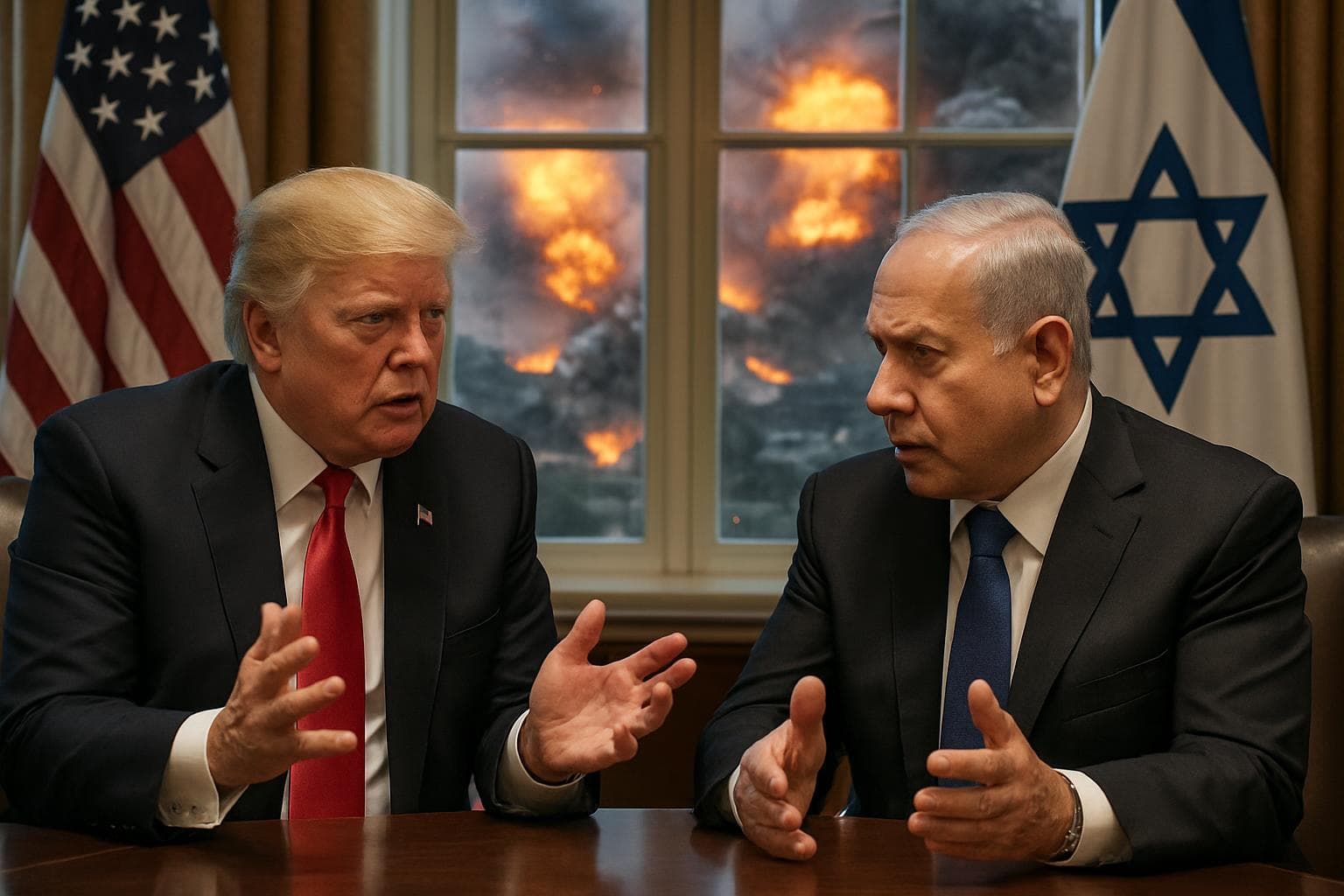
In a bid to halt the ongoing violence in Gaza, US President Donald Trump and Israeli Prime Minister Benjamin Netanyahu convened for a second meeting in as many days at the White House. The discussions, centered on brokering a 60-day ceasefire between Israel and Hamas, come amid a backdrop of escalating tensions and humanitarian concerns in the region.
Diplomatic Efforts Intensify
The meetings, which included Trump's Middle East envoy Steve Witkoff, highlighted a narrowing of differences between Israel and Hamas, with only one major issue remaining unresolved. Witkoff expressed optimism about reaching a ceasefire agreement, stating, "We had four issues and now we're down to one." The proposed deal also involves the release of 10 hostages and the return of nine deceased bodies.
Qatar's Role in Mediation
Qatar, playing a crucial mediating role, has tempered expectations for a swift resolution. Majed Al-Ansari, Qatar’s foreign ministry spokesperson, emphasized the need for more time, stating, "I don’t think that I can give any timeline at the moment." The indirect talks, which began on Sunday, have yet to yield a breakthrough, according to Palestinian officials involved in the negotiations.
Continued Violence in Gaza
Despite diplomatic efforts, the situation on the ground remains dire. Israeli airstrikes have continued, with recent attacks resulting in significant casualties. Gaza’s civil defense agency reported multiple deaths, including children, as a result of these strikes. The Israeli Defense Forces (IDF) have accused Hamas of using civilians as human shields, a claim Hamas denies.
Humanitarian Crisis Deepens
The humanitarian impact of the conflict is severe, with thousands displaced and critical infrastructure damaged. In Khan Younis, a drone strike on a camp for displaced people resulted in several fatalities, underscoring the urgent need for a ceasefire. Shaimaa al-Shaer, a resident of the camp, recounted the harrowing experience of an explosion while preparing breakfast for her children.
WHAT THIS MIGHT MEAN
As negotiations continue, the potential for a ceasefire remains uncertain. The involvement of key international players like Qatar suggests a concerted effort towards peace, but the complexity of the issues at hand may prolong discussions. Should a ceasefire be achieved, it could pave the way for more comprehensive peace talks and a potential resolution to the long-standing conflict. However, the ongoing violence and humanitarian crisis underscore the urgent need for a diplomatic breakthrough. Experts suggest that sustained international pressure and engagement will be crucial in facilitating a lasting peace in the region.
Related Articles
Senate Blocks Resolution to Limit Trump's Military Actions in Iran
Spain's Sánchez Stands Firm Against Trump's Trade Threat Over Iran Stance

US and Israel Intensify Military Campaign as Iran's Capabilities Dwindle

Intensified US-Israel Strikes on Iran Spark Global Outcry
Iran Postpones Khamenei Funeral Amid Escalating US-Israeli Strikes

Tech Giants Pledge to Cover AI Data Center Energy Costs Amid Rising Electricity Concerns
Trump and Netanyahu Push for Gaza Ceasefire Amid Ongoing Conflict
In This Article
 Ethan Brooks| Published
 HIGHLIGHTS
- US President Donald Trump and Israeli Prime Minister Benjamin Netanyahu met twice to discuss a potential 60-day Gaza ceasefire.
- Qatar, mediating the talks, indicated that negotiations are still in early stages and more time is needed.
- The ongoing Gaza conflict, which began on October 7, 2023, has resulted in significant casualties on both sides.
- A draft ceasefire deal includes the release of 10 hostages and the return of nine deceased bodies.
- Despite ongoing talks, violence continues with recent Israeli strikes in Gaza causing numerous casualties.
In a bid to halt the ongoing violence in Gaza, US President Donald Trump and Israeli Prime Minister Benjamin Netanyahu convened for a second meeting in as many days at the White House. The discussions, centered on brokering a 60-day ceasefire between Israel and Hamas, come amid a backdrop of escalating tensions and humanitarian concerns in the region.
Diplomatic Efforts Intensify
The meetings, which included Trump's Middle East envoy Steve Witkoff, highlighted a narrowing of differences between Israel and Hamas, with only one major issue remaining unresolved. Witkoff expressed optimism about reaching a ceasefire agreement, stating, "We had four issues and now we're down to one." The proposed deal also involves the release of 10 hostages and the return of nine deceased bodies.
Qatar's Role in Mediation
Qatar, playing a crucial mediating role, has tempered expectations for a swift resolution. Majed Al-Ansari, Qatar’s foreign ministry spokesperson, emphasized the need for more time, stating, "I don’t think that I can give any timeline at the moment." The indirect talks, which began on Sunday, have yet to yield a breakthrough, according to Palestinian officials involved in the negotiations.
Continued Violence in Gaza
Despite diplomatic efforts, the situation on the ground remains dire. Israeli airstrikes have continued, with recent attacks resulting in significant casualties. Gaza’s civil defense agency reported multiple deaths, including children, as a result of these strikes. The Israeli Defense Forces (IDF) have accused Hamas of using civilians as human shields, a claim Hamas denies.
Humanitarian Crisis Deepens
The humanitarian impact of the conflict is severe, with thousands displaced and critical infrastructure damaged. In Khan Younis, a drone strike on a camp for displaced people resulted in several fatalities, underscoring the urgent need for a ceasefire. Shaimaa al-Shaer, a resident of the camp, recounted the harrowing experience of an explosion while preparing breakfast for her children.
WHAT THIS MIGHT MEAN
As negotiations continue, the potential for a ceasefire remains uncertain. The involvement of key international players like Qatar suggests a concerted effort towards peace, but the complexity of the issues at hand may prolong discussions. Should a ceasefire be achieved, it could pave the way for more comprehensive peace talks and a potential resolution to the long-standing conflict. However, the ongoing violence and humanitarian crisis underscore the urgent need for a diplomatic breakthrough. Experts suggest that sustained international pressure and engagement will be crucial in facilitating a lasting peace in the region.
Related Articles
Senate Blocks Resolution to Limit Trump's Military Actions in Iran
Spain's Sánchez Stands Firm Against Trump's Trade Threat Over Iran Stance
US and Israel Intensify Military Campaign as Iran's Capabilities Dwindle
Intensified US-Israel Strikes on Iran Spark Global Outcry
Iran Postpones Khamenei Funeral Amid Escalating US-Israeli Strikes
Tech Giants Pledge to Cover AI Data Center Energy Costs Amid Rising Electricity Concerns