
Trump Nominates Kevin Warsh as Federal Reserve Chair Amidst Mixed Reactions
In This Article
HIGHLIGHTS
- Donald Trump has nominated Kevin Warsh to replace Jerome Powell as the Federal Reserve chair, with Warsh's term set to begin in May.
- Warsh, known for his conservative stance on monetary policy, has previously supported higher interest rates, contrasting with Trump's preference for lower rates.
- The nomination has been met with mixed reactions, with some praising Warsh's independence and others questioning his past policy decisions.
- Critics highlight Warsh's familial connections to Trump and his inconsistent policy views as potential concerns.
- The financial markets have remained stable following the announcement, with some analysts expressing cautious optimism about Warsh's leadership.
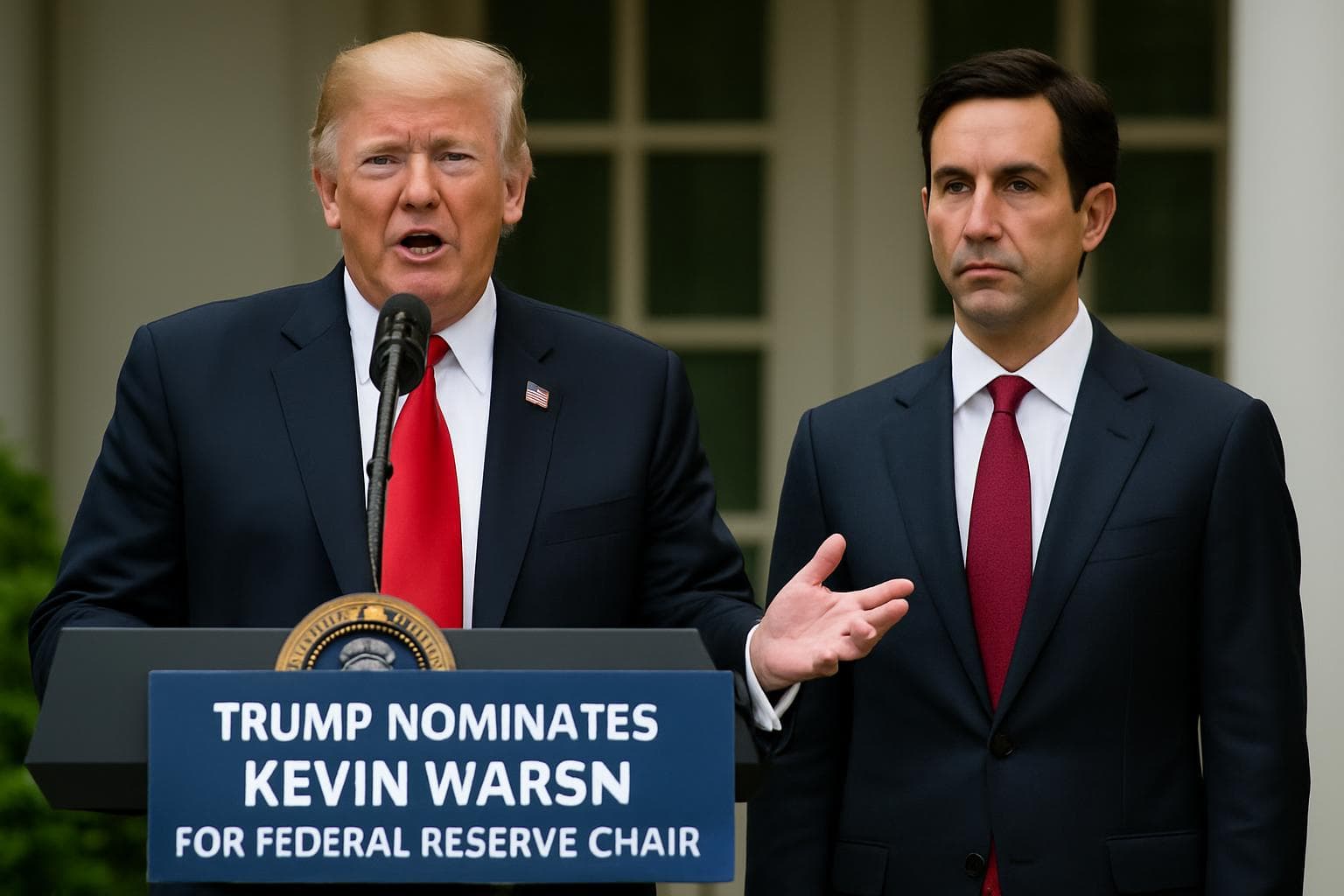
In a move that could reshape the future of U.S. monetary policy, President Donald Trump has nominated Kevin Warsh to succeed Jerome Powell as the chair of the Federal Reserve. Warsh, a former Fed governor with a reputation for conservative monetary views, is set to take over in May, pending Senate confirmation.
A Conservative Choice
Kevin Warsh's nomination comes as no surprise to those familiar with Trump's ongoing dissatisfaction with Powell's leadership. Trump, who has been vocal about his desire for lower interest rates, has often clashed with Powell, labeling him "incompetent" and expressing frustration over his refusal to implement drastic rate cuts. Warsh, however, has historically supported higher interest rates, a stance that seems at odds with Trump's economic preferences.
Despite this apparent contradiction, Trump expressed confidence in Warsh's ability to lead the central bank effectively. "Kevin is 'central casting' and he will never let you down," Trump stated on social media, emphasizing Warsh's qualifications, which include an Ivy League education and experience on Wall Street.
Mixed Reactions and Concerns
The nomination has sparked a range of reactions from financial and political circles. While some, like former Secretary of State Condoleezza Rice and economist Mohamed el-Erian, have praised Warsh's potential independence, others have raised concerns about his past policy decisions. Critics point to Warsh's opposition to economic stimulus during the 2008 financial crisis, fearing that his conservative approach could hinder economic growth.
Additionally, questions have been raised about Warsh's familial ties to Trump, as his father-in-law, Ronald Lauder, is a known Trump donor. Congressman Don Beyer criticized Warsh for seemingly altering his views based on political convenience, suggesting that his nomination may be influenced by personal connections rather than merit.
Market Stability and Future Implications
Despite the controversy, global markets have remained stable following the announcement. Analysts at Wells Fargo noted that Warsh's relatively low public profile in recent years adds an element of uncertainty, but they expressed cautious optimism about his leadership. "There appears to be at least some degree of comfort with a Warsh-led Fed," they stated.
WHAT THIS MIGHT MEAN
As Warsh's nomination progresses through the Senate, the focus will likely shift to his potential impact on U.S. monetary policy. If confirmed, Warsh's leadership could signal a shift towards more conservative economic measures, potentially affecting interest rates and inflation control. However, his ability to balance independence with political pressures will be crucial in maintaining the Federal Reserve's credibility.
Experts suggest that Warsh's tenure could either reinforce the Fed's independence or lead to increased political influence over its decisions. The outcome will depend on Warsh's willingness to prioritize long-term economic stability over short-term political gains. As the financial world watches closely, Warsh's approach to leading the central bank will undoubtedly shape the economic landscape in the years to come.
Related Articles
Trump's New Tariff Strategy Sparks Global Trade Uncertainty

Tech Giants Pledge to Cover AI Data Center Energy Costs Amid Rising Electricity Concerns
Congress Subpoenas Attorney General Bondi in Epstein Investigation

Cuba Faces Widespread Blackout Amid Deepening Fuel Crisis

UK Faces Dilemmas Amid Iran Conflict and China Spying Allegations

Senate Blocks Resolution to Limit Trump's Military Actions in Iran
Trump Nominates Kevin Warsh as Federal Reserve Chair Amidst Mixed Reactions
In This Article
 Daniel Rivera| Published
 HIGHLIGHTS
- Donald Trump has nominated Kevin Warsh to replace Jerome Powell as the Federal Reserve chair, with Warsh's term set to begin in May.
- Warsh, known for his conservative stance on monetary policy, has previously supported higher interest rates, contrasting with Trump's preference for lower rates.
- The nomination has been met with mixed reactions, with some praising Warsh's independence and others questioning his past policy decisions.
- Critics highlight Warsh's familial connections to Trump and his inconsistent policy views as potential concerns.
- The financial markets have remained stable following the announcement, with some analysts expressing cautious optimism about Warsh's leadership.
In a move that could reshape the future of U.S. monetary policy, President Donald Trump has nominated Kevin Warsh to succeed Jerome Powell as the chair of the Federal Reserve. Warsh, a former Fed governor with a reputation for conservative monetary views, is set to take over in May, pending Senate confirmation.
A Conservative Choice
Kevin Warsh's nomination comes as no surprise to those familiar with Trump's ongoing dissatisfaction with Powell's leadership. Trump, who has been vocal about his desire for lower interest rates, has often clashed with Powell, labeling him "incompetent" and expressing frustration over his refusal to implement drastic rate cuts. Warsh, however, has historically supported higher interest rates, a stance that seems at odds with Trump's economic preferences.
Despite this apparent contradiction, Trump expressed confidence in Warsh's ability to lead the central bank effectively. "Kevin is 'central casting' and he will never let you down," Trump stated on social media, emphasizing Warsh's qualifications, which include an Ivy League education and experience on Wall Street.
Mixed Reactions and Concerns
The nomination has sparked a range of reactions from financial and political circles. While some, like former Secretary of State Condoleezza Rice and economist Mohamed el-Erian, have praised Warsh's potential independence, others have raised concerns about his past policy decisions. Critics point to Warsh's opposition to economic stimulus during the 2008 financial crisis, fearing that his conservative approach could hinder economic growth.
Additionally, questions have been raised about Warsh's familial ties to Trump, as his father-in-law, Ronald Lauder, is a known Trump donor. Congressman Don Beyer criticized Warsh for seemingly altering his views based on political convenience, suggesting that his nomination may be influenced by personal connections rather than merit.
Market Stability and Future Implications
Despite the controversy, global markets have remained stable following the announcement. Analysts at Wells Fargo noted that Warsh's relatively low public profile in recent years adds an element of uncertainty, but they expressed cautious optimism about his leadership. "There appears to be at least some degree of comfort with a Warsh-led Fed," they stated.
WHAT THIS MIGHT MEAN
As Warsh's nomination progresses through the Senate, the focus will likely shift to his potential impact on U.S. monetary policy. If confirmed, Warsh's leadership could signal a shift towards more conservative economic measures, potentially affecting interest rates and inflation control. However, his ability to balance independence with political pressures will be crucial in maintaining the Federal Reserve's credibility.
Experts suggest that Warsh's tenure could either reinforce the Fed's independence or lead to increased political influence over its decisions. The outcome will depend on Warsh's willingness to prioritize long-term economic stability over short-term political gains. As the financial world watches closely, Warsh's approach to leading the central bank will undoubtedly shape the economic landscape in the years to come.
Related Articles
Trump's New Tariff Strategy Sparks Global Trade Uncertainty
Tech Giants Pledge to Cover AI Data Center Energy Costs Amid Rising Electricity Concerns
Congress Subpoenas Attorney General Bondi in Epstein Investigation
Cuba Faces Widespread Blackout Amid Deepening Fuel Crisis
UK Faces Dilemmas Amid Iran Conflict and China Spying Allegations
Senate Blocks Resolution to Limit Trump's Military Actions in Iran