
Trump Proposes $1.5 Trillion Military Budget Amid Criticism of Defense Contractors
In This Article
HIGHLIGHTS
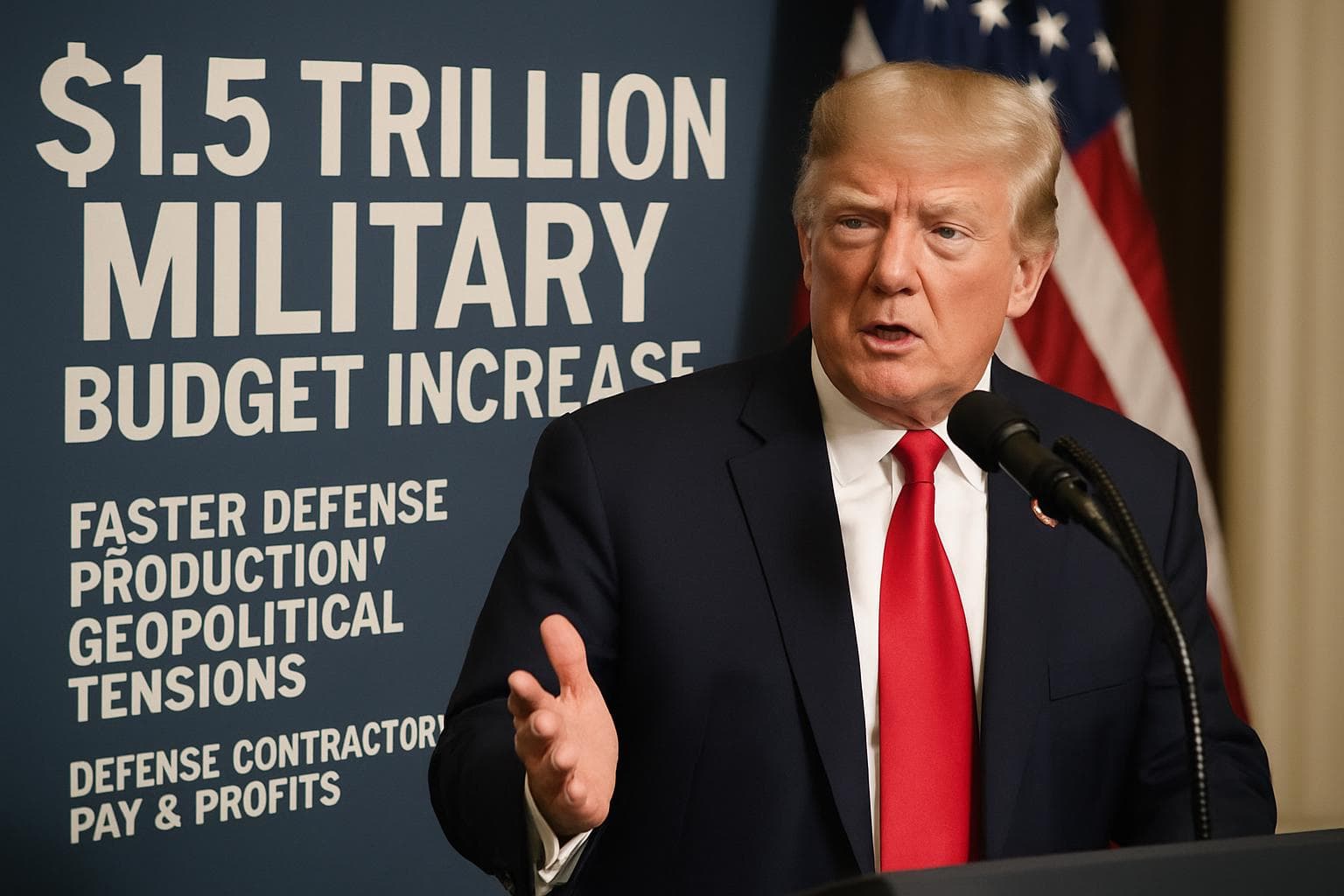
- Donald Trump proposes increasing US military spending to $1.5 trillion by 2027, a 50% rise from the current $901 billion budget.
- Trump criticizes defense contractors for high executive pay and shareholder payouts, urging them to speed up military equipment production.
- Shares of major defense firms like Lockheed Martin and Raytheon rose following Trump's announcements.
- Trump warns that companies not complying with his demands may lose business with the Department of Defense.
- The proposal comes amid rising geopolitical tensions, including US actions against Venezuela and military drills by China around Taiwan.
In a bold move, former President Donald Trump has called for a dramatic increase in US military spending, proposing a budget of $1.5 trillion by 2027. This represents a more than 50% increase from the current $901 billion budget approved by Congress. Trump argues that such an expansion is necessary to ensure national security in what he describes as "very troubled and dangerous times."
Trump took to social media to express his dissatisfaction with the current state of the defense industry, criticizing major contractors for their "exorbitant" executive pay and substantial shareholder payouts. He emphasized the need for these companies to accelerate the production of military equipment, which he claims is not being manufactured quickly enough to meet the demands of the US and its allies.
Defense Industry Under Scrutiny
The former president's comments have put defense giants like Lockheed Martin, Northrop Grumman, and Raytheon under the spotlight. Trump has threatened to restrict dividends and stock buybacks until these companies prioritize investment in new manufacturing plants and equipment. "No Executive should be allowed to make in excess of $5 Million Dollars," Trump stated, highlighting the disparity between executive compensation and the pace of equipment delivery.
Following Trump's announcements, shares of these defense firms saw a significant rise in extended trading, reflecting investor optimism about potential increases in defense contracts.
Geopolitical Context and Implications
Trump's proposal comes at a time of heightened geopolitical tensions. Recently, US forces captured a Russian-flagged oil tanker suspected of violating sanctions, and the US military seized Venezuelan leader Nicolás Maduro to face drug trafficking charges. Additionally, China's military drills around Taiwan have further strained international relations, underscoring the urgency of bolstering US military capabilities.
Potential Consequences for Defense Contractors
Trump's ultimatum to defense contractors could have significant implications for the industry. Companies that fail to comply with his demands may risk losing lucrative contracts with the Department of Defense. Raytheon, in particular, was singled out by Trump as being "least responsive" to America's defense needs, prompting concerns about its future business prospects.
WHAT THIS MIGHT MEAN
If Trump's proposal gains traction, it could lead to a substantial reshaping of the US defense industry, with increased pressure on contractors to prioritize production over profits. This shift may result in accelerated development of military technology and infrastructure, potentially enhancing national security.
However, critics warn that such a massive increase in military spending could exacerbate the national deficit, raising questions about the sustainability of Trump's plan. Additionally, the geopolitical landscape remains volatile, and any missteps in handling international relations could have far-reaching consequences.
As the debate over military spending continues, the defense industry will need to navigate these challenges carefully, balancing shareholder interests with the demands of national security and political scrutiny.
Related Articles

Cuba Faces Widespread Blackout Amid Deepening Fuel Crisis

UK Faces Dilemmas Amid Iran Conflict and China Spying Allegations

US Supreme Court Ruling Sparks Trade Uncertainty in Asia and Beyond
Trump's New Tariff Strategy Sparks Global Trade Uncertainty
China Sets Lowest GDP Growth Target in Decades Amid Economic Challenges

Tech Giants Pledge to Cover AI Data Center Energy Costs Amid Rising Electricity Concerns
Trump Proposes $1.5 Trillion Military Budget Amid Criticism of Defense Contractors
In This Article
 Daniel Rivera| Published
 HIGHLIGHTS
- Donald Trump proposes increasing US military spending to $1.5 trillion by 2027, a 50% rise from the current $901 billion budget.
- Trump criticizes defense contractors for high executive pay and shareholder payouts, urging them to speed up military equipment production.
- Shares of major defense firms like Lockheed Martin and Raytheon rose following Trump's announcements.
- Trump warns that companies not complying with his demands may lose business with the Department of Defense.
- The proposal comes amid rising geopolitical tensions, including US actions against Venezuela and military drills by China around Taiwan.
In a bold move, former President Donald Trump has called for a dramatic increase in US military spending, proposing a budget of $1.5 trillion by 2027. This represents a more than 50% increase from the current $901 billion budget approved by Congress. Trump argues that such an expansion is necessary to ensure national security in what he describes as "very troubled and dangerous times."
Trump took to social media to express his dissatisfaction with the current state of the defense industry, criticizing major contractors for their "exorbitant" executive pay and substantial shareholder payouts. He emphasized the need for these companies to accelerate the production of military equipment, which he claims is not being manufactured quickly enough to meet the demands of the US and its allies.
Defense Industry Under Scrutiny
The former president's comments have put defense giants like Lockheed Martin, Northrop Grumman, and Raytheon under the spotlight. Trump has threatened to restrict dividends and stock buybacks until these companies prioritize investment in new manufacturing plants and equipment. "No Executive should be allowed to make in excess of $5 Million Dollars," Trump stated, highlighting the disparity between executive compensation and the pace of equipment delivery.
Following Trump's announcements, shares of these defense firms saw a significant rise in extended trading, reflecting investor optimism about potential increases in defense contracts.
Geopolitical Context and Implications
Trump's proposal comes at a time of heightened geopolitical tensions. Recently, US forces captured a Russian-flagged oil tanker suspected of violating sanctions, and the US military seized Venezuelan leader Nicolás Maduro to face drug trafficking charges. Additionally, China's military drills around Taiwan have further strained international relations, underscoring the urgency of bolstering US military capabilities.
Potential Consequences for Defense Contractors
Trump's ultimatum to defense contractors could have significant implications for the industry. Companies that fail to comply with his demands may risk losing lucrative contracts with the Department of Defense. Raytheon, in particular, was singled out by Trump as being "least responsive" to America's defense needs, prompting concerns about its future business prospects.
WHAT THIS MIGHT MEAN
If Trump's proposal gains traction, it could lead to a substantial reshaping of the US defense industry, with increased pressure on contractors to prioritize production over profits. This shift may result in accelerated development of military technology and infrastructure, potentially enhancing national security.
However, critics warn that such a massive increase in military spending could exacerbate the national deficit, raising questions about the sustainability of Trump's plan. Additionally, the geopolitical landscape remains volatile, and any missteps in handling international relations could have far-reaching consequences.
As the debate over military spending continues, the defense industry will need to navigate these challenges carefully, balancing shareholder interests with the demands of national security and political scrutiny.
Related Articles
Cuba Faces Widespread Blackout Amid Deepening Fuel Crisis
UK Faces Dilemmas Amid Iran Conflict and China Spying Allegations
US Supreme Court Ruling Sparks Trade Uncertainty in Asia and Beyond
Trump's New Tariff Strategy Sparks Global Trade Uncertainty
China Sets Lowest GDP Growth Target in Decades Amid Economic Challenges
Tech Giants Pledge to Cover AI Data Center Energy Costs Amid Rising Electricity Concerns