
Trump Proposes Ban on Institutional Investors Buying Single-Family Homes
In This Article
HIGHLIGHTS
- President Donald Trump announced plans to ban large institutional investors from purchasing single-family homes to improve housing affordability.
- Trump intends to ask Congress to codify this measure and will discuss it further at the Davos World Economic Forum.
- The move comes amid growing concerns over housing costs, with institutional investors like Blackstone owning a significant number of rental properties.
- Critics question the impact of such a ban, as institutional investors reportedly own a small percentage of single-family homes in the US.
- Shares of major property firms fell following Trump's announcement, reflecting market uncertainty about the policy's potential effects.
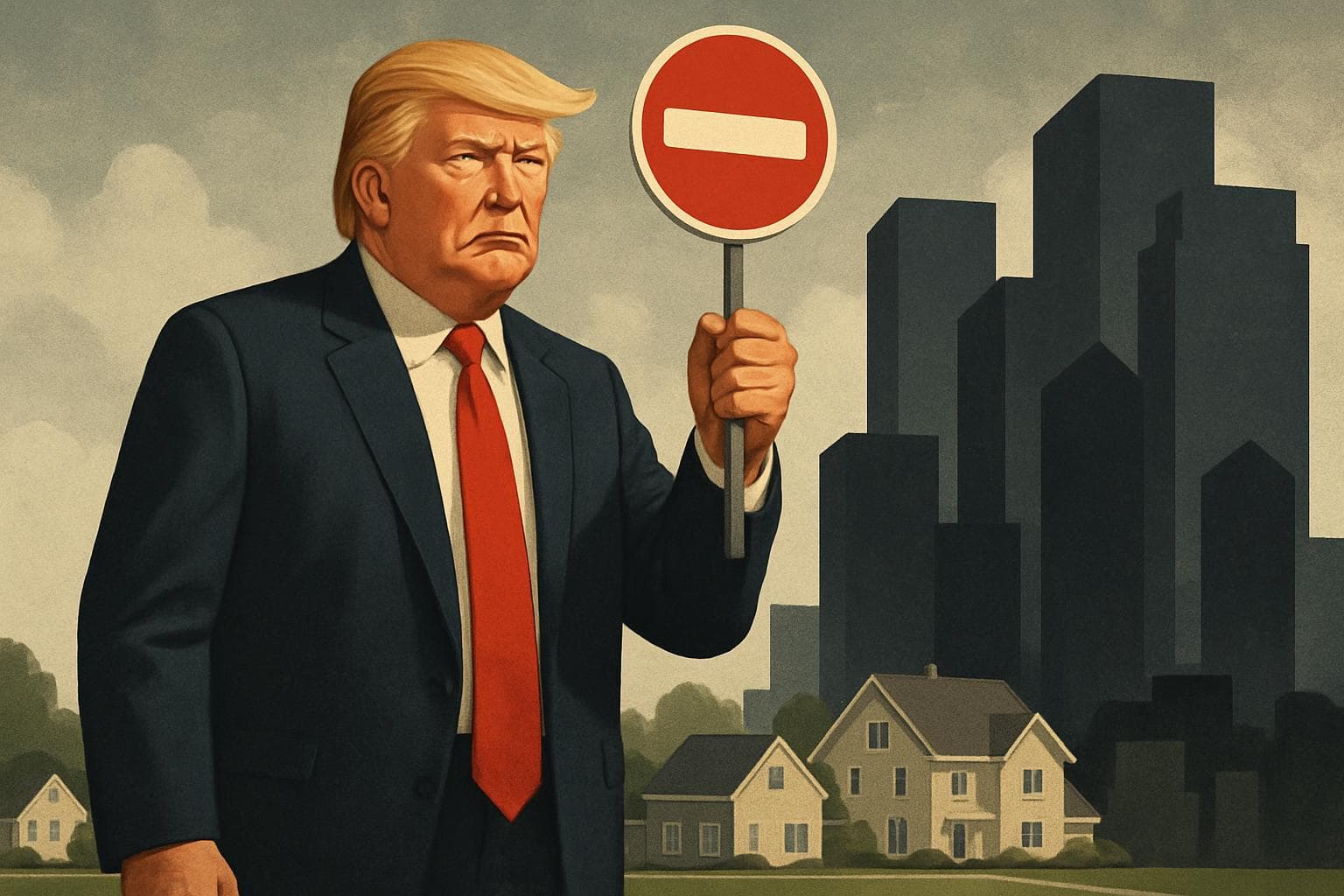
In a bold move aimed at tackling the escalating housing affordability crisis, President Donald Trump has announced plans to prohibit large institutional investors from purchasing single-family homes. This initiative, revealed in a social media post on Wednesday, seeks to curb the influence of corporate entities in the residential real estate market, which many argue has contributed to rising home prices.
Trump has pledged to request Congress to codify this measure and plans to elaborate on his housing affordability proposals at the upcoming Davos World Economic Forum. "The American Dream is increasingly out of reach for far too many people, especially younger Americans," Trump stated, emphasizing the need for homes to be owned by individuals rather than corporations.
The announcement comes as the Trump administration faces mounting public dissatisfaction over economic management, particularly concerning the cost of living. Housing affordability remains a pressing issue, with median home prices reaching $410,800 last year, according to the US Census Bureau.
Since the 2008 financial crisis, private equity firms like Blackstone have acquired tens of thousands of homes, becoming significant landlords in certain markets. This trend has drawn bipartisan scrutiny, with lawmakers blaming these firms for driving up housing costs. However, previous legislative attempts to address this issue have stalled in Congress.
Despite the potential for significant policy change, some analysts remain skeptical about the ban's effectiveness. Laurie Goodman of the Urban Institute noted that institutional investors own a relatively small fraction of single-family homes in the US, suggesting that the policy might have limited impact on overall market prices.
Following Trump's announcement, shares of property firms experienced a notable decline, with Builders FirstSource and Invitation Homes seeing drops of over 5% and 6%, respectively. This market reaction underscores the uncertainty surrounding the proposed policy's implications.
WHAT THIS MIGHT MEAN
If President Trump's proposal gains traction in Congress, it could lead to significant shifts in the US housing market, potentially easing the path to homeownership for many Americans. However, the policy's success will largely depend on how "large" investors are defined and the specifics of the legislative framework.
Should the ban be implemented, it may prompt institutional investors to divest from the single-family home market, potentially increasing the availability of homes for individual buyers. However, if the policy fails to pass or is watered down, the status quo may persist, with housing affordability continuing to be a contentious issue.
Experts suggest that a comprehensive approach addressing multiple factors influencing housing costs, including supply constraints and zoning laws, may be necessary to achieve meaningful improvements in affordability. As the debate unfolds, the real estate market will be closely watching for any developments that could reshape the landscape of homeownership in the US.
Related Articles

Tech Giants Pledge to Cover AI Data Center Energy Costs Amid Rising Electricity Concerns
Congress Subpoenas Attorney General Bondi in Epstein Investigation

Cuba Faces Widespread Blackout Amid Deepening Fuel Crisis

UK Faces Dilemmas Amid Iran Conflict and China Spying Allegations
Senate Blocks Resolution to Limit Trump's Military Actions in Iran

UK-Iran Tensions: Starmer Defends Cautious Approach Amid Trump Criticism
Trump Proposes Ban on Institutional Investors Buying Single-Family Homes
In This Article
 Daniel Rivera| Published
 HIGHLIGHTS
- President Donald Trump announced plans to ban large institutional investors from purchasing single-family homes to improve housing affordability.
- Trump intends to ask Congress to codify this measure and will discuss it further at the Davos World Economic Forum.
- The move comes amid growing concerns over housing costs, with institutional investors like Blackstone owning a significant number of rental properties.
- Critics question the impact of such a ban, as institutional investors reportedly own a small percentage of single-family homes in the US.
- Shares of major property firms fell following Trump's announcement, reflecting market uncertainty about the policy's potential effects.
In a bold move aimed at tackling the escalating housing affordability crisis, President Donald Trump has announced plans to prohibit large institutional investors from purchasing single-family homes. This initiative, revealed in a social media post on Wednesday, seeks to curb the influence of corporate entities in the residential real estate market, which many argue has contributed to rising home prices.
Trump has pledged to request Congress to codify this measure and plans to elaborate on his housing affordability proposals at the upcoming Davos World Economic Forum. "The American Dream is increasingly out of reach for far too many people, especially younger Americans," Trump stated, emphasizing the need for homes to be owned by individuals rather than corporations.
The announcement comes as the Trump administration faces mounting public dissatisfaction over economic management, particularly concerning the cost of living. Housing affordability remains a pressing issue, with median home prices reaching $410,800 last year, according to the US Census Bureau.
Since the 2008 financial crisis, private equity firms like Blackstone have acquired tens of thousands of homes, becoming significant landlords in certain markets. This trend has drawn bipartisan scrutiny, with lawmakers blaming these firms for driving up housing costs. However, previous legislative attempts to address this issue have stalled in Congress.
Despite the potential for significant policy change, some analysts remain skeptical about the ban's effectiveness. Laurie Goodman of the Urban Institute noted that institutional investors own a relatively small fraction of single-family homes in the US, suggesting that the policy might have limited impact on overall market prices.
Following Trump's announcement, shares of property firms experienced a notable decline, with Builders FirstSource and Invitation Homes seeing drops of over 5% and 6%, respectively. This market reaction underscores the uncertainty surrounding the proposed policy's implications.
WHAT THIS MIGHT MEAN
If President Trump's proposal gains traction in Congress, it could lead to significant shifts in the US housing market, potentially easing the path to homeownership for many Americans. However, the policy's success will largely depend on how "large" investors are defined and the specifics of the legislative framework.
Should the ban be implemented, it may prompt institutional investors to divest from the single-family home market, potentially increasing the availability of homes for individual buyers. However, if the policy fails to pass or is watered down, the status quo may persist, with housing affordability continuing to be a contentious issue.
Experts suggest that a comprehensive approach addressing multiple factors influencing housing costs, including supply constraints and zoning laws, may be necessary to achieve meaningful improvements in affordability. As the debate unfolds, the real estate market will be closely watching for any developments that could reshape the landscape of homeownership in the US.
Related Articles
Tech Giants Pledge to Cover AI Data Center Energy Costs Amid Rising Electricity Concerns
Congress Subpoenas Attorney General Bondi in Epstein Investigation
Cuba Faces Widespread Blackout Amid Deepening Fuel Crisis
UK Faces Dilemmas Amid Iran Conflict and China Spying Allegations
Senate Blocks Resolution to Limit Trump's Military Actions in Iran
UK-Iran Tensions: Starmer Defends Cautious Approach Amid Trump Criticism