
Trump's Battle with the Fed: A Threat to Central Bank Independence?
In This Article
HIGHLIGHTS
- President Donald Trump is attempting to dismiss Federal Reserve governor Lisa Cook, who is resisting and threatening legal action.
- Trump's actions are raising concerns about the independence of the Federal Reserve, a cornerstone of US economic stability.
- Historically, US presidents have respected the Fed's autonomy, but Trump's aggressive approach marks a significant departure.
- The controversy has caused fluctuations in financial markets, particularly affecting US Treasury bond interest rates.
- Allegations against Cook involve mortgage fraud claims, which she and her attorney vehemently deny.
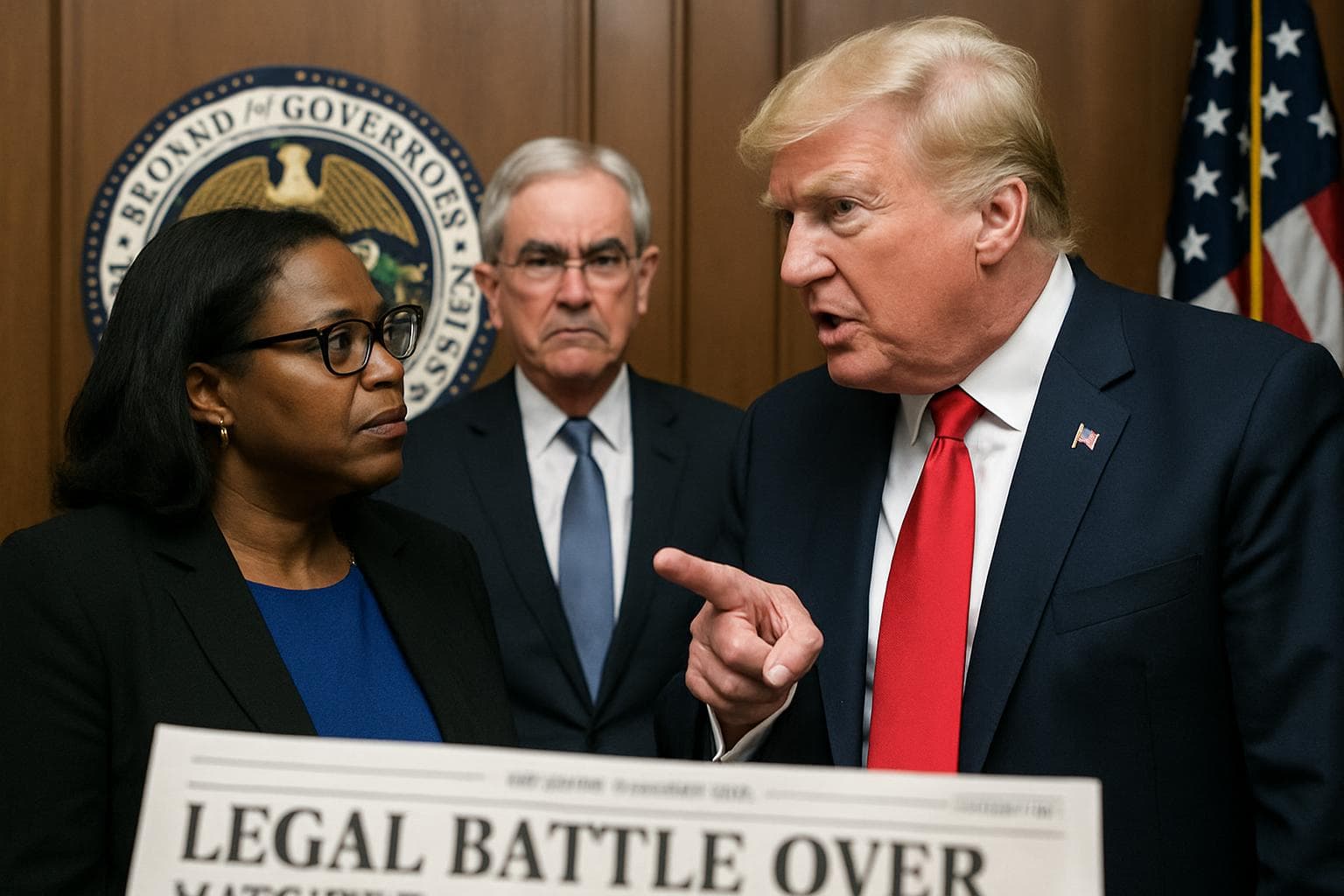
President Donald Trump's ongoing conflict with the Federal Reserve has reached a new level of intensity as he attempts to remove governor Lisa Cook from her position. Cook, appointed by President Joe Biden, has refused to step down and is preparing to take legal action against the administration. This unprecedented move has sparked a debate over the independence of the Federal Reserve, a crucial institution in maintaining US economic stability.
Historical Context and Current Developments
Traditionally, US presidents have respected the Federal Reserve's autonomy, allowing it to make decisions in the best interest of the economy, even if those decisions cause short-term political discomfort. However, Trump's approach has been markedly different. Since returning to office, he has publicly criticized the Fed and its chair, Jerome Powell, for not cutting interest rates, which he believes would boost the economy.
Trump's latest attempt to dismiss Cook is part of a broader strategy to reshape the Fed's board with individuals who align with his political views. This has alarmed economists and investors, who fear that political interference could undermine the Fed's credibility and lead to economic instability.
Legal Battle and Market Reactions
The legal battle centers around allegations of mortgage fraud against Cook, which she and her attorney deny. The administration claims Cook listed two different properties as her primary residence, a charge similar to those Trump has used against other opponents. Despite these allegations, Cook remains firm in her position, arguing that Trump lacks the authority to remove her.
Financial markets have reacted cautiously to the unfolding drama. While major US stock markets have remained relatively stable, the bond market has seen fluctuations, with interest rates on 30-year US Treasury bonds rising. This reflects investor concerns about the potential impact on the US economy and the global financial system.
Implications for the Federal Reserve
The Federal Reserve's independence is crucial for maintaining stable prices and employment levels. Its ability to set interest rates without political interference is a key factor in its effectiveness. As economist Claudia Sahm notes, the Fed's independence is designed for moments like this, when political leaders might push for policies that could harm long-term economic health.
WHAT THIS MIGHT MEAN
The outcome of this legal battle could have significant implications for the Federal Reserve's future. If Trump succeeds in removing Cook, it may set a precedent for increased political influence over the central bank, potentially undermining its independence. This could lead to more volatile economic policies and increased market instability.
On the other hand, if Cook successfully defends her position, it could reinforce the Fed's autonomy and serve as a check against future political interference. Experts warn that any erosion of the Fed's independence could have far-reaching consequences, not only for the US economy but also for global financial markets that rely on the stability of US monetary policy.
Related Articles

Tech Giants Pledge to Cover AI Data Center Energy Costs Amid Rising Electricity Concerns
Congress Subpoenas Attorney General Bondi in Epstein Investigation

Cuba Faces Widespread Blackout Amid Deepening Fuel Crisis

UK Faces Dilemmas Amid Iran Conflict and China Spying Allegations
Senate Blocks Resolution to Limit Trump's Military Actions in Iran

UK-Iran Tensions: Starmer Defends Cautious Approach Amid Trump Criticism
Trump's Battle with the Fed: A Threat to Central Bank Independence?
In This Article
 Daniel Rivera| Published
 HIGHLIGHTS
- President Donald Trump is attempting to dismiss Federal Reserve governor Lisa Cook, who is resisting and threatening legal action.
- Trump's actions are raising concerns about the independence of the Federal Reserve, a cornerstone of US economic stability.
- Historically, US presidents have respected the Fed's autonomy, but Trump's aggressive approach marks a significant departure.
- The controversy has caused fluctuations in financial markets, particularly affecting US Treasury bond interest rates.
- Allegations against Cook involve mortgage fraud claims, which she and her attorney vehemently deny.
President Donald Trump's ongoing conflict with the Federal Reserve has reached a new level of intensity as he attempts to remove governor Lisa Cook from her position. Cook, appointed by President Joe Biden, has refused to step down and is preparing to take legal action against the administration. This unprecedented move has sparked a debate over the independence of the Federal Reserve, a crucial institution in maintaining US economic stability.
Historical Context and Current Developments
Traditionally, US presidents have respected the Federal Reserve's autonomy, allowing it to make decisions in the best interest of the economy, even if those decisions cause short-term political discomfort. However, Trump's approach has been markedly different. Since returning to office, he has publicly criticized the Fed and its chair, Jerome Powell, for not cutting interest rates, which he believes would boost the economy.
Trump's latest attempt to dismiss Cook is part of a broader strategy to reshape the Fed's board with individuals who align with his political views. This has alarmed economists and investors, who fear that political interference could undermine the Fed's credibility and lead to economic instability.
Legal Battle and Market Reactions
The legal battle centers around allegations of mortgage fraud against Cook, which she and her attorney deny. The administration claims Cook listed two different properties as her primary residence, a charge similar to those Trump has used against other opponents. Despite these allegations, Cook remains firm in her position, arguing that Trump lacks the authority to remove her.
Financial markets have reacted cautiously to the unfolding drama. While major US stock markets have remained relatively stable, the bond market has seen fluctuations, with interest rates on 30-year US Treasury bonds rising. This reflects investor concerns about the potential impact on the US economy and the global financial system.
Implications for the Federal Reserve
The Federal Reserve's independence is crucial for maintaining stable prices and employment levels. Its ability to set interest rates without political interference is a key factor in its effectiveness. As economist Claudia Sahm notes, the Fed's independence is designed for moments like this, when political leaders might push for policies that could harm long-term economic health.
WHAT THIS MIGHT MEAN
The outcome of this legal battle could have significant implications for the Federal Reserve's future. If Trump succeeds in removing Cook, it may set a precedent for increased political influence over the central bank, potentially undermining its independence. This could lead to more volatile economic policies and increased market instability.
On the other hand, if Cook successfully defends her position, it could reinforce the Fed's autonomy and serve as a check against future political interference. Experts warn that any erosion of the Fed's independence could have far-reaching consequences, not only for the US economy but also for global financial markets that rely on the stability of US monetary policy.
Related Articles
Tech Giants Pledge to Cover AI Data Center Energy Costs Amid Rising Electricity Concerns
Congress Subpoenas Attorney General Bondi in Epstein Investigation
Cuba Faces Widespread Blackout Amid Deepening Fuel Crisis
UK Faces Dilemmas Amid Iran Conflict and China Spying Allegations
Senate Blocks Resolution to Limit Trump's Military Actions in Iran
UK-Iran Tensions: Starmer Defends Cautious Approach Amid Trump Criticism