
Trump's Criticism of Europe Sparks Tensions Over Ukraine Support
In This Article
HIGHLIGHTS
- Donald Trump criticized European leaders as "weak" and hinted at reducing US support for Ukraine, suggesting Kyiv should cede territory to Russia.
- European leaders, including Germany's Chancellor Friedrich Merz, rejected Trump's narrative, emphasizing the need for a unified European security policy.
- Ukrainian President Volodymyr Zelenskyy is preparing to present a refined peace plan to the US, developed in collaboration with European allies.
- Trump accused Zelenskyy of being an obstacle to peace, while Zelenskyy countered by expressing readiness for wartime elections if security is ensured.
- The US national security strategy has been criticized by European leaders for its stance on immigration and its implications for the US-European alliance.
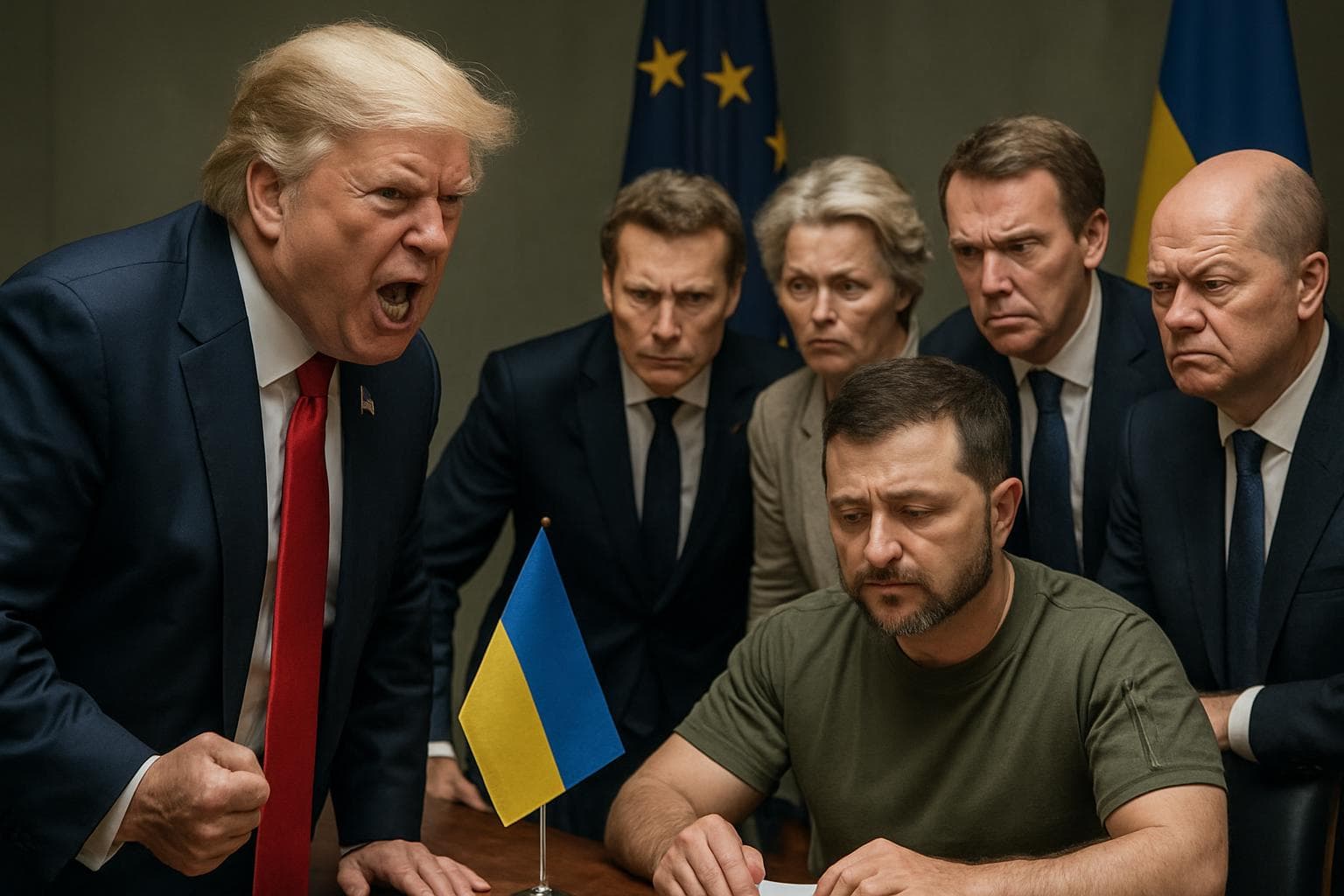
In a recent interview with Politico, former US President Donald Trump launched a scathing critique of European leaders, labeling them as "weak" and "decaying." He suggested that the United States might reconsider its support for Ukraine unless Kyiv agrees to territorial concessions to Russia. Trump's remarks have intensified the ongoing debate over the future of US-European relations and the strategy to end the Russia-Ukraine conflict.
Trump's Controversial Stance
Trump's comments have drawn sharp reactions from European leaders, who are concerned about the implications of his statements on the US-European alliance. In the interview, Trump accused Europe of failing to manage immigration effectively and claimed that the continent was "destroying itself." He also suggested that Ukrainian President Volodymyr Zelenskyy should "play ball" by ceding territory to Moscow, asserting that Russia holds the "upper hand" in negotiations.
European Leaders Respond
European leaders have been quick to respond to Trump's assertions. Germany's Chancellor Friedrich Merz dismissed the notion that European democracy needs saving, emphasizing the importance of a security policy independent of Washington. The EU's foreign policy chief, Kaja Kallas, and European Council President António Costa also expressed their disapproval of the US national security strategy, which they view as a provocation.
Zelenskyy's Diplomatic Efforts
Amidst the diplomatic tensions, President Zelenskyy is actively working with European allies to develop a comprehensive peace plan for Ukraine. Zelenskyy announced that the plan, which aims to end the ongoing conflict with Russia, will soon be presented to the United States. He also addressed Trump's criticism by expressing his willingness to hold wartime elections, provided that security is guaranteed by international partners.
Implications for US-European Relations
Trump's remarks have further complicated the already strained relationship between the US and Europe. The US national security strategy, which criticizes European immigration policies and suggests a shift in alliance dynamics, has been met with resistance from European leaders. As the situation unfolds, the focus remains on how these developments will impact the broader geopolitical landscape and the quest for peace in Ukraine.
WHAT THIS MIGHT MEAN
The ongoing tensions between the US and Europe over Ukraine could have significant implications for international diplomacy. If the US reduces its support for Ukraine, European nations may need to step up their efforts to broker a peace deal independently. This could lead to a more unified European security policy, as suggested by Chancellor Merz. On the other hand, if Zelenskyy's peace plan gains traction, it could pave the way for a resolution to the conflict, potentially easing tensions between the US and its European allies. However, the success of these diplomatic efforts will largely depend on the willingness of all parties to engage in constructive dialogue and compromise.
Related Articles
Cuba Faces Widespread Blackout Amid Deepening Fuel Crisis
Russian LNG Tanker Sinks in Mediterranean Amid Accusations of Ukrainian Drone Attack

UK Faces Dilemmas Amid Iran Conflict and China Spying Allegations
US Supreme Court Ruling Sparks Trade Uncertainty in Asia and Beyond
China Sets Lowest GDP Growth Target in Decades Amid Economic Challenges

Tech Giants Pledge to Cover AI Data Center Energy Costs Amid Rising Electricity Concerns
Trump's Criticism of Europe Sparks Tensions Over Ukraine Support
In This Article
 Alex Carter| Published
 HIGHLIGHTS
- Donald Trump criticized European leaders as "weak" and hinted at reducing US support for Ukraine, suggesting Kyiv should cede territory to Russia.
- European leaders, including Germany's Chancellor Friedrich Merz, rejected Trump's narrative, emphasizing the need for a unified European security policy.
- Ukrainian President Volodymyr Zelenskyy is preparing to present a refined peace plan to the US, developed in collaboration with European allies.
- Trump accused Zelenskyy of being an obstacle to peace, while Zelenskyy countered by expressing readiness for wartime elections if security is ensured.
- The US national security strategy has been criticized by European leaders for its stance on immigration and its implications for the US-European alliance.
In a recent interview with Politico, former US President Donald Trump launched a scathing critique of European leaders, labeling them as "weak" and "decaying." He suggested that the United States might reconsider its support for Ukraine unless Kyiv agrees to territorial concessions to Russia. Trump's remarks have intensified the ongoing debate over the future of US-European relations and the strategy to end the Russia-Ukraine conflict.
Trump's Controversial Stance
Trump's comments have drawn sharp reactions from European leaders, who are concerned about the implications of his statements on the US-European alliance. In the interview, Trump accused Europe of failing to manage immigration effectively and claimed that the continent was "destroying itself." He also suggested that Ukrainian President Volodymyr Zelenskyy should "play ball" by ceding territory to Moscow, asserting that Russia holds the "upper hand" in negotiations.
European Leaders Respond
European leaders have been quick to respond to Trump's assertions. Germany's Chancellor Friedrich Merz dismissed the notion that European democracy needs saving, emphasizing the importance of a security policy independent of Washington. The EU's foreign policy chief, Kaja Kallas, and European Council President António Costa also expressed their disapproval of the US national security strategy, which they view as a provocation.
Zelenskyy's Diplomatic Efforts
Amidst the diplomatic tensions, President Zelenskyy is actively working with European allies to develop a comprehensive peace plan for Ukraine. Zelenskyy announced that the plan, which aims to end the ongoing conflict with Russia, will soon be presented to the United States. He also addressed Trump's criticism by expressing his willingness to hold wartime elections, provided that security is guaranteed by international partners.
Implications for US-European Relations
Trump's remarks have further complicated the already strained relationship between the US and Europe. The US national security strategy, which criticizes European immigration policies and suggests a shift in alliance dynamics, has been met with resistance from European leaders. As the situation unfolds, the focus remains on how these developments will impact the broader geopolitical landscape and the quest for peace in Ukraine.
WHAT THIS MIGHT MEAN
The ongoing tensions between the US and Europe over Ukraine could have significant implications for international diplomacy. If the US reduces its support for Ukraine, European nations may need to step up their efforts to broker a peace deal independently. This could lead to a more unified European security policy, as suggested by Chancellor Merz. On the other hand, if Zelenskyy's peace plan gains traction, it could pave the way for a resolution to the conflict, potentially easing tensions between the US and its European allies. However, the success of these diplomatic efforts will largely depend on the willingness of all parties to engage in constructive dialogue and compromise.
Related Articles
Cuba Faces Widespread Blackout Amid Deepening Fuel Crisis
Russian LNG Tanker Sinks in Mediterranean Amid Accusations of Ukrainian Drone Attack
UK Faces Dilemmas Amid Iran Conflict and China Spying Allegations
US Supreme Court Ruling Sparks Trade Uncertainty in Asia and Beyond
China Sets Lowest GDP Growth Target in Decades Amid Economic Challenges
Tech Giants Pledge to Cover AI Data Center Energy Costs Amid Rising Electricity Concerns