
Trump's Executive Order Paves Way for Crypto in Retirement Plans
In This Article
HIGHLIGHTS
- President Trump signed an executive order to allow cryptocurrencies and alternative assets in 401(k) retirement accounts, aiming to diversify investment options.
- The order directs the Department of Labor to review regulations within 180 days, potentially impacting the $12 trillion retirement fund market.
- Critics warn of increased risks due to the speculative nature of cryptocurrencies and higher fees associated with alternative assets.
- Trump's move aligns with his administration's broader support for the cryptocurrency sector and deregulation efforts.
- Investment management firms like State Street and Vanguard are already partnering with alternative asset managers to offer new retirement fund options.
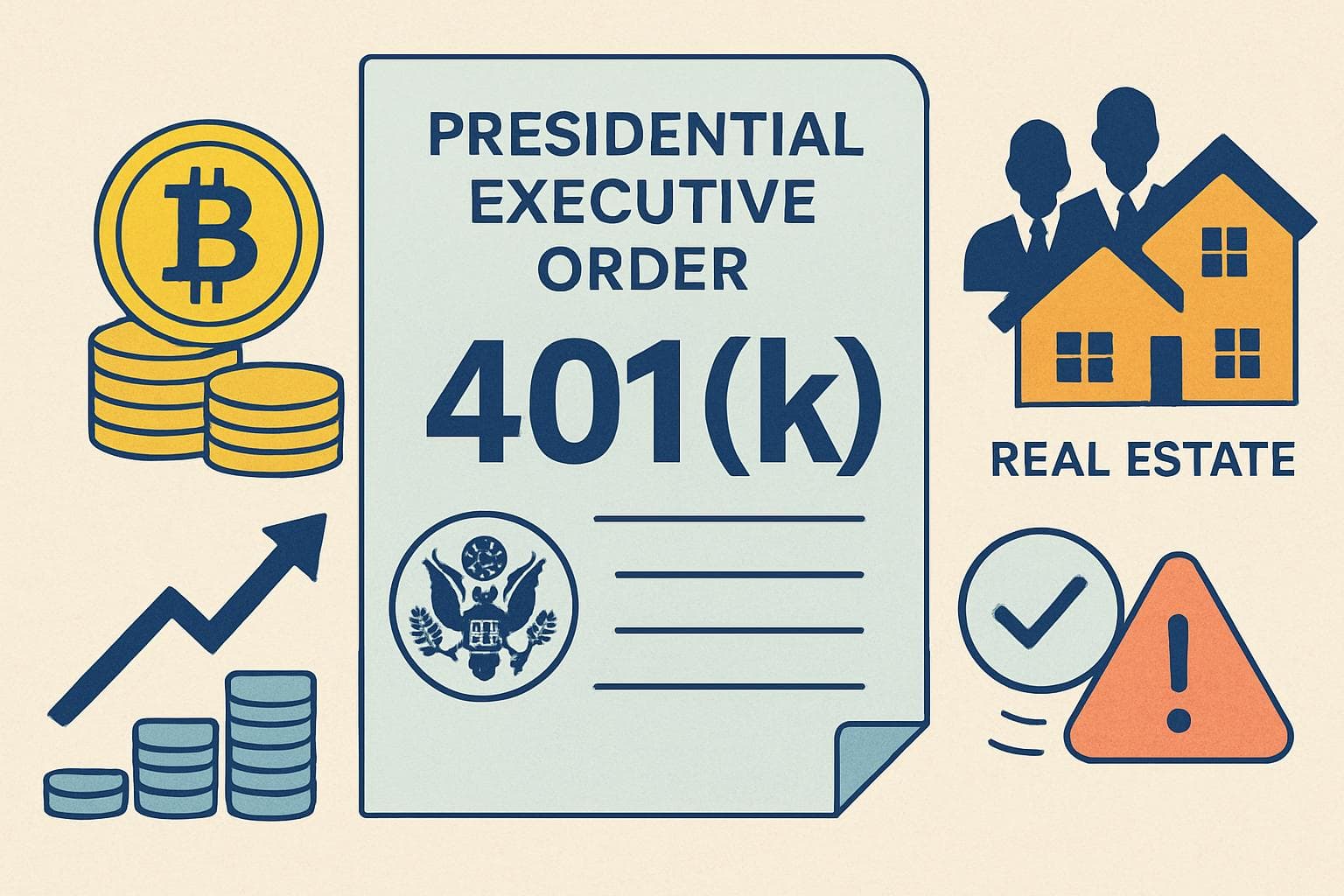
In a significant policy shift, President Donald Trump has signed an executive order aimed at expanding investment options within 401(k) retirement accounts to include cryptocurrencies and other alternative assets such as private equity and real estate. This move is part of a broader strategy to diversify retirement savings and open new funding avenues for asset managers.
Expanding Investment Horizons
The executive order, signed on Thursday, instructs the Department of Labor to review existing regulations within 180 days to facilitate the inclusion of alternative assets in retirement plans. This initiative could unlock a substantial portion of the $12 trillion market in defined contribution plans, traditionally dominated by stocks, bonds, and cash. The order is expected to benefit large asset managers by providing access to a new pool of retirement savings.
Balancing Innovation and Risk
While the order promises to broaden investment opportunities, it has sparked concerns about potential risks. Critics argue that cryptocurrencies, known for their volatility and speculative nature, could jeopardize the financial security of retirees. Anil Khurana, executive director of Georgetown University's Baratta Center for Global Business, cautioned that opening the $9 trillion 401(k) industry to highly speculative assets could be a significant misstep.
Regulatory and Political Context
Trump's order is part of his administration's ongoing efforts to support the cryptocurrency sector and reduce regulatory burdens. Previously skeptical of digital currencies, Trump has recently embraced the industry, launching his own cryptocurrency venture and advocating for the U.S. to become a global crypto hub. The order also addresses alleged "debanking" of conservatives, a contentious issue among right-wing circles.
Industry Response
In anticipation of regulatory changes, investment management giants like State Street and Vanguard have already begun forming partnerships with alternative asset managers, including Apollo Global and Blackstone, to offer private-equity-focused retirement funds. This proactive approach indicates a growing interest in diversifying retirement portfolios despite the potential risks involved.
WHAT THIS MIGHT MEAN
The executive order could lead to significant changes in the retirement investment landscape, depending on the outcome of the Department of Labor's review. If regulations are relaxed, it may encourage more employers to offer alternative assets in their retirement plans, potentially increasing both opportunities and risks for savers. However, the speculative nature of cryptocurrencies and the higher fees associated with alternative investments may deter some employers from adopting these options.
Politically, Trump's move could bolster his support among cryptocurrency enthusiasts and deregulation advocates, aligning with his administration's broader economic policies. However, it may also face opposition from those concerned about the financial stability of retirees and the potential for increased market volatility. As the regulatory review progresses, stakeholders will be closely watching for any changes that could reshape the future of retirement savings in the United States.
Related Articles

Tech Giants Pledge to Cover AI Data Center Energy Costs Amid Rising Electricity Concerns

Congress Subpoenas Attorney General Bondi in Epstein Investigation

Cuba Faces Widespread Blackout Amid Deepening Fuel Crisis

UK Faces Dilemmas Amid Iran Conflict and China Spying Allegations
Senate Blocks Resolution to Limit Trump's Military Actions in Iran

UK-Iran Tensions: Starmer Defends Cautious Approach Amid Trump Criticism
Trump's Executive Order Paves Way for Crypto in Retirement Plans
In This Article
 Daniel Rivera| Published
 HIGHLIGHTS
- President Trump signed an executive order to allow cryptocurrencies and alternative assets in 401(k) retirement accounts, aiming to diversify investment options.
- The order directs the Department of Labor to review regulations within 180 days, potentially impacting the $12 trillion retirement fund market.
- Critics warn of increased risks due to the speculative nature of cryptocurrencies and higher fees associated with alternative assets.
- Trump's move aligns with his administration's broader support for the cryptocurrency sector and deregulation efforts.
- Investment management firms like State Street and Vanguard are already partnering with alternative asset managers to offer new retirement fund options.
In a significant policy shift, President Donald Trump has signed an executive order aimed at expanding investment options within 401(k) retirement accounts to include cryptocurrencies and other alternative assets such as private equity and real estate. This move is part of a broader strategy to diversify retirement savings and open new funding avenues for asset managers.
Expanding Investment Horizons
The executive order, signed on Thursday, instructs the Department of Labor to review existing regulations within 180 days to facilitate the inclusion of alternative assets in retirement plans. This initiative could unlock a substantial portion of the $12 trillion market in defined contribution plans, traditionally dominated by stocks, bonds, and cash. The order is expected to benefit large asset managers by providing access to a new pool of retirement savings.
Balancing Innovation and Risk
While the order promises to broaden investment opportunities, it has sparked concerns about potential risks. Critics argue that cryptocurrencies, known for their volatility and speculative nature, could jeopardize the financial security of retirees. Anil Khurana, executive director of Georgetown University's Baratta Center for Global Business, cautioned that opening the $9 trillion 401(k) industry to highly speculative assets could be a significant misstep.
Regulatory and Political Context
Trump's order is part of his administration's ongoing efforts to support the cryptocurrency sector and reduce regulatory burdens. Previously skeptical of digital currencies, Trump has recently embraced the industry, launching his own cryptocurrency venture and advocating for the U.S. to become a global crypto hub. The order also addresses alleged "debanking" of conservatives, a contentious issue among right-wing circles.
Industry Response
In anticipation of regulatory changes, investment management giants like State Street and Vanguard have already begun forming partnerships with alternative asset managers, including Apollo Global and Blackstone, to offer private-equity-focused retirement funds. This proactive approach indicates a growing interest in diversifying retirement portfolios despite the potential risks involved.
WHAT THIS MIGHT MEAN
The executive order could lead to significant changes in the retirement investment landscape, depending on the outcome of the Department of Labor's review. If regulations are relaxed, it may encourage more employers to offer alternative assets in their retirement plans, potentially increasing both opportunities and risks for savers. However, the speculative nature of cryptocurrencies and the higher fees associated with alternative investments may deter some employers from adopting these options.
Politically, Trump's move could bolster his support among cryptocurrency enthusiasts and deregulation advocates, aligning with his administration's broader economic policies. However, it may also face opposition from those concerned about the financial stability of retirees and the potential for increased market volatility. As the regulatory review progresses, stakeholders will be closely watching for any changes that could reshape the future of retirement savings in the United States.
Related Articles
Tech Giants Pledge to Cover AI Data Center Energy Costs Amid Rising Electricity Concerns
Congress Subpoenas Attorney General Bondi in Epstein Investigation
Cuba Faces Widespread Blackout Amid Deepening Fuel Crisis
UK Faces Dilemmas Amid Iran Conflict and China Spying Allegations
Senate Blocks Resolution to Limit Trump's Military Actions in Iran
UK-Iran Tensions: Starmer Defends Cautious Approach Amid Trump Criticism