
Trump's Tariffs on India: Economic Impact and Global Trade Implications
In This Article
HIGHLIGHTS
- US President Donald Trump announced a 25% tariff on Indian goods, with an additional unspecified penalty for India's trade with Russia.
- The tariffs, effective from August 1, could negatively impact India's GDP, with experts predicting a potential 0.2% decrease.
- The US-India trade deficit stands at $45.7 billion, prompting Trump's tariff decision amid ongoing global trade negotiations.
- Indian stock markets reacted negatively, reflecting concerns over the economic impact of the tariffs.
- The tariffs could affect key Indian export sectors, including textiles, pharmaceuticals, and automobiles.
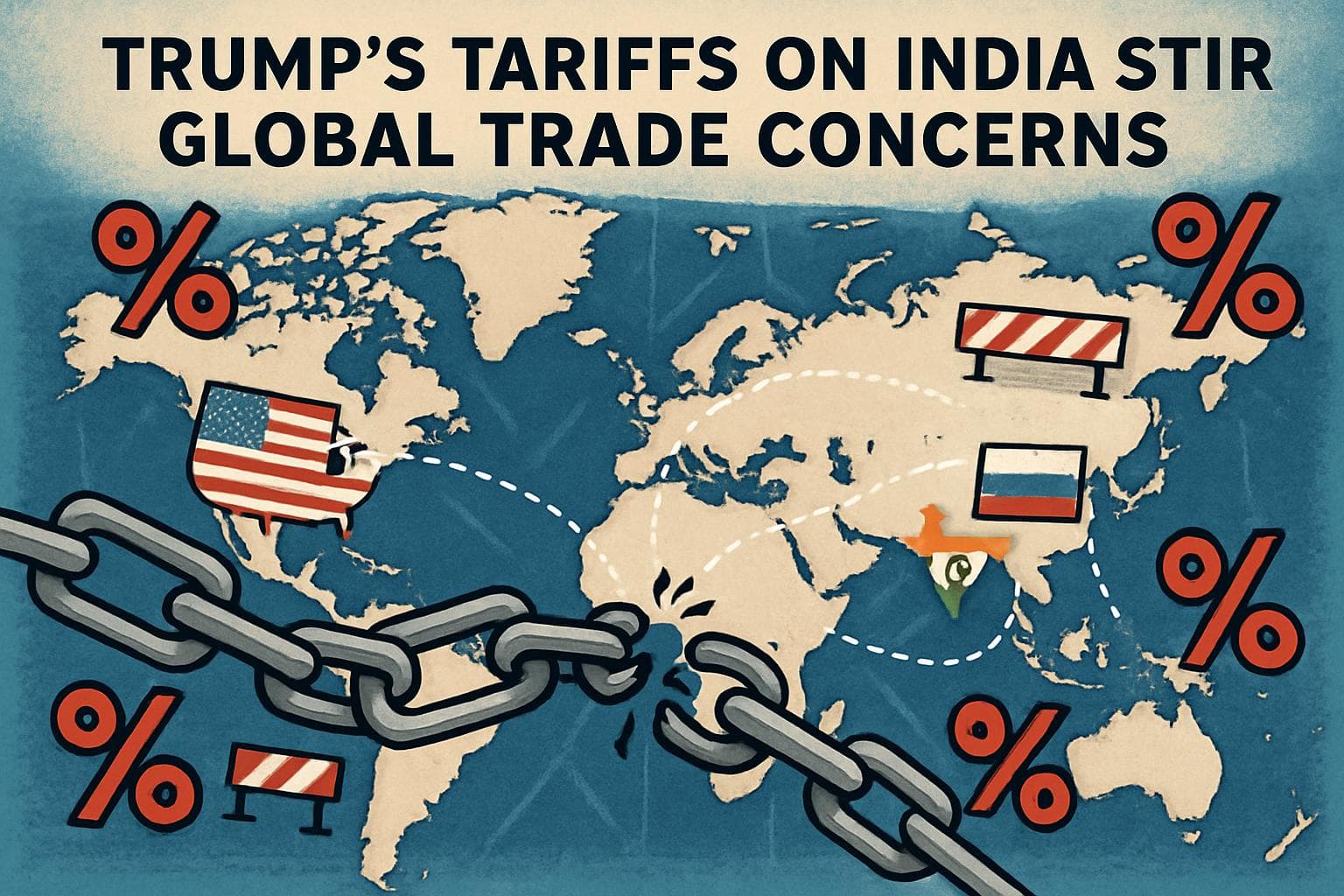
In a significant move that could reshape US-India trade relations, President Donald Trump has announced a 25% tariff on goods imported from India, coupled with an additional penalty for India's ongoing trade with Russia. The tariffs, set to take effect on August 1, have sparked concerns over their potential impact on India's economic growth and export sectors.
Tariffs and Penalties: A Blow to India's Economy
The announcement, made via Trump's Truth Social platform, has left experts speculating about the full extent of the economic repercussions. Aditi Nayar, chief economist at ratings agency Icra, noted that the proposed tariffs and penalties could pose a substantial challenge to India's GDP growth. Icra has already adjusted its GDP forecast for India from 6.5% to 6.2% for the current financial year, citing the adverse effects of the tariff hikes.
The tariffs are part of Trump's broader strategy to address the US trade deficit with India, which currently stands at $45.7 billion. The US President has criticized India's trade policies, describing them as among the most "strenuous and obnoxious" globally. Trump's decision comes amid a broader global tariff war, with countries racing to meet the August 1 deadline for trade agreements.
Market Reactions and Sectoral Impact
The Indian stock markets opened in the red following the tariff announcement, reflecting investor concerns over the potential economic fallout. Nilesh Shah, a fund manager, highlighted that the market had anticipated a trade deal aligning with long-term US-India strategic interests.
The tariffs are expected to impact several key Indian export sectors, including textiles, pharmaceuticals, and automobiles. Agneshwar Sen, a trade policy expert at EY India, warned that sustained tariffs could hinder India's competitiveness against other Asian economies like Vietnam and China.
Global Trade Negotiations and Future Prospects
As the August 1 deadline looms, countries worldwide are engaged in intense negotiations with Washington to avoid unilateral tariff hikes. Trump's announcement follows recent deals with Vietnam and the European Union, where tariffs were adjusted following negotiations.
WHAT THIS MIGHT MEAN
The imposition of tariffs on India could have far-reaching implications for global trade dynamics. If the tariffs remain in place, India may face challenges in maintaining its export competitiveness, potentially leading to a realignment of supply chains in favor of other Asian economies. Furthermore, the tariffs could strain US-India relations, complicating future trade negotiations.
Experts suggest that India's response will be crucial in determining the long-term impact of these tariffs. Engaging in diplomatic negotiations and exploring alternative markets could mitigate some of the adverse effects. Additionally, the global community will be closely watching how these developments influence the broader geopolitical landscape, particularly in the context of the ongoing Russia-Ukraine conflict.
Related Articles
Trump's New Tariff Strategy Sparks Global Trade Uncertainty
China Sets Lowest GDP Growth Target in Decades Amid Economic Challenges
US Supreme Court Ruling Sparks Trade Uncertainty in Asia and Beyond

Tech Giants Pledge to Cover AI Data Center Energy Costs Amid Rising Electricity Concerns

Russian LNG Tanker Sinks in Mediterranean Amid Accusations of Ukrainian Drone Attack

UK Faces Dilemmas Amid Iran Conflict and China Spying Allegations
Trump's Tariffs on India: Economic Impact and Global Trade Implications
In This Article
 Daniel Rivera| Published
 HIGHLIGHTS
- US President Donald Trump announced a 25% tariff on Indian goods, with an additional unspecified penalty for India's trade with Russia.
- The tariffs, effective from August 1, could negatively impact India's GDP, with experts predicting a potential 0.2% decrease.
- The US-India trade deficit stands at $45.7 billion, prompting Trump's tariff decision amid ongoing global trade negotiations.
- Indian stock markets reacted negatively, reflecting concerns over the economic impact of the tariffs.
- The tariffs could affect key Indian export sectors, including textiles, pharmaceuticals, and automobiles.
In a significant move that could reshape US-India trade relations, President Donald Trump has announced a 25% tariff on goods imported from India, coupled with an additional penalty for India's ongoing trade with Russia. The tariffs, set to take effect on August 1, have sparked concerns over their potential impact on India's economic growth and export sectors.
Tariffs and Penalties: A Blow to India's Economy
The announcement, made via Trump's Truth Social platform, has left experts speculating about the full extent of the economic repercussions. Aditi Nayar, chief economist at ratings agency Icra, noted that the proposed tariffs and penalties could pose a substantial challenge to India's GDP growth. Icra has already adjusted its GDP forecast for India from 6.5% to 6.2% for the current financial year, citing the adverse effects of the tariff hikes.
The tariffs are part of Trump's broader strategy to address the US trade deficit with India, which currently stands at $45.7 billion. The US President has criticized India's trade policies, describing them as among the most "strenuous and obnoxious" globally. Trump's decision comes amid a broader global tariff war, with countries racing to meet the August 1 deadline for trade agreements.
Market Reactions and Sectoral Impact
The Indian stock markets opened in the red following the tariff announcement, reflecting investor concerns over the potential economic fallout. Nilesh Shah, a fund manager, highlighted that the market had anticipated a trade deal aligning with long-term US-India strategic interests.
The tariffs are expected to impact several key Indian export sectors, including textiles, pharmaceuticals, and automobiles. Agneshwar Sen, a trade policy expert at EY India, warned that sustained tariffs could hinder India's competitiveness against other Asian economies like Vietnam and China.
Global Trade Negotiations and Future Prospects
As the August 1 deadline looms, countries worldwide are engaged in intense negotiations with Washington to avoid unilateral tariff hikes. Trump's announcement follows recent deals with Vietnam and the European Union, where tariffs were adjusted following negotiations.
WHAT THIS MIGHT MEAN
The imposition of tariffs on India could have far-reaching implications for global trade dynamics. If the tariffs remain in place, India may face challenges in maintaining its export competitiveness, potentially leading to a realignment of supply chains in favor of other Asian economies. Furthermore, the tariffs could strain US-India relations, complicating future trade negotiations.
Experts suggest that India's response will be crucial in determining the long-term impact of these tariffs. Engaging in diplomatic negotiations and exploring alternative markets could mitigate some of the adverse effects. Additionally, the global community will be closely watching how these developments influence the broader geopolitical landscape, particularly in the context of the ongoing Russia-Ukraine conflict.
Related Articles
Trump's New Tariff Strategy Sparks Global Trade Uncertainty
China Sets Lowest GDP Growth Target in Decades Amid Economic Challenges
US Supreme Court Ruling Sparks Trade Uncertainty in Asia and Beyond
Tech Giants Pledge to Cover AI Data Center Energy Costs Amid Rising Electricity Concerns
Russian LNG Tanker Sinks in Mediterranean Amid Accusations of Ukrainian Drone Attack
UK Faces Dilemmas Amid Iran Conflict and China Spying Allegations