
Trump Administration's Plan to Cut Jobs at Voice of America Sparks Legal Battle
In This Article
HIGHLIGHTS
- The Trump administration plans to terminate over 500 employees from Voice of America and other broadcasters under the US Agency for Global Media.
- A federal judge blocked the removal of VOA Director Michael Abramowitz, citing legal non-compliance by the administration.
- Critics argue that the job cuts threaten press freedom and America's soft power, with accusations of the outlet being "anti-Trump."
- Acting CEO Kari Lake claims the reduction will streamline operations and save taxpayer money, despite legal challenges from employees.
- The layoffs will not affect journalists in the Office of Cuba Broadcasting, which continues its Spanish-language broadcasts from Miami.
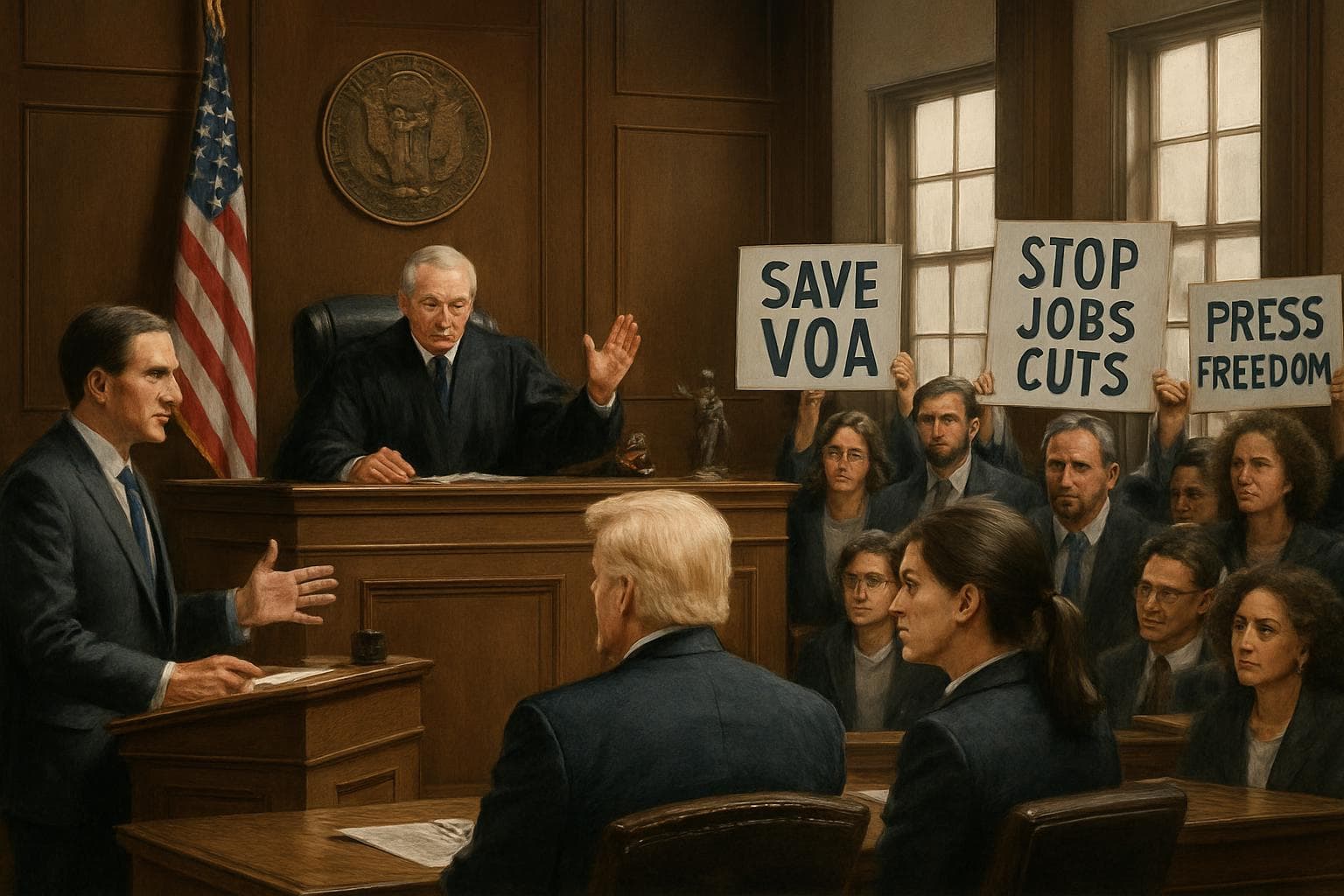
The Trump administration's decision to eliminate more than 500 positions at Voice of America (VOA) and other government-funded broadcasters has ignited a legal and political firestorm. The move, announced by Kari Lake, the acting CEO of the US Agency for Global Media (USAGM), is part of a broader effort to streamline operations and reduce federal spending. However, it has been met with fierce opposition from employees and critics who view it as an attack on press freedom.
Legal Challenges and Judicial Intervention
The announcement came shortly after a federal judge intervened to block the removal of VOA Director Michael Abramowitz. Judge Royce Lamberth ruled that the administration had not adhered to legal procedures, emphasizing that Abramowitz's dismissal would require approval from the International Broadcasting Advisory Board. This ruling underscores the ongoing legal challenges facing the administration's attempts to restructure VOA and its parent agency.
Impact on Press Freedom and Soft Power
Critics argue that the job cuts at VOA, a major global broadcaster established during World War II to counter Nazi propaganda, undermine America's ability to project soft power and promote democratic values abroad. The administration has accused VOA of being "anti-Trump" and "radical," a claim that has been strongly contested by the agency's employees. The layoffs, which will leave VOA with just 108 staff members, have raised concerns about the future of US-funded international broadcasting.
Employee Reactions and Future Prospects
Employees have expressed outrage over the planned reductions, with many on administrative leave since March. A group of agency employees has filed lawsuits to block the terminations, arguing that the process lacks the rigorous review required by Congress. Despite these challenges, Lake remains committed to her vision of a leaner, more efficient agency, stating that the reduction in force will ultimately enhance the agency's ability to fulfill its mission.
Exemptions and Continuing Operations
Notably, the layoffs will not affect journalists working in the Office of Cuba Broadcasting, which continues to deliver Spanish-language news from Miami. This division, along with other networks under USAGM, such as Radio Free Europe/Radio Liberty and Radio Free Asia, plays a crucial role in extending US influence and combating authoritarianism worldwide.
WHAT THIS MIGHT MEAN
The ongoing legal battle over the job cuts at Voice of America could have significant implications for the future of US international broadcasting. If the courts ultimately side with the employees, it could set a precedent for how government-funded media organizations are managed and protected. Conversely, if the administration prevails, it may embolden further efforts to reshape these agencies in line with political objectives.
Politically, the controversy highlights the tension between the Trump administration's domestic agenda and its international broadcasting strategy. As the legal proceedings unfold, the outcome could influence how future administrations approach the balance between cost-cutting measures and maintaining a robust global media presence.
Related Articles

US Pushes for Ukraine-Russia Peace Deal by June Amid Energy Crisis

US Military Strikes on Alleged Drug Boats Raise Legal Concerns

Geneva Peace Talks: Russia and Ukraine Seek Resolution Amid Ongoing Conflict
Clintons to Testify as Epstein Files Spark Allegations of Cover-Up
Don Lemon Pleads Not Guilty in Minnesota Church Protest Case
Judge Blocks Demotion of Senator Mark Kelly Over 'Illegal Orders' Video
Trump Administration's Plan to Cut Jobs at Voice of America Sparks Legal Battle
In This Article
 Ethan Brooks| Published
 HIGHLIGHTS
- The Trump administration plans to terminate over 500 employees from Voice of America and other broadcasters under the US Agency for Global Media.
- A federal judge blocked the removal of VOA Director Michael Abramowitz, citing legal non-compliance by the administration.
- Critics argue that the job cuts threaten press freedom and America's soft power, with accusations of the outlet being "anti-Trump."
- Acting CEO Kari Lake claims the reduction will streamline operations and save taxpayer money, despite legal challenges from employees.
- The layoffs will not affect journalists in the Office of Cuba Broadcasting, which continues its Spanish-language broadcasts from Miami.
The Trump administration's decision to eliminate more than 500 positions at Voice of America (VOA) and other government-funded broadcasters has ignited a legal and political firestorm. The move, announced by Kari Lake, the acting CEO of the US Agency for Global Media (USAGM), is part of a broader effort to streamline operations and reduce federal spending. However, it has been met with fierce opposition from employees and critics who view it as an attack on press freedom.
Legal Challenges and Judicial Intervention
The announcement came shortly after a federal judge intervened to block the removal of VOA Director Michael Abramowitz. Judge Royce Lamberth ruled that the administration had not adhered to legal procedures, emphasizing that Abramowitz's dismissal would require approval from the International Broadcasting Advisory Board. This ruling underscores the ongoing legal challenges facing the administration's attempts to restructure VOA and its parent agency.
Impact on Press Freedom and Soft Power
Critics argue that the job cuts at VOA, a major global broadcaster established during World War II to counter Nazi propaganda, undermine America's ability to project soft power and promote democratic values abroad. The administration has accused VOA of being "anti-Trump" and "radical," a claim that has been strongly contested by the agency's employees. The layoffs, which will leave VOA with just 108 staff members, have raised concerns about the future of US-funded international broadcasting.
Employee Reactions and Future Prospects
Employees have expressed outrage over the planned reductions, with many on administrative leave since March. A group of agency employees has filed lawsuits to block the terminations, arguing that the process lacks the rigorous review required by Congress. Despite these challenges, Lake remains committed to her vision of a leaner, more efficient agency, stating that the reduction in force will ultimately enhance the agency's ability to fulfill its mission.
Exemptions and Continuing Operations
Notably, the layoffs will not affect journalists working in the Office of Cuba Broadcasting, which continues to deliver Spanish-language news from Miami. This division, along with other networks under USAGM, such as Radio Free Europe/Radio Liberty and Radio Free Asia, plays a crucial role in extending US influence and combating authoritarianism worldwide.
WHAT THIS MIGHT MEAN
The ongoing legal battle over the job cuts at Voice of America could have significant implications for the future of US international broadcasting. If the courts ultimately side with the employees, it could set a precedent for how government-funded media organizations are managed and protected. Conversely, if the administration prevails, it may embolden further efforts to reshape these agencies in line with political objectives.
Politically, the controversy highlights the tension between the Trump administration's domestic agenda and its international broadcasting strategy. As the legal proceedings unfold, the outcome could influence how future administrations approach the balance between cost-cutting measures and maintaining a robust global media presence.
Related Articles
US Pushes for Ukraine-Russia Peace Deal by June Amid Energy Crisis
US Military Strikes on Alleged Drug Boats Raise Legal Concerns
Geneva Peace Talks: Russia and Ukraine Seek Resolution Amid Ongoing Conflict
Clintons to Testify as Epstein Files Spark Allegations of Cover-Up
Don Lemon Pleads Not Guilty in Minnesota Church Protest Case
Judge Blocks Demotion of Senator Mark Kelly Over 'Illegal Orders' Video