
UK Economic Growth Stalls Amid Jaguar Land Rover Cyber-Attack
In This Article
HIGHLIGHTS
- The UK economy grew by just 0.1% in the third quarter of 2025, with a notable decline in car production due to a cyber-attack on Jaguar Land Rover.
- September saw a 0.1% contraction in GDP, marking the lowest car production levels since 1952, as reported by the Society of Motor Manufacturers and Traders.
- Chancellor Rachel Reeves is expected to announce tax increases in the upcoming budget to address borrowing rules and economic challenges.
- Analysts suggest the weak growth figures may prompt the Bank of England to consider cutting interest rates in December.
- The UK's economic performance lagged behind France but was on par with Canada, amidst broader G7 economic uncertainty.
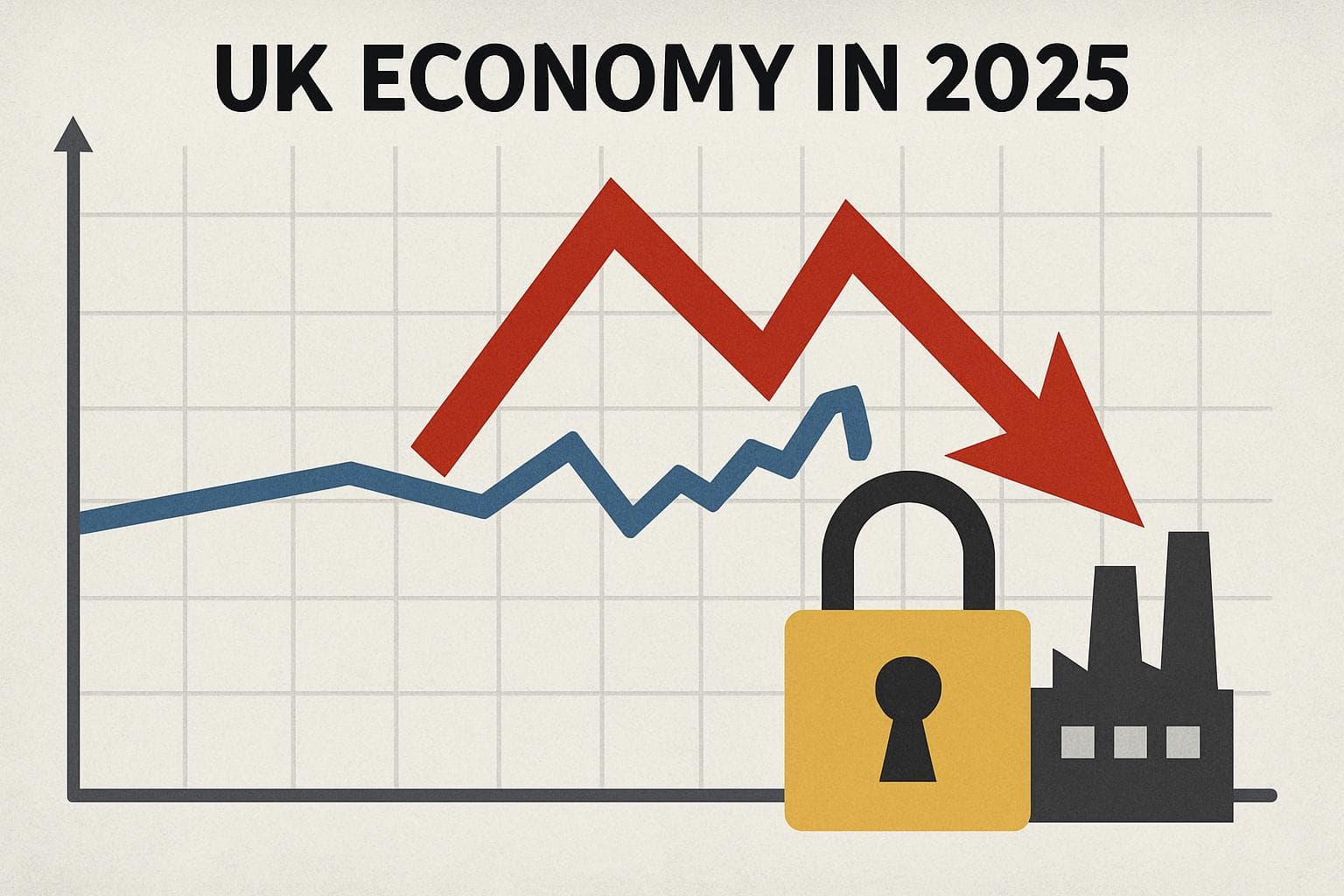
The UK economy experienced a significant slowdown in the third quarter of 2025, expanding by a mere 0.1% as the manufacturing sector grappled with the repercussions of a cyber-attack on Jaguar Land Rover (JLR). According to the Office for National Statistics (ONS), the attack led to a 28.6% drop in motor vehicle production, contributing to a 0.1% contraction in GDP for September.
Impact of the Cyber-Attack on Manufacturing
The cyber-attack on JLR, which began in late August, resulted in a five-week shutdown that severely impacted UK car production. The Society of Motor Manufacturers and Traders reported a 27% decline in car output, marking the lowest September production since 1952. The attack, considered the most economically damaging cyber event in UK history, is estimated to have cost £1.9 billion and affected 5,000 businesses.
Chancellor's Response and Economic Outlook
As the UK prepares for Chancellor Rachel Reeves's budget announcement on November 26, the economic outlook remains uncertain. Reeves acknowledged the challenges, stating, "We had the fastest-growing economy in the G7 in the first half of the year, but there's more to do to build an economy that works for working people." She is expected to propose tax increases to meet borrowing rules and address economic challenges.
Interest Rate Speculations and Broader Economic Context
The disappointing growth figures have fueled speculation that the Bank of England may cut interest rates in December. With the unemployment rate rising to 5%, the highest in four years, and economic uncertainty persisting, experts like Martin Beck of WPI Strategy suggest a rate cut is increasingly likely. The UK's growth lagged behind France's 0.5% expansion but matched Canada's 0.1% growth, reflecting broader G7 economic challenges.
WHAT THIS MIGHT MEAN
Looking ahead, the UK economy faces several potential outcomes. If the Bank of England opts to cut interest rates, it could provide a short-term boost to economic activity. However, the anticipated tax increases in the upcoming budget may offset these gains, potentially dampening consumer spending and business investment. The full recovery from the JLR cyber-attack is not expected until January 2026, suggesting that manufacturing may continue to struggle in the near term. As the UK navigates these challenges, maintaining economic momentum will be crucial to ensuring long-term stability and growth.
Related Articles
Trump Raises Import Tariffs to 15% After Supreme Court Setback
US Supreme Court Ruling on Trump's Tariffs Sparks Trade Policy Uncertainty
Trump's Tariff Strategy Faces Supreme Court Setback, New Measures Announced

Trump's Tariff Strategy Faces Supreme Court Setback, Sparks New Trade Policy

Canada and Australia Forge Strategic Partnership Amid Global Uncertainty

Breakthrough Drug Offers Hope for Children with Severe Epilepsy
UK Economic Growth Stalls Amid Jaguar Land Rover Cyber-Attack
In This Article
 Daniel Rivera| Published
 HIGHLIGHTS
- The UK economy grew by just 0.1% in the third quarter of 2025, with a notable decline in car production due to a cyber-attack on Jaguar Land Rover.
- September saw a 0.1% contraction in GDP, marking the lowest car production levels since 1952, as reported by the Society of Motor Manufacturers and Traders.
- Chancellor Rachel Reeves is expected to announce tax increases in the upcoming budget to address borrowing rules and economic challenges.
- Analysts suggest the weak growth figures may prompt the Bank of England to consider cutting interest rates in December.
- The UK's economic performance lagged behind France but was on par with Canada, amidst broader G7 economic uncertainty.
The UK economy experienced a significant slowdown in the third quarter of 2025, expanding by a mere 0.1% as the manufacturing sector grappled with the repercussions of a cyber-attack on Jaguar Land Rover (JLR). According to the Office for National Statistics (ONS), the attack led to a 28.6% drop in motor vehicle production, contributing to a 0.1% contraction in GDP for September.
Impact of the Cyber-Attack on Manufacturing
The cyber-attack on JLR, which began in late August, resulted in a five-week shutdown that severely impacted UK car production. The Society of Motor Manufacturers and Traders reported a 27% decline in car output, marking the lowest September production since 1952. The attack, considered the most economically damaging cyber event in UK history, is estimated to have cost £1.9 billion and affected 5,000 businesses.
Chancellor's Response and Economic Outlook
As the UK prepares for Chancellor Rachel Reeves's budget announcement on November 26, the economic outlook remains uncertain. Reeves acknowledged the challenges, stating, "We had the fastest-growing economy in the G7 in the first half of the year, but there's more to do to build an economy that works for working people." She is expected to propose tax increases to meet borrowing rules and address economic challenges.
Interest Rate Speculations and Broader Economic Context
The disappointing growth figures have fueled speculation that the Bank of England may cut interest rates in December. With the unemployment rate rising to 5%, the highest in four years, and economic uncertainty persisting, experts like Martin Beck of WPI Strategy suggest a rate cut is increasingly likely. The UK's growth lagged behind France's 0.5% expansion but matched Canada's 0.1% growth, reflecting broader G7 economic challenges.
WHAT THIS MIGHT MEAN
Looking ahead, the UK economy faces several potential outcomes. If the Bank of England opts to cut interest rates, it could provide a short-term boost to economic activity. However, the anticipated tax increases in the upcoming budget may offset these gains, potentially dampening consumer spending and business investment. The full recovery from the JLR cyber-attack is not expected until January 2026, suggesting that manufacturing may continue to struggle in the near term. As the UK navigates these challenges, maintaining economic momentum will be crucial to ensuring long-term stability and growth.
Related Articles
Trump Raises Import Tariffs to 15% After Supreme Court Setback
US Supreme Court Ruling on Trump's Tariffs Sparks Trade Policy Uncertainty
Trump's Tariff Strategy Faces Supreme Court Setback, New Measures Announced
Trump's Tariff Strategy Faces Supreme Court Setback, Sparks New Trade Policy
Canada and Australia Forge Strategic Partnership Amid Global Uncertainty
Breakthrough Drug Offers Hope for Children with Severe Epilepsy