
UK Government Borrowing Falls in July, Easing Pressure on Chancellor Reeves
In This Article
HIGHLIGHTS
- UK government borrowing in July was £1.1bn, £2.3bn less than the previous year, according to the Office for National Statistics.
- Despite the lower borrowing, the total for the financial year so far is £60bn, £6.7bn higher than the same period last year.
- Chancellor Rachel Reeves faces pressure to raise taxes in the autumn budget to meet fiscal rules, with potential reforms in property taxes.
- Analysts suggest Reeves might need to raise up to £27bn to maintain fiscal targets, amid a challenging economic outlook.
- The government is exploring options to increase revenue from inheritances and property taxation to address public finance pressures.
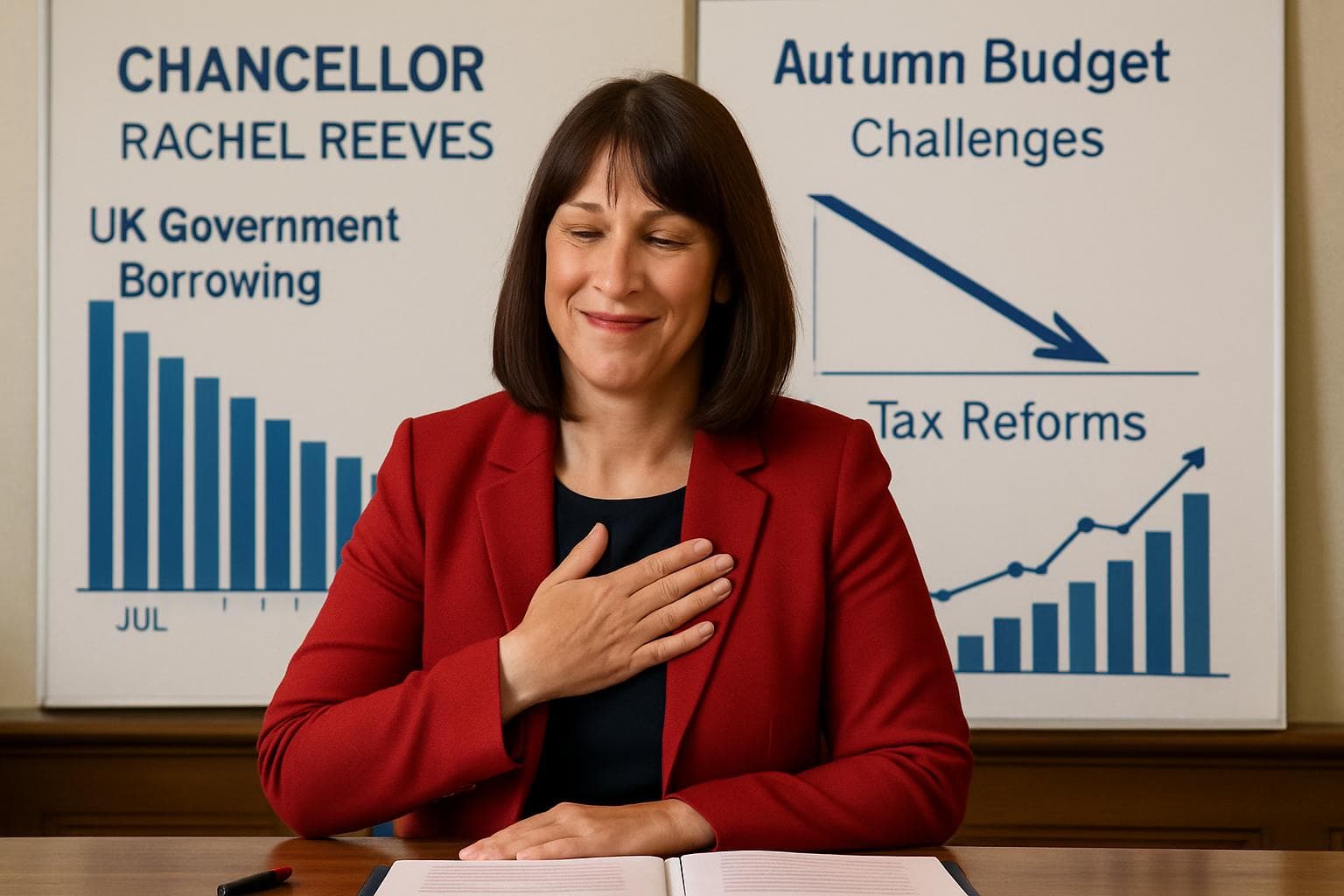
The UK government reported a significant reduction in borrowing for July, offering a temporary reprieve for Chancellor Rachel Reeves as she prepares for the upcoming autumn budget. According to the Office for National Statistics (ONS), public sector net borrowing stood at £1.1bn, a decrease of £2.3bn compared to the same month last year. This figure was notably below the City’s forecast of a £2.6bn deficit and the Office for Budget Responsibility's (OBR) prediction of £2.1bn.
Borrowing Trends and Economic Pressures
Despite the positive news for July, the broader picture remains challenging. The total borrowing for the first four months of the financial year has reached £60bn, which is £6.7bn higher than the same period last year. This marks the third-highest borrowing level for April to July since records began. The increase in borrowing is attributed to rising public spending and a cooling jobs market, which have impacted tax receipts.
Fiscal Challenges Ahead
Chancellor Reeves is under pressure to address these fiscal challenges in her autumn budget. Analysts, including Paul Dales from Capital Economics, suggest that Reeves may need to raise up to £27bn to adhere to her fiscal rules. These rules mandate that day-to-day government costs be covered by tax income by 2029-30, and that debt should fall as a share of national income by the end of the current parliament.
Potential Tax Reforms
In response to these pressures, the government is reportedly considering reforms to property and inheritance taxes. Such measures could help bridge the fiscal gap and support public finances. Darren Jones, the chief secretary to the Treasury, emphasized the importance of reducing government borrowing to alleviate the burden of national debt interest payments on taxpayers.
WHAT THIS MIGHT MEAN
Looking ahead, Chancellor Reeves faces a delicate balancing act in her autumn budget. While the reduction in borrowing for July provides some relief, the overall increase in borrowing for the year underscores the need for decisive fiscal measures. Potential tax reforms, particularly in property and inheritance taxes, could play a crucial role in addressing the fiscal shortfall. However, these measures may face political resistance and could impact economic growth. As the government navigates these challenges, the upcoming budget will be pivotal in shaping the UK's economic trajectory and public finance sustainability.
Related Articles
UK Achieves Record Budget Surplus Amid Calls for Fiscal Policy Reform

Reform UK Pledges to Retain and Reform Budget Watchdog Amid Leadership Changes

UK Government Proposes Major Reforms to Cut Pet Care Costs

UK Government Considers Removing Andrew Mountbatten-Windsor from Royal Succession Amid Arrest
Prince William Calls for Action on UK Male Suicide Rates
UK Inflation Drops to 3% in January, Sparking Interest Rate Cut Speculation
UK Government Borrowing Falls in July, Easing Pressure on Chancellor Reeves
In This Article
 Daniel Rivera| Published
 HIGHLIGHTS
- UK government borrowing in July was £1.1bn, £2.3bn less than the previous year, according to the Office for National Statistics.
- Despite the lower borrowing, the total for the financial year so far is £60bn, £6.7bn higher than the same period last year.
- Chancellor Rachel Reeves faces pressure to raise taxes in the autumn budget to meet fiscal rules, with potential reforms in property taxes.
- Analysts suggest Reeves might need to raise up to £27bn to maintain fiscal targets, amid a challenging economic outlook.
- The government is exploring options to increase revenue from inheritances and property taxation to address public finance pressures.
The UK government reported a significant reduction in borrowing for July, offering a temporary reprieve for Chancellor Rachel Reeves as she prepares for the upcoming autumn budget. According to the Office for National Statistics (ONS), public sector net borrowing stood at £1.1bn, a decrease of £2.3bn compared to the same month last year. This figure was notably below the City’s forecast of a £2.6bn deficit and the Office for Budget Responsibility's (OBR) prediction of £2.1bn.
Borrowing Trends and Economic Pressures
Despite the positive news for July, the broader picture remains challenging. The total borrowing for the first four months of the financial year has reached £60bn, which is £6.7bn higher than the same period last year. This marks the third-highest borrowing level for April to July since records began. The increase in borrowing is attributed to rising public spending and a cooling jobs market, which have impacted tax receipts.
Fiscal Challenges Ahead
Chancellor Reeves is under pressure to address these fiscal challenges in her autumn budget. Analysts, including Paul Dales from Capital Economics, suggest that Reeves may need to raise up to £27bn to adhere to her fiscal rules. These rules mandate that day-to-day government costs be covered by tax income by 2029-30, and that debt should fall as a share of national income by the end of the current parliament.
Potential Tax Reforms
In response to these pressures, the government is reportedly considering reforms to property and inheritance taxes. Such measures could help bridge the fiscal gap and support public finances. Darren Jones, the chief secretary to the Treasury, emphasized the importance of reducing government borrowing to alleviate the burden of national debt interest payments on taxpayers.
WHAT THIS MIGHT MEAN
Looking ahead, Chancellor Reeves faces a delicate balancing act in her autumn budget. While the reduction in borrowing for July provides some relief, the overall increase in borrowing for the year underscores the need for decisive fiscal measures. Potential tax reforms, particularly in property and inheritance taxes, could play a crucial role in addressing the fiscal shortfall. However, these measures may face political resistance and could impact economic growth. As the government navigates these challenges, the upcoming budget will be pivotal in shaping the UK's economic trajectory and public finance sustainability.
Related Articles
UK Achieves Record Budget Surplus Amid Calls for Fiscal Policy Reform
Reform UK Pledges to Retain and Reform Budget Watchdog Amid Leadership Changes
UK Government Proposes Major Reforms to Cut Pet Care Costs
UK Government Considers Removing Andrew Mountbatten-Windsor from Royal Succession Amid Arrest
Prince William Calls for Action on UK Male Suicide Rates
UK Inflation Drops to 3% in January, Sparking Interest Rate Cut Speculation