
Tensions Escalate as Ukraine Marks Independence Day Amid Accusations of Drone Strikes on Russian Nuclear Plant
In This Article
HIGHLIGHTS
- A Ukrainian drone attack allegedly caused a fire at the Kursk nuclear power plant in Russia, damaging a transformer but not affecting radiation levels.
- Ukraine celebrated its independence day amid ongoing conflict, with the UK showing support by flying Ukrainian flags above Downing Street.
- US President Donald Trump expressed frustration over stalled peace talks with Russia, considering further sanctions or tariffs.
- Russia claimed advances in the Donetsk region, while Ukraine reported reclaiming villages, highlighting ongoing territorial disputes.
- The IAEA has urged restraint around nuclear facilities, emphasizing the risks posed by military actions near such sites.
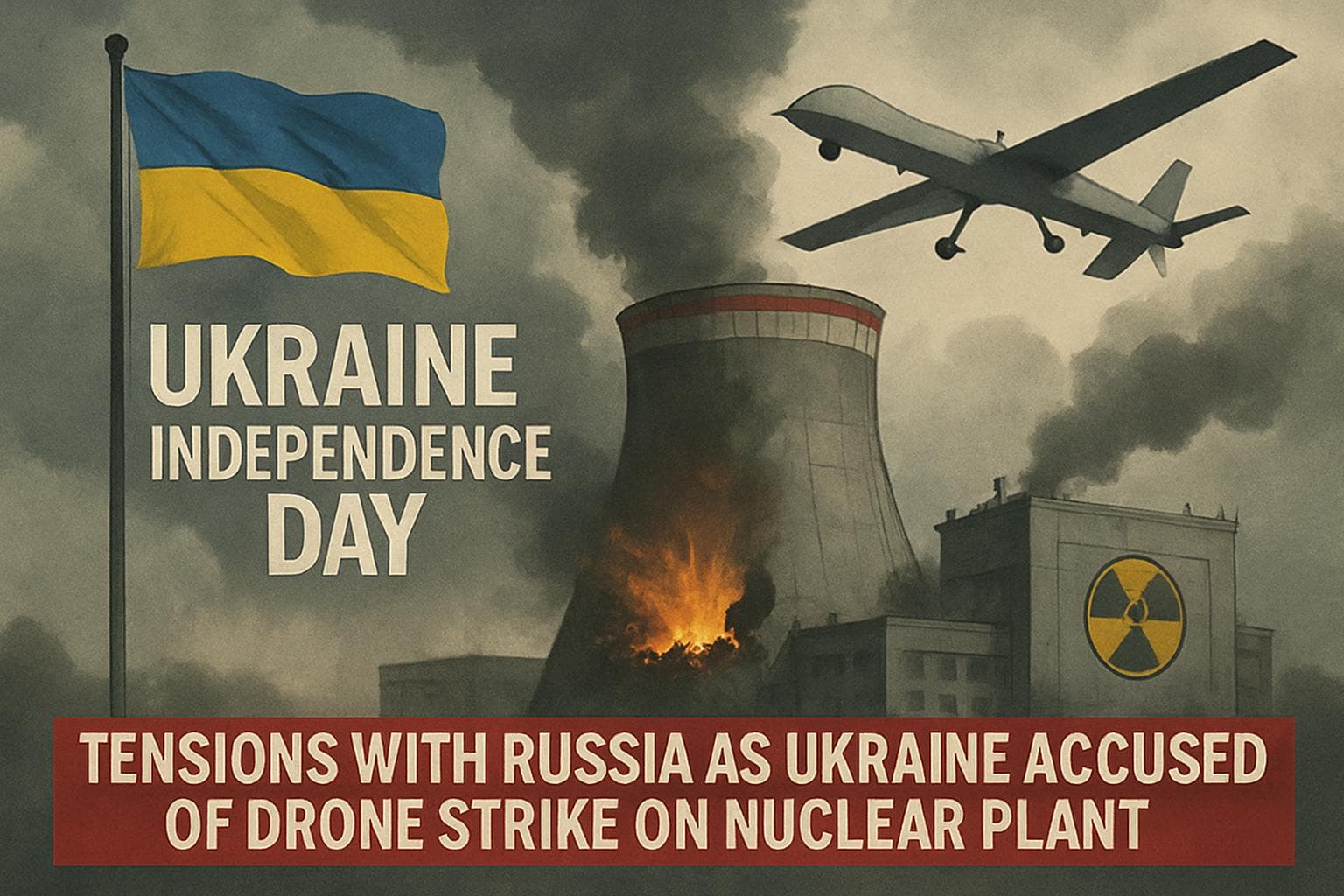
As Ukraine celebrated its independence day, tensions with Russia intensified following accusations of a Ukrainian drone attack on the Kursk nuclear power plant in western Russia. Russian officials reported that the attack caused a fire and damaged an auxiliary transformer, leading to a 50% reduction in the reactor's operating capacity. Despite the incident, radiation levels remained normal, and there were no casualties, according to the plant's statement on Telegram.
The International Atomic Energy Agency (IAEA) has repeatedly warned both nations about the dangers of military actions near nuclear facilities. The agency confirmed that radiation levels near the Kursk plant were stable, reiterating calls for maximum restraint.
In a show of solidarity, the UK government flew Ukrainian flags above Downing Street, with Defence Secretary John Healey announcing extended military support through Operation Interflex, a training program for Ukrainian soldiers.
Meanwhile, US President Donald Trump, after a summit with Russian President Vladimir Putin, expressed frustration over the lack of progress in peace negotiations. Trump hinted at imposing further economic sanctions or tariffs on Russia, stating, "I'm going to make a decision as to what we do... whether it's massive sanctions or massive tariffs or both."
On the ground, Russia claimed to have seized two villages in the Donetsk region, while Ukraine reported reclaiming three others. Ukrainian President Volodymyr Zelensky emphasized the importance of peace talks, stating that a meeting with Putin would be "the most effective way forward."
WHAT THIS MIGHT MEAN
The ongoing conflict between Russia and Ukraine continues to pose significant challenges to regional stability. The alleged drone attack on the Kursk nuclear plant underscores the potential for escalation, particularly around sensitive sites. The IAEA's calls for restraint highlight the international community's concerns over nuclear safety.
Politically, the stalled peace talks between the US and Russia could lead to increased tensions, especially if President Trump opts for further sanctions. Such measures could strain diplomatic relations and complicate efforts to reach a ceasefire.
As both nations engage in territorial disputes, the situation remains volatile. The international community, particularly European allies, may play a crucial role in mediating peace efforts and ensuring that military actions do not further endanger nuclear facilities.
Related Articles
Russian LNG Tanker Sinks in Mediterranean Amid Accusations of Ukrainian Drone Attack
Senate Blocks Resolution to Limit Trump's Military Actions in Iran
Spain's Sánchez Stands Firm Against Trump's Trade Threat Over Iran Stance
Diplomatic Tensions Rise as Trump Criticizes Starmer's Iran Policy

US-Iran Tensions Escalate Amid Renewed Nuclear Talks and Protests

Congress Subpoenas Attorney General Bondi in Epstein Investigation
Tensions Escalate as Ukraine Marks Independence Day Amid Accusations of Drone Strikes on Russian Nuclear Plant
In This Article
 Ethan Brooks| Published
 HIGHLIGHTS
- A Ukrainian drone attack allegedly caused a fire at the Kursk nuclear power plant in Russia, damaging a transformer but not affecting radiation levels.
- Ukraine celebrated its independence day amid ongoing conflict, with the UK showing support by flying Ukrainian flags above Downing Street.
- US President Donald Trump expressed frustration over stalled peace talks with Russia, considering further sanctions or tariffs.
- Russia claimed advances in the Donetsk region, while Ukraine reported reclaiming villages, highlighting ongoing territorial disputes.
- The IAEA has urged restraint around nuclear facilities, emphasizing the risks posed by military actions near such sites.
As Ukraine celebrated its independence day, tensions with Russia intensified following accusations of a Ukrainian drone attack on the Kursk nuclear power plant in western Russia. Russian officials reported that the attack caused a fire and damaged an auxiliary transformer, leading to a 50% reduction in the reactor's operating capacity. Despite the incident, radiation levels remained normal, and there were no casualties, according to the plant's statement on Telegram.
The International Atomic Energy Agency (IAEA) has repeatedly warned both nations about the dangers of military actions near nuclear facilities. The agency confirmed that radiation levels near the Kursk plant were stable, reiterating calls for maximum restraint.
In a show of solidarity, the UK government flew Ukrainian flags above Downing Street, with Defence Secretary John Healey announcing extended military support through Operation Interflex, a training program for Ukrainian soldiers.
Meanwhile, US President Donald Trump, after a summit with Russian President Vladimir Putin, expressed frustration over the lack of progress in peace negotiations. Trump hinted at imposing further economic sanctions or tariffs on Russia, stating, "I'm going to make a decision as to what we do... whether it's massive sanctions or massive tariffs or both."
On the ground, Russia claimed to have seized two villages in the Donetsk region, while Ukraine reported reclaiming three others. Ukrainian President Volodymyr Zelensky emphasized the importance of peace talks, stating that a meeting with Putin would be "the most effective way forward."
WHAT THIS MIGHT MEAN
The ongoing conflict between Russia and Ukraine continues to pose significant challenges to regional stability. The alleged drone attack on the Kursk nuclear plant underscores the potential for escalation, particularly around sensitive sites. The IAEA's calls for restraint highlight the international community's concerns over nuclear safety.
Politically, the stalled peace talks between the US and Russia could lead to increased tensions, especially if President Trump opts for further sanctions. Such measures could strain diplomatic relations and complicate efforts to reach a ceasefire.
As both nations engage in territorial disputes, the situation remains volatile. The international community, particularly European allies, may play a crucial role in mediating peace efforts and ensuring that military actions do not further endanger nuclear facilities.
Related Articles
Russian LNG Tanker Sinks in Mediterranean Amid Accusations of Ukrainian Drone Attack
Senate Blocks Resolution to Limit Trump's Military Actions in Iran
Spain's Sánchez Stands Firm Against Trump's Trade Threat Over Iran Stance
Diplomatic Tensions Rise as Trump Criticizes Starmer's Iran Policy
US-Iran Tensions Escalate Amid Renewed Nuclear Talks and Protests
Congress Subpoenas Attorney General Bondi in Epstein Investigation