
Ukraine Faces Critical Decision as US Peace Plan Sparks Controversy
In This Article
HIGHLIGHTS
- Ukraine's allies are set to discuss a US peace plan at the G20 summit, which has been criticized for favoring Moscow.
- President Zelensky warns Ukraine faces a critical decision between losing US support or compromising its dignity.
- The US has given Ukraine a deadline until Thanksgiving to accept the peace proposal, which includes ceding territory to Russia.
- European leaders emphasize Ukraine's central role in deciding its future, rejecting any agreement without Kyiv's consent.
- Russia claims the US plan could be a basis for peace, while continuing military advances in Ukraine.
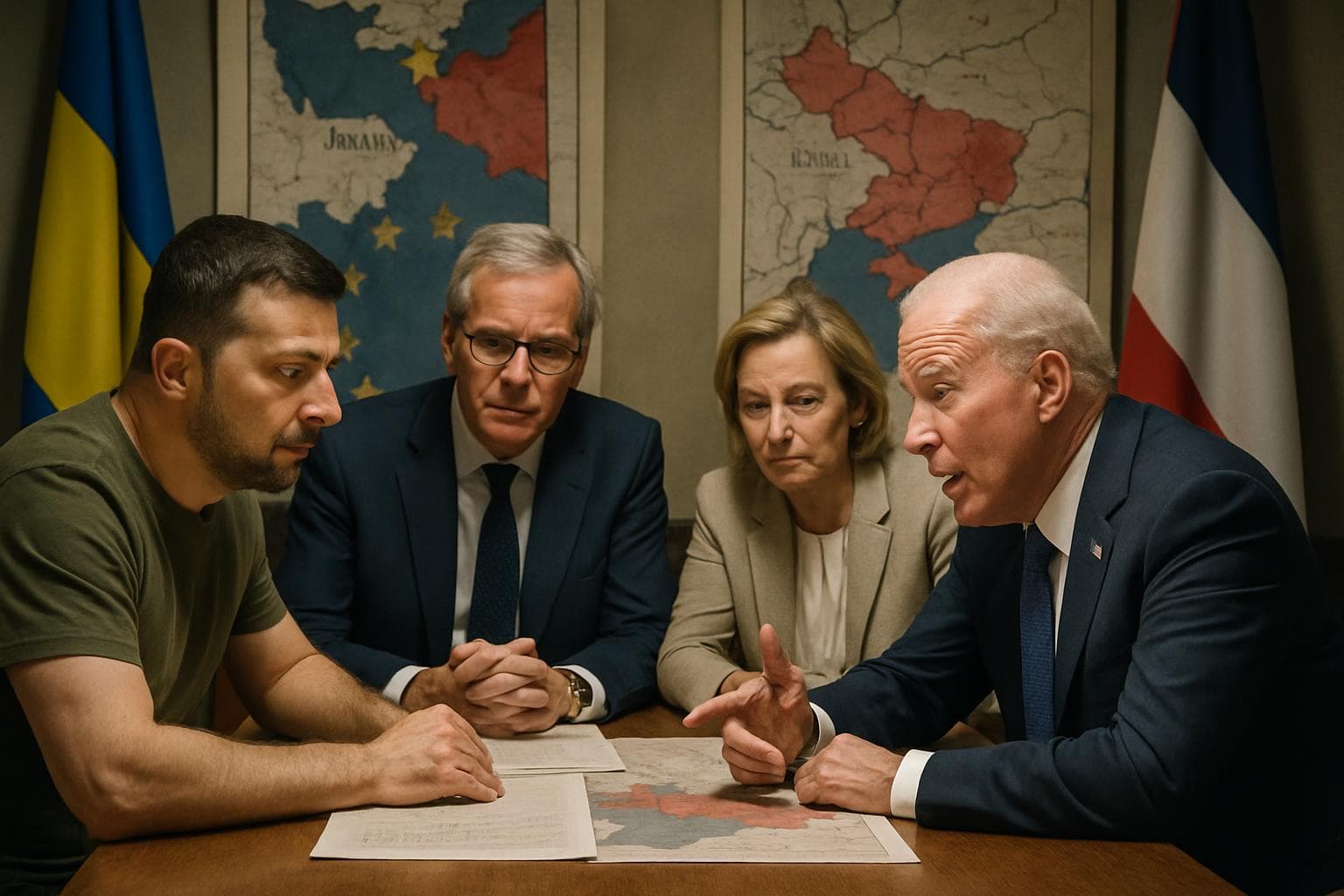
As the G20 summit convenes in South Africa, Ukraine's allies are preparing to discuss a contentious US peace plan aimed at ending the ongoing conflict with Russia. The proposal, which has been criticized for being overly favorable to Moscow, has placed Ukraine in a precarious position, with President Volodymyr Zelensky warning of a pivotal moment in the nation's history.
US Peace Plan Under Scrutiny
The US-drafted peace plan, leaked to the public, suggests concessions that Ukraine had previously rejected, including ceding control of certain eastern territories and reducing its military size. The plan also demands that Ukraine pledge not to join NATO, a long-standing demand from the Kremlin. President Donald Trump has set a deadline for Ukraine to accept the proposal by Thanksgiving, warning that failure to do so could result in further territorial losses to Russia.
European Leaders Stand Firm
European leaders have reiterated that Ukraine must have a decisive role in shaping its future. Ursula von der Leyen, President of the European Commission, and António Costa, President of the European Council, emphasized that any agreement must be made with Ukraine's full participation. They plan to discuss the US proposal further at the G20 summit and an upcoming EU-AU meeting in Angola.
Zelensky's Dilemma
President Zelensky has expressed deep concerns about the proposed deal, stating that Ukraine is at risk of losing a key ally in the US or compromising its national dignity. In a national address, he vowed not to betray Ukraine's interests and expressed a desire to work constructively with the US to amend the plan. Zelensky highlighted the ongoing support from European partners, who recognize Ukraine as a crucial barrier against Russian aggression.
Russia's Position
Russian President Vladimir Putin has acknowledged receiving the US proposals and suggested they could serve as a foundation for a peaceful resolution. However, he also noted that Russian forces continue to make advances in Ukraine, underscoring the urgency of reaching a diplomatic solution.
WHAT THIS MIGHT MEAN
The upcoming discussions at the G20 summit could significantly influence the trajectory of the Russia-Ukraine conflict. If Ukraine rejects the US peace plan, it risks straining relations with a major ally, potentially impacting military and economic support. Conversely, accepting the plan could lead to domestic backlash and further territorial concessions to Russia. European leaders' insistence on Ukraine's involvement in any agreement may help bolster Kyiv's negotiating position. However, the ongoing military advances by Russian forces add pressure to reach a resolution swiftly. As the deadline approaches, the international community will be closely watching how these diplomatic efforts unfold and their implications for regional stability.
Related Articles
Russian LNG Tanker Sinks in Mediterranean Amid Accusations of Ukrainian Drone Attack

UK-Iran Tensions: Starmer Defends Cautious Approach Amid Trump Criticism

Tech Giants Pledge to Cover AI Data Center Energy Costs Amid Rising Electricity Concerns
Spain's Sánchez Stands Firm Against Trump's Trade Threat Over Iran Stance
Diplomatic Tensions Rise as Trump Criticizes Starmer's Iran Policy
Canada and Australia Forge Strategic Partnership Amid Global Uncertainty
Ukraine Faces Critical Decision as US Peace Plan Sparks Controversy
In This Article
 Alex Carter| Published
 HIGHLIGHTS
- Ukraine's allies are set to discuss a US peace plan at the G20 summit, which has been criticized for favoring Moscow.
- President Zelensky warns Ukraine faces a critical decision between losing US support or compromising its dignity.
- The US has given Ukraine a deadline until Thanksgiving to accept the peace proposal, which includes ceding territory to Russia.
- European leaders emphasize Ukraine's central role in deciding its future, rejecting any agreement without Kyiv's consent.
- Russia claims the US plan could be a basis for peace, while continuing military advances in Ukraine.
As the G20 summit convenes in South Africa, Ukraine's allies are preparing to discuss a contentious US peace plan aimed at ending the ongoing conflict with Russia. The proposal, which has been criticized for being overly favorable to Moscow, has placed Ukraine in a precarious position, with President Volodymyr Zelensky warning of a pivotal moment in the nation's history.
US Peace Plan Under Scrutiny
The US-drafted peace plan, leaked to the public, suggests concessions that Ukraine had previously rejected, including ceding control of certain eastern territories and reducing its military size. The plan also demands that Ukraine pledge not to join NATO, a long-standing demand from the Kremlin. President Donald Trump has set a deadline for Ukraine to accept the proposal by Thanksgiving, warning that failure to do so could result in further territorial losses to Russia.
European Leaders Stand Firm
European leaders have reiterated that Ukraine must have a decisive role in shaping its future. Ursula von der Leyen, President of the European Commission, and António Costa, President of the European Council, emphasized that any agreement must be made with Ukraine's full participation. They plan to discuss the US proposal further at the G20 summit and an upcoming EU-AU meeting in Angola.
Zelensky's Dilemma
President Zelensky has expressed deep concerns about the proposed deal, stating that Ukraine is at risk of losing a key ally in the US or compromising its national dignity. In a national address, he vowed not to betray Ukraine's interests and expressed a desire to work constructively with the US to amend the plan. Zelensky highlighted the ongoing support from European partners, who recognize Ukraine as a crucial barrier against Russian aggression.
Russia's Position
Russian President Vladimir Putin has acknowledged receiving the US proposals and suggested they could serve as a foundation for a peaceful resolution. However, he also noted that Russian forces continue to make advances in Ukraine, underscoring the urgency of reaching a diplomatic solution.
WHAT THIS MIGHT MEAN
The upcoming discussions at the G20 summit could significantly influence the trajectory of the Russia-Ukraine conflict. If Ukraine rejects the US peace plan, it risks straining relations with a major ally, potentially impacting military and economic support. Conversely, accepting the plan could lead to domestic backlash and further territorial concessions to Russia. European leaders' insistence on Ukraine's involvement in any agreement may help bolster Kyiv's negotiating position. However, the ongoing military advances by Russian forces add pressure to reach a resolution swiftly. As the deadline approaches, the international community will be closely watching how these diplomatic efforts unfold and their implications for regional stability.
Related Articles
Russian LNG Tanker Sinks in Mediterranean Amid Accusations of Ukrainian Drone Attack
UK-Iran Tensions: Starmer Defends Cautious Approach Amid Trump Criticism
Tech Giants Pledge to Cover AI Data Center Energy Costs Amid Rising Electricity Concerns
Spain's Sánchez Stands Firm Against Trump's Trade Threat Over Iran Stance
Diplomatic Tensions Rise as Trump Criticizes Starmer's Iran Policy
Canada and Australia Forge Strategic Partnership Amid Global Uncertainty