
UN Endorses Trump's Controversial Gaza Peace Plan Amidst Global Debate
In This Article
HIGHLIGHTS
- The UN Security Council approved a US-drafted resolution endorsing Trump's 20-point Gaza peace plan, with 13 votes in favor and abstentions from Russia and China.
- The resolution includes the deployment of an International Stabilization Force (ISF) and a transitional governance body, the Board of Peace, chaired by Trump.
- The plan suggests a potential path to Palestinian statehood, a point of contention with Israel, which opposes any Palestinian state west of the Jordan River.
- Hamas rejected the resolution, criticizing it as an imposition of international control over Gaza and opposing the disarmament clause.
- The resolution aims to solidify a ceasefire between Israel and Hamas, following a conflict that began with a Hamas-led attack on October 7, 2023.
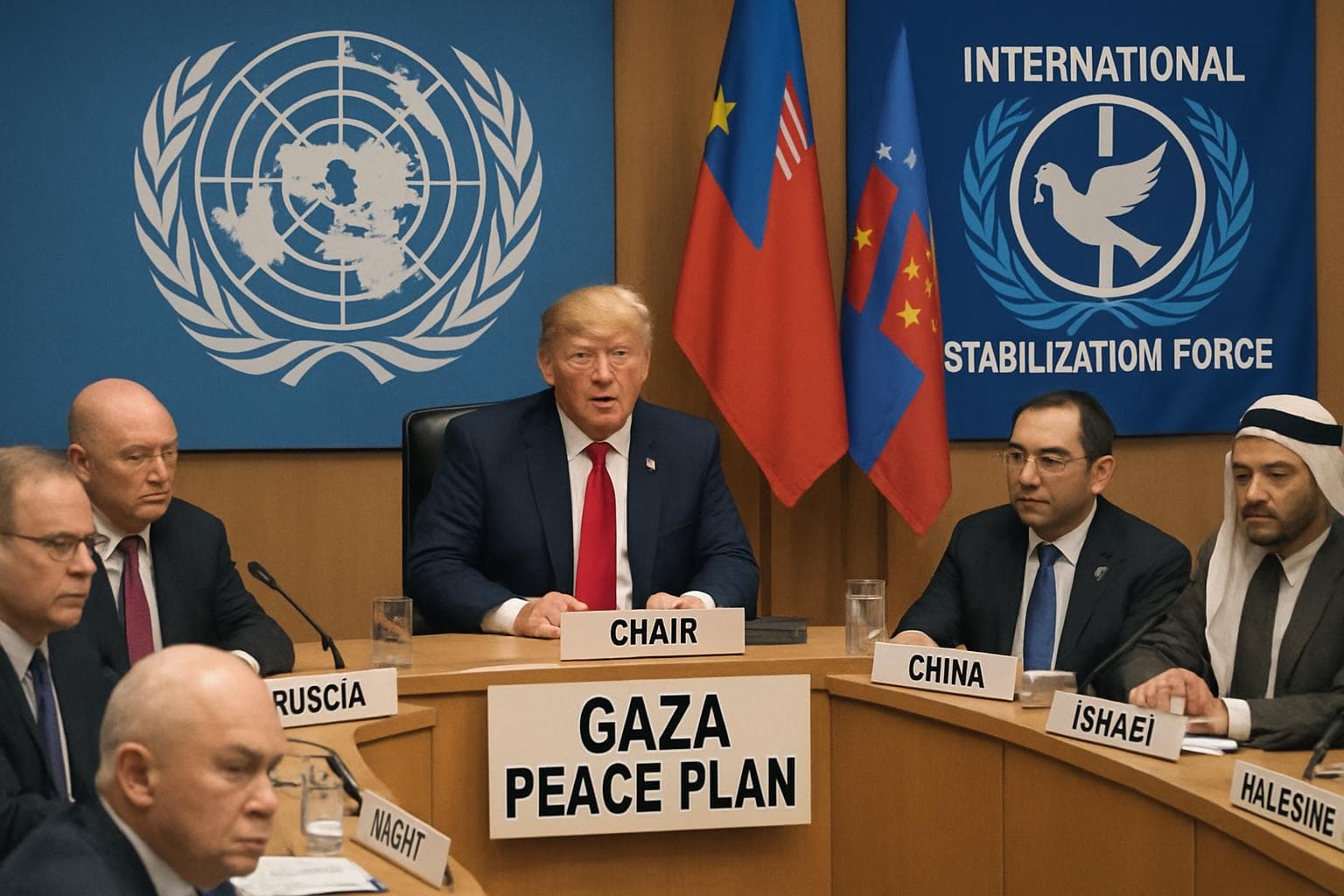
The United Nations Security Council has endorsed a US-drafted resolution supporting President Donald Trump's ambitious 20-point peace plan for Gaza. The resolution, which passed with 13 votes in favor and abstentions from Russia and China, aims to stabilize the volatile region through the deployment of an International Stabilization Force (ISF) and the establishment of a transitional governance body known as the Board of Peace, chaired by Trump himself.
International Stabilization Force and Governance
Central to the resolution is the creation of the ISF, which will work alongside Israel, Egypt, and a newly trained Palestinian police force to secure border areas and oversee the disarmament of non-state armed groups, including Hamas. The ISF's mandate includes protecting civilians and ensuring the safe passage of humanitarian aid. The Board of Peace, a transitional governance body, will oversee Gaza's reconstruction and administration, with Trump expected to play a leading role.
Path to Palestinian Statehood
A significant aspect of the resolution is its reference to a potential pathway to Palestinian statehood, a concession made to secure backing from Arab and Islamic nations. However, this prospect has been met with staunch opposition from Israeli Prime Minister Benjamin Netanyahu, who reiterated his government's refusal to accept a Palestinian state west of the Jordan River.
Hamas Rejection and Regional Reactions
Hamas has firmly rejected the resolution, condemning it as an attempt to impose international control over Gaza and criticizing the disarmament clause as a violation of Palestinian sovereignty. The militant group insists on maintaining its right to resistance and has dismissed the ISF's role as biased.
Ceasefire and Humanitarian Concerns
The resolution seeks to transform the fragile ceasefire between Israel and Hamas into lasting peace. The conflict, which erupted on October 7, 2023, resulted in significant casualties, with over 1,200 Israelis killed and more than 69,000 Palestinians losing their lives in subsequent Israeli military actions. The international community remains hopeful that the resolution will pave the way for reconstruction and humanitarian relief in Gaza.
WHAT THIS MIGHT MEAN
The endorsement of Trump's Gaza peace plan by the UN Security Council marks a pivotal moment in Middle Eastern diplomacy. However, the path forward is fraught with challenges. Israel's opposition to Palestinian statehood could hinder the resolution's implementation, potentially leading to renewed tensions. Meanwhile, Hamas's rejection of the plan raises questions about the ISF's ability to operate effectively in Gaza.
Experts suggest that the success of the resolution hinges on the cooperation of regional powers and the willingness of international contributors to support the ISF. The inclusion of a pathway to Palestinian statehood, albeit vague, may serve as a diplomatic tool to engage Arab nations in the peace process. Ultimately, the resolution's impact will depend on its translation into concrete actions that address the humanitarian needs of Gaza's population while navigating the complex political landscape of the region.
Related Articles

UK Faces Dilemmas Amid Iran Conflict and China Spying Allegations
China Sets Lowest GDP Growth Target in Decades Amid Economic Challenges

Cuba Faces Widespread Blackout Amid Deepening Fuel Crisis
Russian LNG Tanker Sinks in Mediterranean Amid Accusations of Ukrainian Drone Attack

Middle East Conflict Drives UK Energy Prices to New Highs

US and Israel Intensify Military Campaign as Iran's Capabilities Dwindle
UN Endorses Trump's Controversial Gaza Peace Plan Amidst Global Debate
In This Article
 James Okoro| Published
 HIGHLIGHTS
- The UN Security Council approved a US-drafted resolution endorsing Trump's 20-point Gaza peace plan, with 13 votes in favor and abstentions from Russia and China.
- The resolution includes the deployment of an International Stabilization Force (ISF) and a transitional governance body, the Board of Peace, chaired by Trump.
- The plan suggests a potential path to Palestinian statehood, a point of contention with Israel, which opposes any Palestinian state west of the Jordan River.
- Hamas rejected the resolution, criticizing it as an imposition of international control over Gaza and opposing the disarmament clause.
- The resolution aims to solidify a ceasefire between Israel and Hamas, following a conflict that began with a Hamas-led attack on October 7, 2023.
The United Nations Security Council has endorsed a US-drafted resolution supporting President Donald Trump's ambitious 20-point peace plan for Gaza. The resolution, which passed with 13 votes in favor and abstentions from Russia and China, aims to stabilize the volatile region through the deployment of an International Stabilization Force (ISF) and the establishment of a transitional governance body known as the Board of Peace, chaired by Trump himself.
International Stabilization Force and Governance
Central to the resolution is the creation of the ISF, which will work alongside Israel, Egypt, and a newly trained Palestinian police force to secure border areas and oversee the disarmament of non-state armed groups, including Hamas. The ISF's mandate includes protecting civilians and ensuring the safe passage of humanitarian aid. The Board of Peace, a transitional governance body, will oversee Gaza's reconstruction and administration, with Trump expected to play a leading role.
Path to Palestinian Statehood
A significant aspect of the resolution is its reference to a potential pathway to Palestinian statehood, a concession made to secure backing from Arab and Islamic nations. However, this prospect has been met with staunch opposition from Israeli Prime Minister Benjamin Netanyahu, who reiterated his government's refusal to accept a Palestinian state west of the Jordan River.
Hamas Rejection and Regional Reactions
Hamas has firmly rejected the resolution, condemning it as an attempt to impose international control over Gaza and criticizing the disarmament clause as a violation of Palestinian sovereignty. The militant group insists on maintaining its right to resistance and has dismissed the ISF's role as biased.
Ceasefire and Humanitarian Concerns
The resolution seeks to transform the fragile ceasefire between Israel and Hamas into lasting peace. The conflict, which erupted on October 7, 2023, resulted in significant casualties, with over 1,200 Israelis killed and more than 69,000 Palestinians losing their lives in subsequent Israeli military actions. The international community remains hopeful that the resolution will pave the way for reconstruction and humanitarian relief in Gaza.
WHAT THIS MIGHT MEAN
The endorsement of Trump's Gaza peace plan by the UN Security Council marks a pivotal moment in Middle Eastern diplomacy. However, the path forward is fraught with challenges. Israel's opposition to Palestinian statehood could hinder the resolution's implementation, potentially leading to renewed tensions. Meanwhile, Hamas's rejection of the plan raises questions about the ISF's ability to operate effectively in Gaza.
Experts suggest that the success of the resolution hinges on the cooperation of regional powers and the willingness of international contributors to support the ISF. The inclusion of a pathway to Palestinian statehood, albeit vague, may serve as a diplomatic tool to engage Arab nations in the peace process. Ultimately, the resolution's impact will depend on its translation into concrete actions that address the humanitarian needs of Gaza's population while navigating the complex political landscape of the region.
Related Articles
UK Faces Dilemmas Amid Iran Conflict and China Spying Allegations
China Sets Lowest GDP Growth Target in Decades Amid Economic Challenges
Cuba Faces Widespread Blackout Amid Deepening Fuel Crisis
Russian LNG Tanker Sinks in Mediterranean Amid Accusations of Ukrainian Drone Attack
Middle East Conflict Drives UK Energy Prices to New Highs
US and Israel Intensify Military Campaign as Iran's Capabilities Dwindle