
US Aircraft Carrier's Arrival in Caribbean Heightens Tensions with Venezuela
In This Article
HIGHLIGHTS
- The USS Gerald R Ford, the world's largest aircraft carrier, has arrived in the Caribbean, escalating US military presence in the region.
- The deployment is part of the US's strategy to combat drug trafficking, with at least 19 strikes on alleged drug boats since September.
- Venezuelan President Nicolas Maduro has accused the US of fabricating a crisis to destabilize his government.
- The US military buildup has strained relations with Colombia, leading President Gustavo Petro to halt intelligence sharing with the US.
- The situation echoes historical tensions, reminiscent of the 1989 Panama invasion, raising concerns over human rights and regional stability.
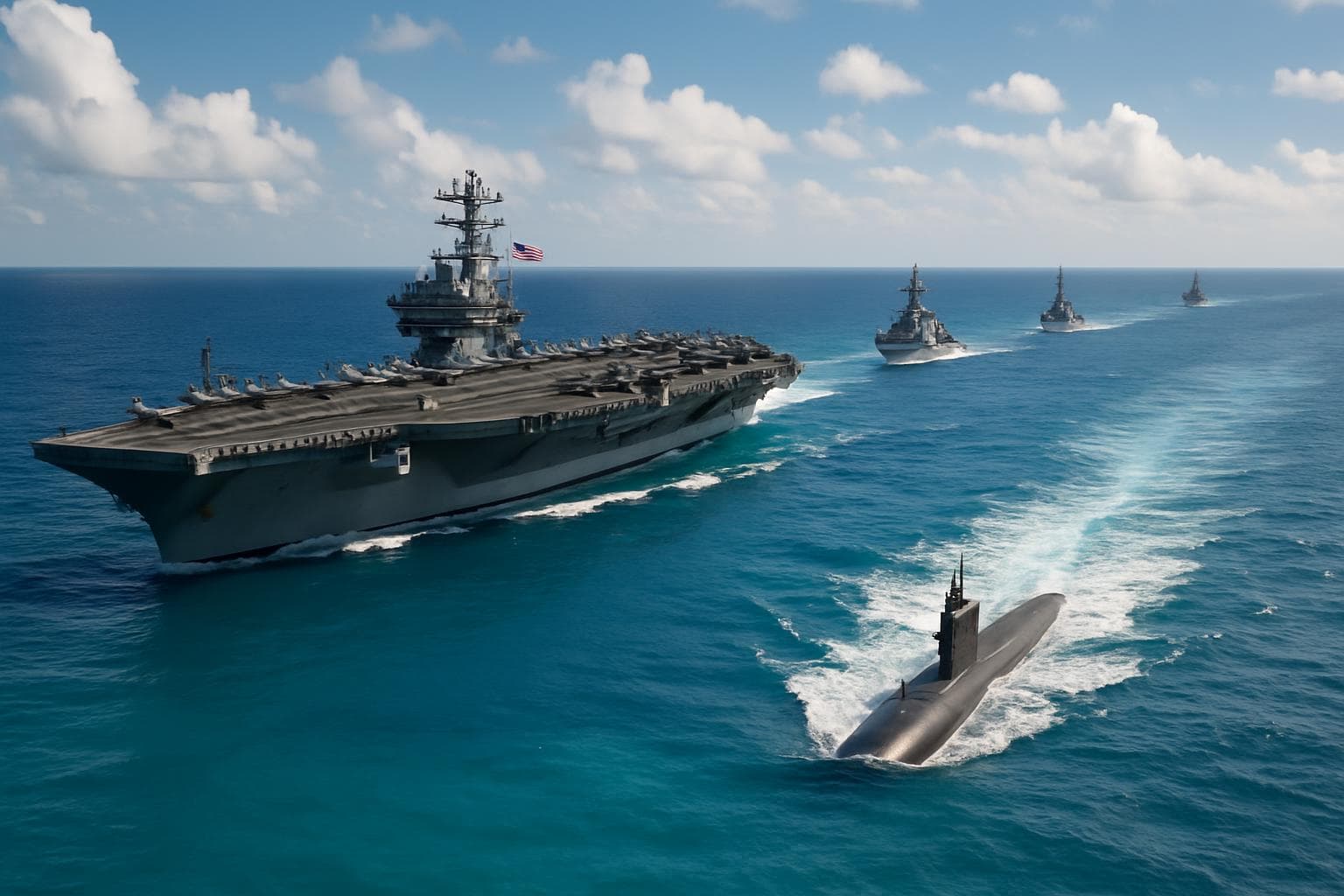
The arrival of the USS Gerald R Ford, the world's largest aircraft carrier, in the Caribbean marks a significant escalation in US military presence in Latin America. This move, confirmed by the US Navy, is part of a broader strategy to combat drug trafficking in the region, a campaign that has already resulted in at least 19 strikes on alleged drug boats since September, killing 76 people.
Military Buildup and Strategic Objectives
The deployment of the USS Gerald R Ford, along with its accompanying strike group, underscores the US's commitment to disrupting illicit activities in the Caribbean and the eastern Pacific. Pentagon spokesperson Sean Parnell stated that the carrier's presence would enhance the US's capacity to detect and dismantle transnational criminal organizations. This military buildup, which includes guided-missile destroyers and a nuclear-powered submarine, represents the largest US military presence in the region since the 1989 Panama invasion.
Venezuelan Response and Regional Tensions
Venezuelan President Nicolas Maduro has condemned the US's actions, accusing it of fabricating a crisis to undermine his government. In response, Venezuela has announced a "massive deployment" of its own military forces, including land, sea, and air units, to counter the US naval presence. The situation has further strained US relations with Colombia, where President Gustavo Petro has suspended intelligence sharing with the US, citing concerns over human rights violations in the ongoing drug war.
Historical Echoes and Human Rights Concerns
The current military escalation has drawn comparisons to past US interventions in Latin America, particularly the 1989 invasion of Panama. Critics argue that the aggressive stance could lead to violations of human rights and destabilize the region. Despite these concerns, the Trump administration maintains that the military actions are necessary to stem the flow of narcotics into the US.
WHAT THIS MIGHT MEAN
The arrival of the USS Gerald R Ford in the Caribbean could lead to increased diplomatic tensions between the US and Venezuela, potentially affecting regional stability. If the military buildup continues, it may provoke further military responses from Venezuela and its allies, escalating the situation. Experts warn that without diplomatic engagement, the risk of conflict could grow, impacting not only US-Venezuelan relations but also broader geopolitical dynamics in Latin America. As the situation unfolds, international observers will be watching closely for any signs of de-escalation or further confrontation.
Related Articles
US Military Strikes on Alleged Drug Boats Raise Legal Concerns
US and Israel Intensify Military Campaign as Iran's Capabilities Dwindle
US-Iran Tensions Escalate Amid Renewed Nuclear Talks and Protests
Trump to Direct Release of Pentagon UFO Files Amid Renewed Interest
US-Iran Tensions Escalate Amid Military Buildup and Diplomatic Deadlock

Geneva Peace Talks: Russia and Ukraine Seek Resolution Amid Ongoing Conflict
US Aircraft Carrier's Arrival in Caribbean Heightens Tensions with Venezuela
In This Article
 Ethan Brooks| Published
 HIGHLIGHTS
- The USS Gerald R Ford, the world's largest aircraft carrier, has arrived in the Caribbean, escalating US military presence in the region.
- The deployment is part of the US's strategy to combat drug trafficking, with at least 19 strikes on alleged drug boats since September.
- Venezuelan President Nicolas Maduro has accused the US of fabricating a crisis to destabilize his government.
- The US military buildup has strained relations with Colombia, leading President Gustavo Petro to halt intelligence sharing with the US.
- The situation echoes historical tensions, reminiscent of the 1989 Panama invasion, raising concerns over human rights and regional stability.
The arrival of the USS Gerald R Ford, the world's largest aircraft carrier, in the Caribbean marks a significant escalation in US military presence in Latin America. This move, confirmed by the US Navy, is part of a broader strategy to combat drug trafficking in the region, a campaign that has already resulted in at least 19 strikes on alleged drug boats since September, killing 76 people.
Military Buildup and Strategic Objectives
The deployment of the USS Gerald R Ford, along with its accompanying strike group, underscores the US's commitment to disrupting illicit activities in the Caribbean and the eastern Pacific. Pentagon spokesperson Sean Parnell stated that the carrier's presence would enhance the US's capacity to detect and dismantle transnational criminal organizations. This military buildup, which includes guided-missile destroyers and a nuclear-powered submarine, represents the largest US military presence in the region since the 1989 Panama invasion.
Venezuelan Response and Regional Tensions
Venezuelan President Nicolas Maduro has condemned the US's actions, accusing it of fabricating a crisis to undermine his government. In response, Venezuela has announced a "massive deployment" of its own military forces, including land, sea, and air units, to counter the US naval presence. The situation has further strained US relations with Colombia, where President Gustavo Petro has suspended intelligence sharing with the US, citing concerns over human rights violations in the ongoing drug war.
Historical Echoes and Human Rights Concerns
The current military escalation has drawn comparisons to past US interventions in Latin America, particularly the 1989 invasion of Panama. Critics argue that the aggressive stance could lead to violations of human rights and destabilize the region. Despite these concerns, the Trump administration maintains that the military actions are necessary to stem the flow of narcotics into the US.
WHAT THIS MIGHT MEAN
The arrival of the USS Gerald R Ford in the Caribbean could lead to increased diplomatic tensions between the US and Venezuela, potentially affecting regional stability. If the military buildup continues, it may provoke further military responses from Venezuela and its allies, escalating the situation. Experts warn that without diplomatic engagement, the risk of conflict could grow, impacting not only US-Venezuelan relations but also broader geopolitical dynamics in Latin America. As the situation unfolds, international observers will be watching closely for any signs of de-escalation or further confrontation.
Related Articles
US Military Strikes on Alleged Drug Boats Raise Legal Concerns
US and Israel Intensify Military Campaign as Iran's Capabilities Dwindle
US-Iran Tensions Escalate Amid Renewed Nuclear Talks and Protests
Trump to Direct Release of Pentagon UFO Files Amid Renewed Interest
US-Iran Tensions Escalate Amid Military Buildup and Diplomatic Deadlock
Geneva Peace Talks: Russia and Ukraine Seek Resolution Amid Ongoing Conflict