
US Airports Face Flight Reductions Amid Record Government Shutdown
In This Article
HIGHLIGHTS
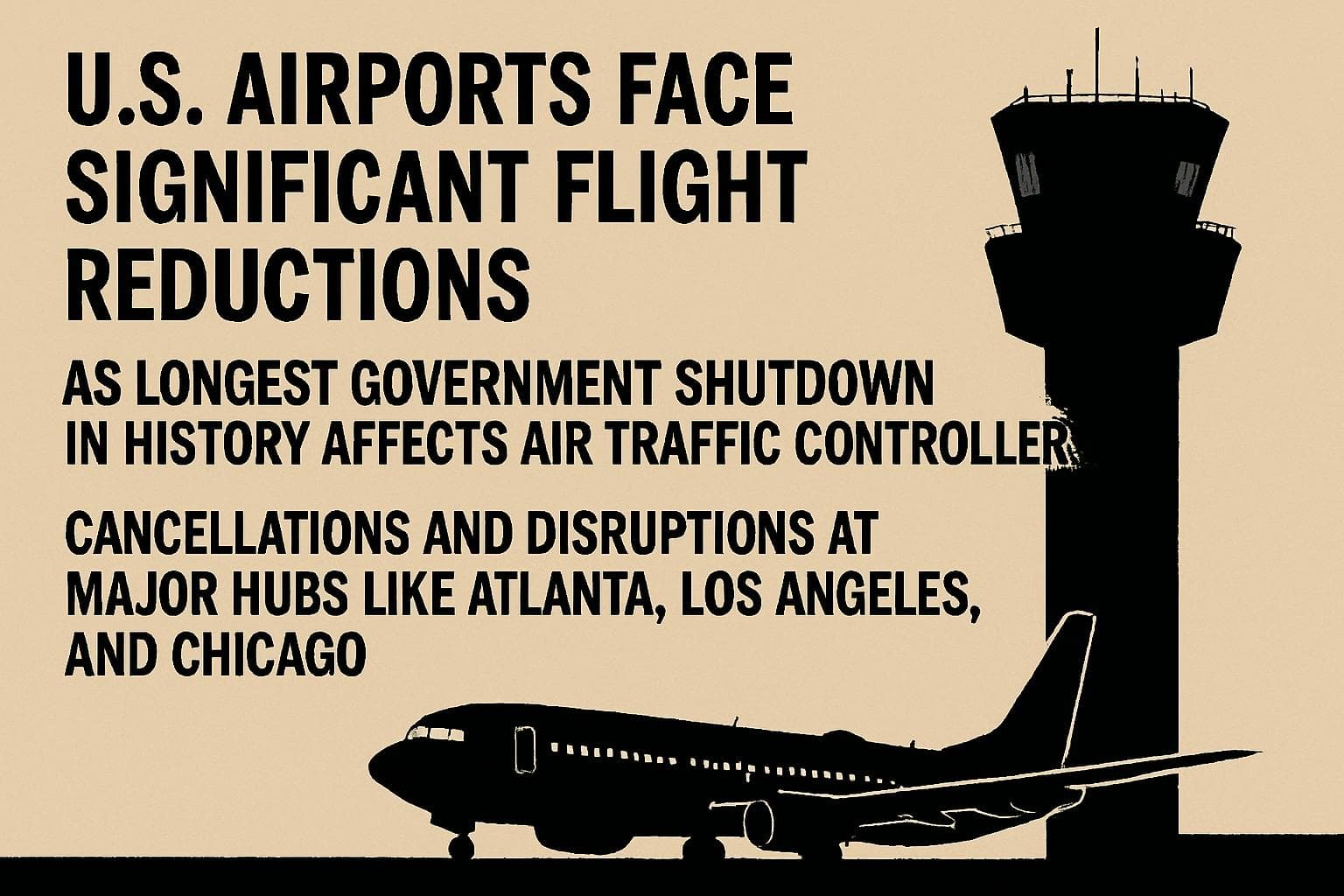
- The FAA is reducing flights by up to 10% at 40 major US airports due to the ongoing government shutdown, affecting air traffic control.
- The shutdown, now the longest in US history, has left hundreds of thousands of federal workers unpaid, impacting air traffic controllers.
- Major airlines like United, Delta, and Southwest are canceling flights and offering flexible rebooking options to minimize customer disruption.
- The flight reductions will begin at 4% on Friday, increasing to 10% by November 14, potentially canceling up to 1,800 flights.
- Political negotiations continue with no resolution in sight, as Democrats and Republicans remain at an impasse over the federal budget.
As the US government shutdown extends into its 38th day, the Federal Aviation Administration (FAA) has announced significant flight reductions at 40 of the nation's busiest airports. This decision aims to alleviate pressure on air traffic controllers, many of whom are working without pay due to the budget impasse in Washington.
Impact on Major Airports
Starting Friday, flights will be reduced by 4%, with the cuts escalating to 10% by November 14. The affected airports include Hartsfield-Jackson Atlanta International, Los Angeles International, and Chicago O'Hare, among others. These reductions could lead to the cancellation of up to 1,800 flights, impacting approximately 268,000 seats, according to aviation analytics firm Cirium.
Airlines Respond to FAA Directive
Major US airlines, including United, Delta, and Southwest, have begun canceling flights in compliance with the FAA's directive. United Airlines CEO Scott Kirby emphasized the importance of maintaining safety, stating, "The goal of regulators is to relieve pressure on the aviation system so that we can all continue to operate safely." Airlines are offering flexible rebooking options to minimize disruption for travelers.
Political Stalemate Continues
The government shutdown, the longest in US history, shows no signs of resolution as Democrats and Republicans remain deadlocked over the federal budget. The shutdown has left hundreds of thousands of federal workers unpaid, including air traffic controllers, leading to safety concerns in the aviation sector. Transportation Secretary Sean Duffy assured the public that the decision to cut flights is based on safety data, not politics.
WHAT THIS MIGHT MEAN
The ongoing flight reductions could have significant implications for the US aviation industry and travelers. If the government shutdown continues, further disruptions and delays are likely, potentially affecting holiday travel plans. Politically, the pressure is mounting on both parties to reach a budget agreement, as public frustration grows over the impact on federal services. Experts suggest that a resolution may hinge on concessions from both sides, but with the current political climate, the timeline remains uncertain.
Related Articles
Iran Postpones Khamenei Funeral Amid Escalating US-Israeli Strikes

Violence Erupts Across Mexico Following Death of Drug Lord El Mencho

US-Iran Tensions Escalate Amid Renewed Nuclear Talks and Protests
US Supreme Court Ruling on Trump's Tariffs Sparks Trade Policy Uncertainty
Canada Calls for De-escalation Amid US-Israel Strikes on Iran
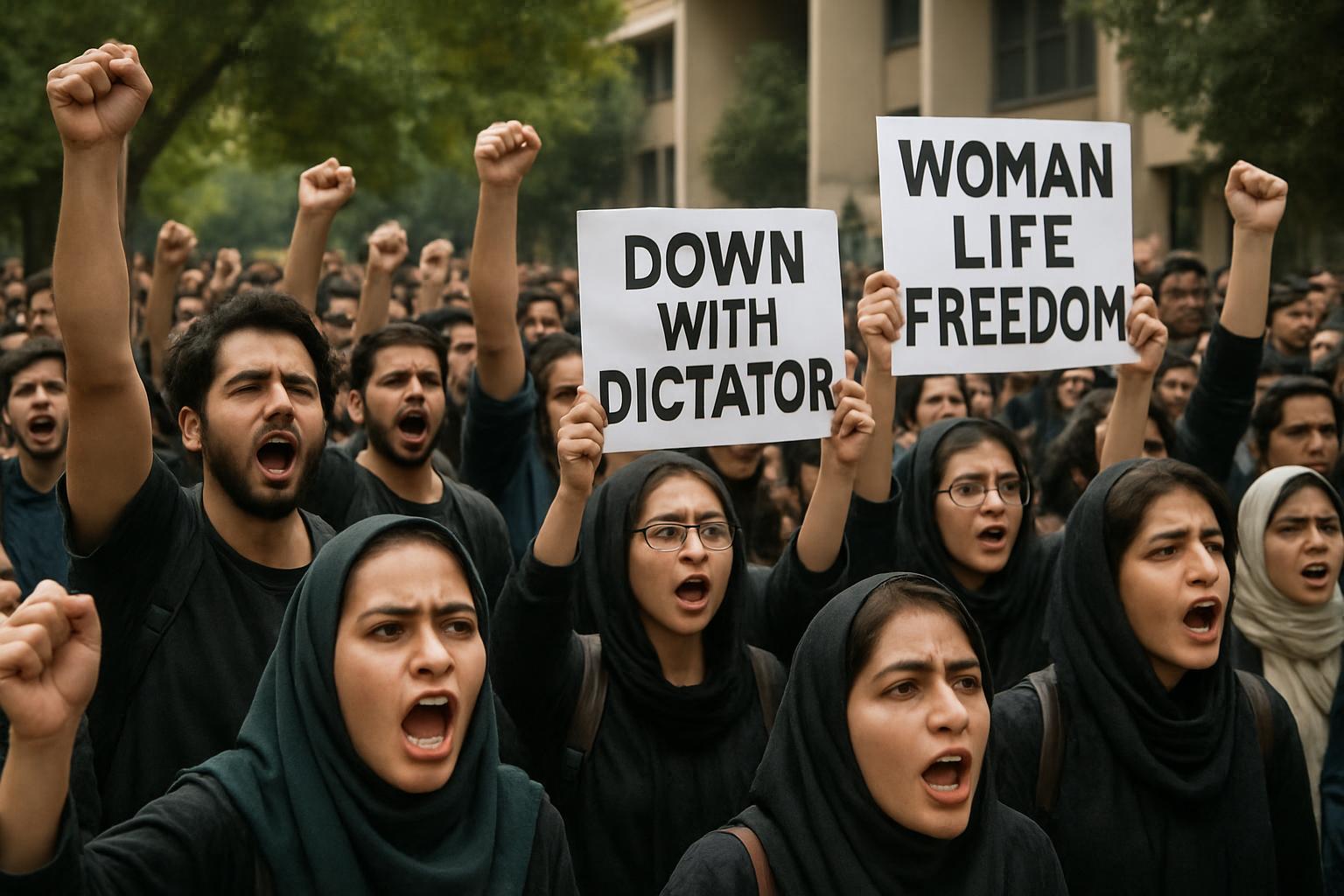
Iranian Students Lead Major Protests Amid Rising US-Iran Tensions
US Airports Face Flight Reductions Amid Record Government Shutdown
In This Article
 Ethan Brooks| Published
 HIGHLIGHTS
- The FAA is reducing flights by up to 10% at 40 major US airports due to the ongoing government shutdown, affecting air traffic control.
- The shutdown, now the longest in US history, has left hundreds of thousands of federal workers unpaid, impacting air traffic controllers.
- Major airlines like United, Delta, and Southwest are canceling flights and offering flexible rebooking options to minimize customer disruption.
- The flight reductions will begin at 4% on Friday, increasing to 10% by November 14, potentially canceling up to 1,800 flights.
- Political negotiations continue with no resolution in sight, as Democrats and Republicans remain at an impasse over the federal budget.
As the US government shutdown extends into its 38th day, the Federal Aviation Administration (FAA) has announced significant flight reductions at 40 of the nation's busiest airports. This decision aims to alleviate pressure on air traffic controllers, many of whom are working without pay due to the budget impasse in Washington.
Impact on Major Airports
Starting Friday, flights will be reduced by 4%, with the cuts escalating to 10% by November 14. The affected airports include Hartsfield-Jackson Atlanta International, Los Angeles International, and Chicago O'Hare, among others. These reductions could lead to the cancellation of up to 1,800 flights, impacting approximately 268,000 seats, according to aviation analytics firm Cirium.
Airlines Respond to FAA Directive
Major US airlines, including United, Delta, and Southwest, have begun canceling flights in compliance with the FAA's directive. United Airlines CEO Scott Kirby emphasized the importance of maintaining safety, stating, "The goal of regulators is to relieve pressure on the aviation system so that we can all continue to operate safely." Airlines are offering flexible rebooking options to minimize disruption for travelers.
Political Stalemate Continues
The government shutdown, the longest in US history, shows no signs of resolution as Democrats and Republicans remain deadlocked over the federal budget. The shutdown has left hundreds of thousands of federal workers unpaid, including air traffic controllers, leading to safety concerns in the aviation sector. Transportation Secretary Sean Duffy assured the public that the decision to cut flights is based on safety data, not politics.
WHAT THIS MIGHT MEAN
The ongoing flight reductions could have significant implications for the US aviation industry and travelers. If the government shutdown continues, further disruptions and delays are likely, potentially affecting holiday travel plans. Politically, the pressure is mounting on both parties to reach a budget agreement, as public frustration grows over the impact on federal services. Experts suggest that a resolution may hinge on concessions from both sides, but with the current political climate, the timeline remains uncertain.
Related Articles
Iran Postpones Khamenei Funeral Amid Escalating US-Israeli Strikes
Violence Erupts Across Mexico Following Death of Drug Lord El Mencho
US-Iran Tensions Escalate Amid Renewed Nuclear Talks and Protests
US Supreme Court Ruling on Trump's Tariffs Sparks Trade Policy Uncertainty
Canada Calls for De-escalation Amid US-Israel Strikes on Iran
Iranian Students Lead Major Protests Amid Rising US-Iran Tensions