
US-EU Trade Deal Limits Tariffs Amid Legislative Hurdles
In This Article
HIGHLIGHTS
- The US and EU have agreed to limit tariffs on pharmaceuticals and semiconductors to 15%, averting a potential 250% tariff hike.
- The reduction in European car tariffs from 27.5% to 15% is contingent upon the EU passing legislation to eliminate tariffs on US industrial goods.
- The trade agreement, announced by Trump and von der Leyen, aims to enhance transatlantic trade relations but has faced criticism from some European leaders.
- The EU's failure to secure a tariff exemption for its wine and spirits sector has disappointed industry leaders, impacting a €5bn export market.
- The agreement is seen as a "first step" with potential for expansion, but requires legislative action from the EU to fully implement tariff reductions.
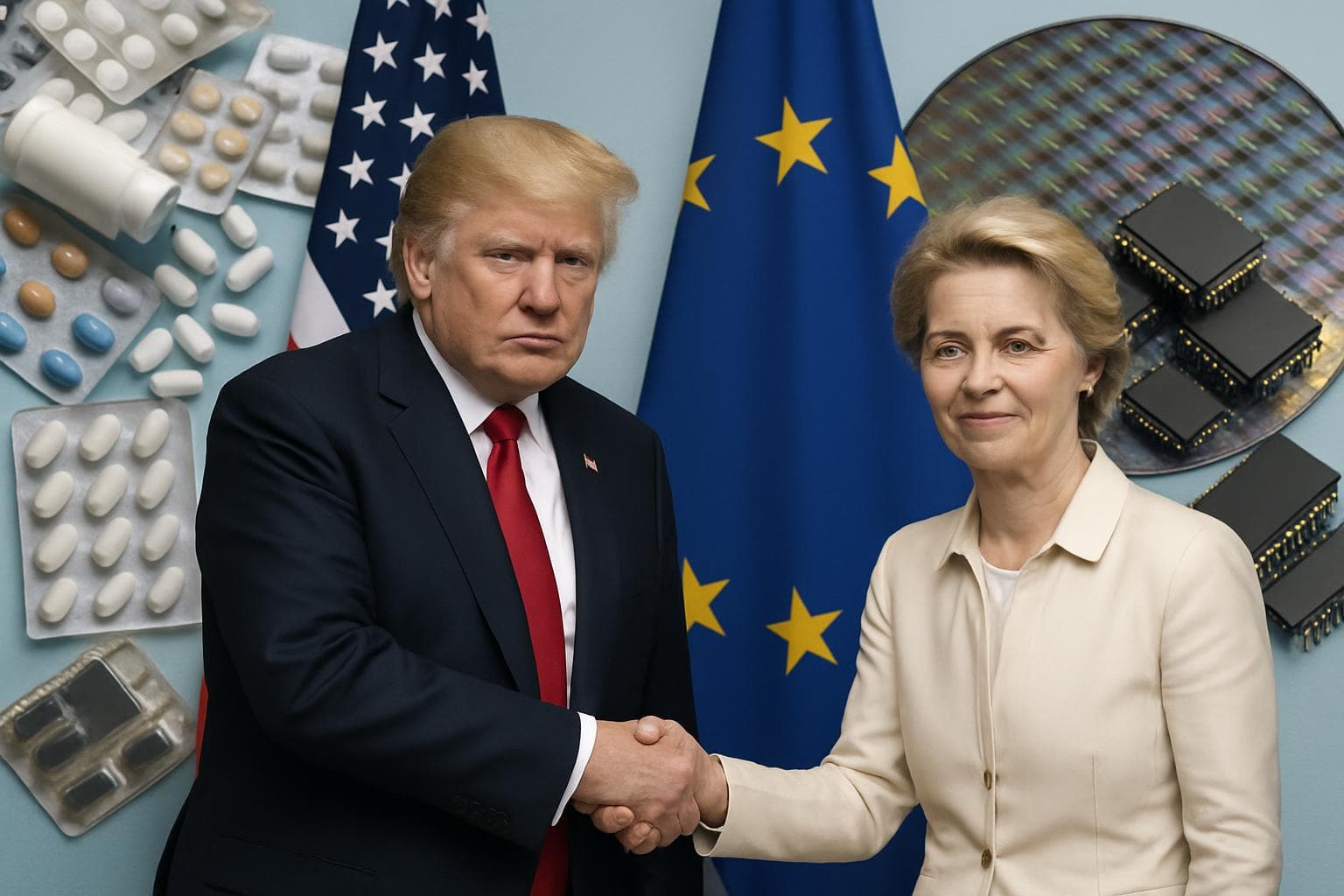
In a significant development for transatlantic trade relations, the United States and the European Union have reached a preliminary agreement to limit tariffs on pharmaceuticals and semiconductors to 15%, down from the previously threatened 250% and 100% respectively. This agreement, announced by US President Donald Trump and European Commission President Ursula von der Leyen, marks a crucial step in easing trade tensions between the two economic powerhouses.
Pharmaceutical and Semiconductor Tariffs
The agreement, unveiled on Thursday, provides relief to the European pharmaceutical and semiconductor sectors, which faced the prospect of steep tariff hikes. Ireland, a major exporter of pharmaceuticals to the US, welcomed the news. Deputy Prime Minister Simon Harris stated, "This provides an important shield to Irish exporters that could have been subject to much larger tariffs."
Automotive Industry Conditions
However, the reduction of US tariffs on European cars from 27.5% to 15% hinges on the EU's legislative action to eliminate tariffs on US industrial goods. This includes agricultural products such as fresh fruit, vegetables, and meats. An unnamed US official emphasized the urgency, stating, "Both sides are very interested in moving quickly."
Mixed Reactions from Europe
The trade deal has elicited mixed reactions across Europe. While some leaders, like Spain's Prime Minister Pedro Sánchez, expressed tepid support, others voiced concerns. French Prime Minister François Bayrou described the agreement as a "dark day" for European unity. The French wine industry, a significant export sector, expressed disappointment over the lack of tariff exemptions, with Gabriel Picard of the wine and spirits federation FEVS stating, "We are certain that this will create major difficulties for the wines and spirits sector."
Future Prospects
The joint statement from the US and EU describes the agreement as a "first step in a process" that could be expanded as the relationship develops. EU Trade Commissioner Maros Sefcovic noted that the 15% tariff on cars would be retroactively applied once the legislative process begins.
WHAT THIS MIGHT MEAN
The US-EU trade agreement represents a pivotal moment in transatlantic trade relations, but its success hinges on the EU's ability to swiftly enact the necessary legislation. Should the EU fail to pass the required laws, European car manufacturers will continue to face high tariffs, potentially straining the automotive industry. Conversely, successful implementation could pave the way for further trade negotiations, potentially expanding the scope of tariff reductions.
Experts suggest that the agreement could serve as a foundation for future trade discussions, potentially addressing other contentious sectors such as agriculture and digital services. However, the mixed reactions from European leaders highlight the challenges of balancing national interests with broader economic goals. As the legislative process unfolds, the focus will remain on how quickly and effectively both sides can fulfill their commitments to foster a more balanced and mutually beneficial trade relationship.
Related Articles
Spain's Sánchez Stands Firm Against Trump's Trade Threat Over Iran Stance
Senate Blocks Resolution to Limit Trump's Military Actions in Iran

Iran Postpones Khamenei Funeral Amid Escalating US-Israeli Strikes
Congress Subpoenas Attorney General Bondi in Epstein Investigation
Cuba Faces Widespread Blackout Amid Deepening Fuel Crisis

Russian LNG Tanker Sinks in Mediterranean Amid Accusations of Ukrainian Drone Attack
US-EU Trade Deal Limits Tariffs Amid Legislative Hurdles
In This Article
 Ethan Brooks| Published
 HIGHLIGHTS
- The US and EU have agreed to limit tariffs on pharmaceuticals and semiconductors to 15%, averting a potential 250% tariff hike.
- The reduction in European car tariffs from 27.5% to 15% is contingent upon the EU passing legislation to eliminate tariffs on US industrial goods.
- The trade agreement, announced by Trump and von der Leyen, aims to enhance transatlantic trade relations but has faced criticism from some European leaders.
- The EU's failure to secure a tariff exemption for its wine and spirits sector has disappointed industry leaders, impacting a €5bn export market.
- The agreement is seen as a "first step" with potential for expansion, but requires legislative action from the EU to fully implement tariff reductions.
In a significant development for transatlantic trade relations, the United States and the European Union have reached a preliminary agreement to limit tariffs on pharmaceuticals and semiconductors to 15%, down from the previously threatened 250% and 100% respectively. This agreement, announced by US President Donald Trump and European Commission President Ursula von der Leyen, marks a crucial step in easing trade tensions between the two economic powerhouses.
Pharmaceutical and Semiconductor Tariffs
The agreement, unveiled on Thursday, provides relief to the European pharmaceutical and semiconductor sectors, which faced the prospect of steep tariff hikes. Ireland, a major exporter of pharmaceuticals to the US, welcomed the news. Deputy Prime Minister Simon Harris stated, "This provides an important shield to Irish exporters that could have been subject to much larger tariffs."
Automotive Industry Conditions
However, the reduction of US tariffs on European cars from 27.5% to 15% hinges on the EU's legislative action to eliminate tariffs on US industrial goods. This includes agricultural products such as fresh fruit, vegetables, and meats. An unnamed US official emphasized the urgency, stating, "Both sides are very interested in moving quickly."
Mixed Reactions from Europe
The trade deal has elicited mixed reactions across Europe. While some leaders, like Spain's Prime Minister Pedro Sánchez, expressed tepid support, others voiced concerns. French Prime Minister François Bayrou described the agreement as a "dark day" for European unity. The French wine industry, a significant export sector, expressed disappointment over the lack of tariff exemptions, with Gabriel Picard of the wine and spirits federation FEVS stating, "We are certain that this will create major difficulties for the wines and spirits sector."
Future Prospects
The joint statement from the US and EU describes the agreement as a "first step in a process" that could be expanded as the relationship develops. EU Trade Commissioner Maros Sefcovic noted that the 15% tariff on cars would be retroactively applied once the legislative process begins.
WHAT THIS MIGHT MEAN
The US-EU trade agreement represents a pivotal moment in transatlantic trade relations, but its success hinges on the EU's ability to swiftly enact the necessary legislation. Should the EU fail to pass the required laws, European car manufacturers will continue to face high tariffs, potentially straining the automotive industry. Conversely, successful implementation could pave the way for further trade negotiations, potentially expanding the scope of tariff reductions.
Experts suggest that the agreement could serve as a foundation for future trade discussions, potentially addressing other contentious sectors such as agriculture and digital services. However, the mixed reactions from European leaders highlight the challenges of balancing national interests with broader economic goals. As the legislative process unfolds, the focus will remain on how quickly and effectively both sides can fulfill their commitments to foster a more balanced and mutually beneficial trade relationship.
Related Articles
Spain's Sánchez Stands Firm Against Trump's Trade Threat Over Iran Stance
Senate Blocks Resolution to Limit Trump's Military Actions in Iran
Iran Postpones Khamenei Funeral Amid Escalating US-Israeli Strikes
Congress Subpoenas Attorney General Bondi in Epstein Investigation
Cuba Faces Widespread Blackout Amid Deepening Fuel Crisis
Russian LNG Tanker Sinks in Mediterranean Amid Accusations of Ukrainian Drone Attack