
US Launches Major Airstrikes Against Islamic State Targets in Syria
In This Article
HIGHLIGHTS
- The US launched a significant military operation, Operation Hawkeye Strike, targeting over 70 IS sites in Syria after an attack on US personnel.
- The strikes involved US and Jordanian aircraft, employing over 100 precision munitions against IS infrastructure and weapons sites.
- President Trump and US Defense Secretary Pete Hegseth emphasized the operation as a declaration of vengeance, not the start of a war.
- The attack in Palmyra, which prompted the strikes, resulted in the deaths of two US soldiers and a civilian interpreter, with three others injured.
- Syria's government, led by former rebels, expressed full support for the US strikes and reiterated its commitment to combating IS.
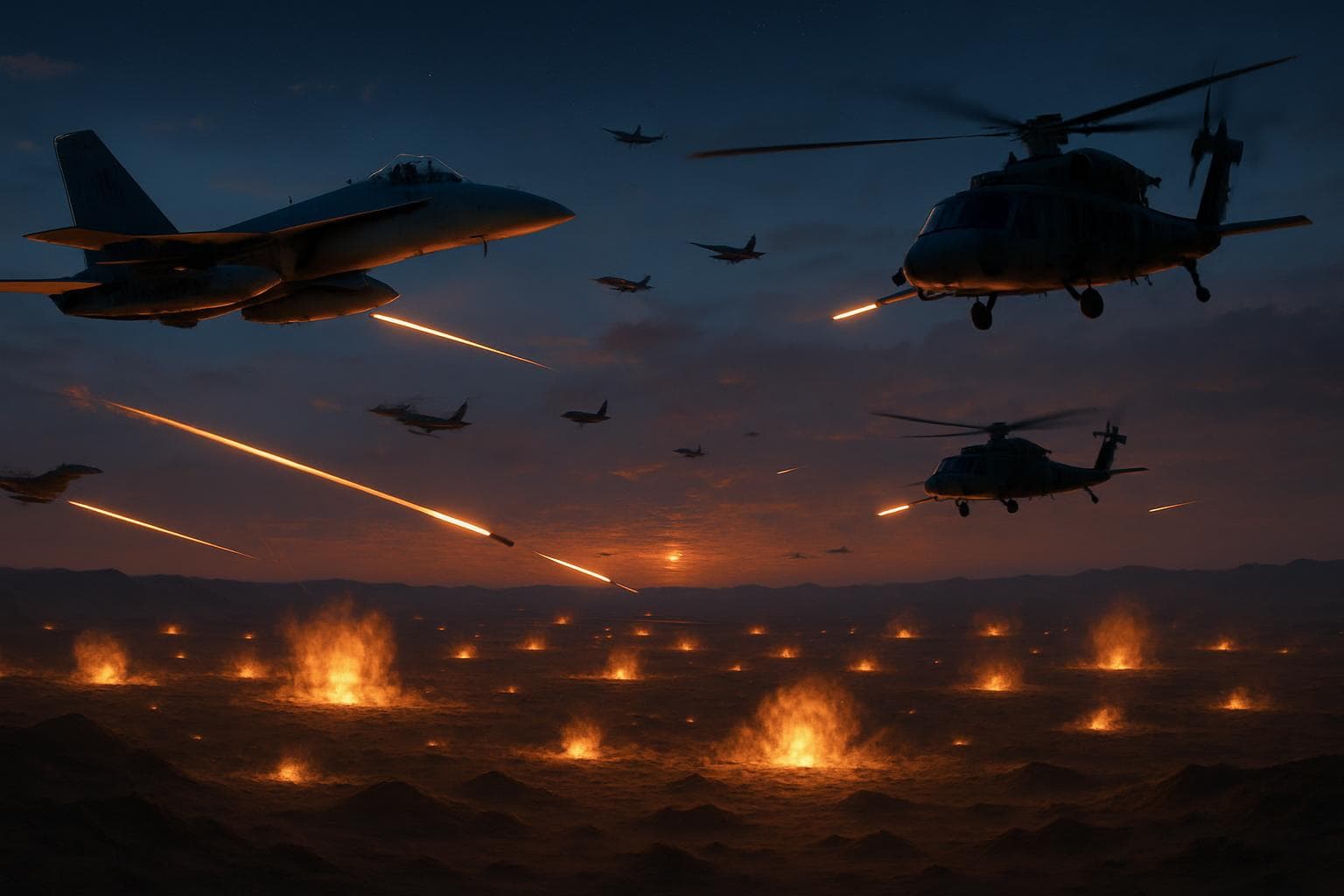
In a robust military response to a deadly attack on American forces, the United States has executed a large-scale airstrike operation against the Islamic State (IS) in Syria. Dubbed Operation Hawkeye Strike, the mission targeted over 70 IS sites across central Syria, utilizing fighter jets, attack helicopters, and artillery to deliver more than 100 precision munitions. Jordanian aircraft also participated in the operation, underscoring regional cooperation against the jihadist threat.
Operation Details and Objectives
The operation was launched at 16:00 Eastern Time (21:00 GMT) on Friday, following an IS ambush in Palmyra on December 13, which claimed the lives of two US soldiers and a civilian interpreter. Three additional US soldiers were injured in the attack. US Central Command (Centcom) confirmed the strikes aimed at dismantling IS infrastructure and weapons sites, with Centcom commander Admiral Brad Cooper affirming the US's commitment to pursuing terrorists who threaten American lives.
Political and Military Reactions
President Donald Trump and US Defense Secretary Pete Hegseth framed the operation as a decisive act of retaliation rather than an initiation of war. "If you target Americans, you will spend the rest of your brief, anxious life knowing the United States will hunt you, find you, and ruthlessly kill you," Hegseth declared. Trump echoed this sentiment on social media, asserting that the US was delivering "very serious retaliation" against the perpetrators.
Syria's Position and International Context
The Syrian government, now led by former rebels who ousted Bashar al-Assad last year, has expressed full support for the US strikes. Syria's foreign ministry reiterated its commitment to eradicating IS from its territory. The Syrian Observatory for Human Rights reported that the strikes targeted IS positions near Raqqa and Deir ez-Zor, resulting in the death of a prominent IS leader and several fighters.
Background and Ongoing Efforts
Despite losing its last territorial stronghold in Syria in 2019, IS continues to pose a threat with an estimated 5,000 to 7,000 fighters remaining in Syria and Iraq, according to the United Nations. The US maintains approximately 1,000 troops in Syria, focusing on preventing IS's resurgence and supporting local forces in counter-terrorism efforts.
WHAT THIS MIGHT MEAN
The recent US airstrikes in Syria could mark a pivotal moment in the ongoing battle against the Islamic State. While the operation demonstrates the US's resolve to counter IS threats, it also raises questions about the long-term strategy in the region. Experts suggest that continued military pressure, coupled with diplomatic efforts, will be crucial in stabilizing Syria and preventing IS from regaining strength.
Politically, the strikes may bolster US-Syria relations under the new government, potentially paving the way for further collaboration in counter-terrorism initiatives. However, the involvement of Jordanian forces highlights the broader regional dynamics at play, emphasizing the need for a coordinated international approach to effectively combat IS and ensure lasting peace in the region.
Related Articles
US and Israel Intensify Military Campaign as Iran's Capabilities Dwindle

Intensified US-Israel Strikes on Iran Spark Global Outcry
Iran Postpones Khamenei Funeral Amid Escalating US-Israeli Strikes
Senate Blocks Resolution to Limit Trump's Military Actions in Iran

UK-Iran Tensions: Starmer Defends Cautious Approach Amid Trump Criticism
Spain's Sánchez Stands Firm Against Trump's Trade Threat Over Iran Stance
US Launches Major Airstrikes Against Islamic State Targets in Syria
In This Article
 Ethan Brooks| Published
 HIGHLIGHTS
- The US launched a significant military operation, Operation Hawkeye Strike, targeting over 70 IS sites in Syria after an attack on US personnel.
- The strikes involved US and Jordanian aircraft, employing over 100 precision munitions against IS infrastructure and weapons sites.
- President Trump and US Defense Secretary Pete Hegseth emphasized the operation as a declaration of vengeance, not the start of a war.
- The attack in Palmyra, which prompted the strikes, resulted in the deaths of two US soldiers and a civilian interpreter, with three others injured.
- Syria's government, led by former rebels, expressed full support for the US strikes and reiterated its commitment to combating IS.
In a robust military response to a deadly attack on American forces, the United States has executed a large-scale airstrike operation against the Islamic State (IS) in Syria. Dubbed Operation Hawkeye Strike, the mission targeted over 70 IS sites across central Syria, utilizing fighter jets, attack helicopters, and artillery to deliver more than 100 precision munitions. Jordanian aircraft also participated in the operation, underscoring regional cooperation against the jihadist threat.
Operation Details and Objectives
The operation was launched at 16:00 Eastern Time (21:00 GMT) on Friday, following an IS ambush in Palmyra on December 13, which claimed the lives of two US soldiers and a civilian interpreter. Three additional US soldiers were injured in the attack. US Central Command (Centcom) confirmed the strikes aimed at dismantling IS infrastructure and weapons sites, with Centcom commander Admiral Brad Cooper affirming the US's commitment to pursuing terrorists who threaten American lives.
Political and Military Reactions
President Donald Trump and US Defense Secretary Pete Hegseth framed the operation as a decisive act of retaliation rather than an initiation of war. "If you target Americans, you will spend the rest of your brief, anxious life knowing the United States will hunt you, find you, and ruthlessly kill you," Hegseth declared. Trump echoed this sentiment on social media, asserting that the US was delivering "very serious retaliation" against the perpetrators.
Syria's Position and International Context
The Syrian government, now led by former rebels who ousted Bashar al-Assad last year, has expressed full support for the US strikes. Syria's foreign ministry reiterated its commitment to eradicating IS from its territory. The Syrian Observatory for Human Rights reported that the strikes targeted IS positions near Raqqa and Deir ez-Zor, resulting in the death of a prominent IS leader and several fighters.
Background and Ongoing Efforts
Despite losing its last territorial stronghold in Syria in 2019, IS continues to pose a threat with an estimated 5,000 to 7,000 fighters remaining in Syria and Iraq, according to the United Nations. The US maintains approximately 1,000 troops in Syria, focusing on preventing IS's resurgence and supporting local forces in counter-terrorism efforts.
WHAT THIS MIGHT MEAN
The recent US airstrikes in Syria could mark a pivotal moment in the ongoing battle against the Islamic State. While the operation demonstrates the US's resolve to counter IS threats, it also raises questions about the long-term strategy in the region. Experts suggest that continued military pressure, coupled with diplomatic efforts, will be crucial in stabilizing Syria and preventing IS from regaining strength.
Politically, the strikes may bolster US-Syria relations under the new government, potentially paving the way for further collaboration in counter-terrorism initiatives. However, the involvement of Jordanian forces highlights the broader regional dynamics at play, emphasizing the need for a coordinated international approach to effectively combat IS and ensure lasting peace in the region.
Related Articles
US and Israel Intensify Military Campaign as Iran's Capabilities Dwindle
Intensified US-Israel Strikes on Iran Spark Global Outcry
Iran Postpones Khamenei Funeral Amid Escalating US-Israeli Strikes
Senate Blocks Resolution to Limit Trump's Military Actions in Iran
UK-Iran Tensions: Starmer Defends Cautious Approach Amid Trump Criticism
Spain's Sánchez Stands Firm Against Trump's Trade Threat Over Iran Stance