
US Immigration Policy Tightens Amid National Security Concerns
In This Article
HIGHLIGHTS
- The Trump administration has paused immigration applications from 19 countries, citing national security concerns.
- Naturalization ceremonies and asylum decisions are on hold, affecting migrants from countries like Afghanistan, Iran, and Venezuela.
- The policy follows a shooting incident involving an Afghan national, intensifying scrutiny on migrants from travel ban countries.
- Legal experts predict challenges to these policies, which impact nearly 1.5 million pending asylum cases.
- Immigration advocates warn of increased uncertainty and fear among affected communities.
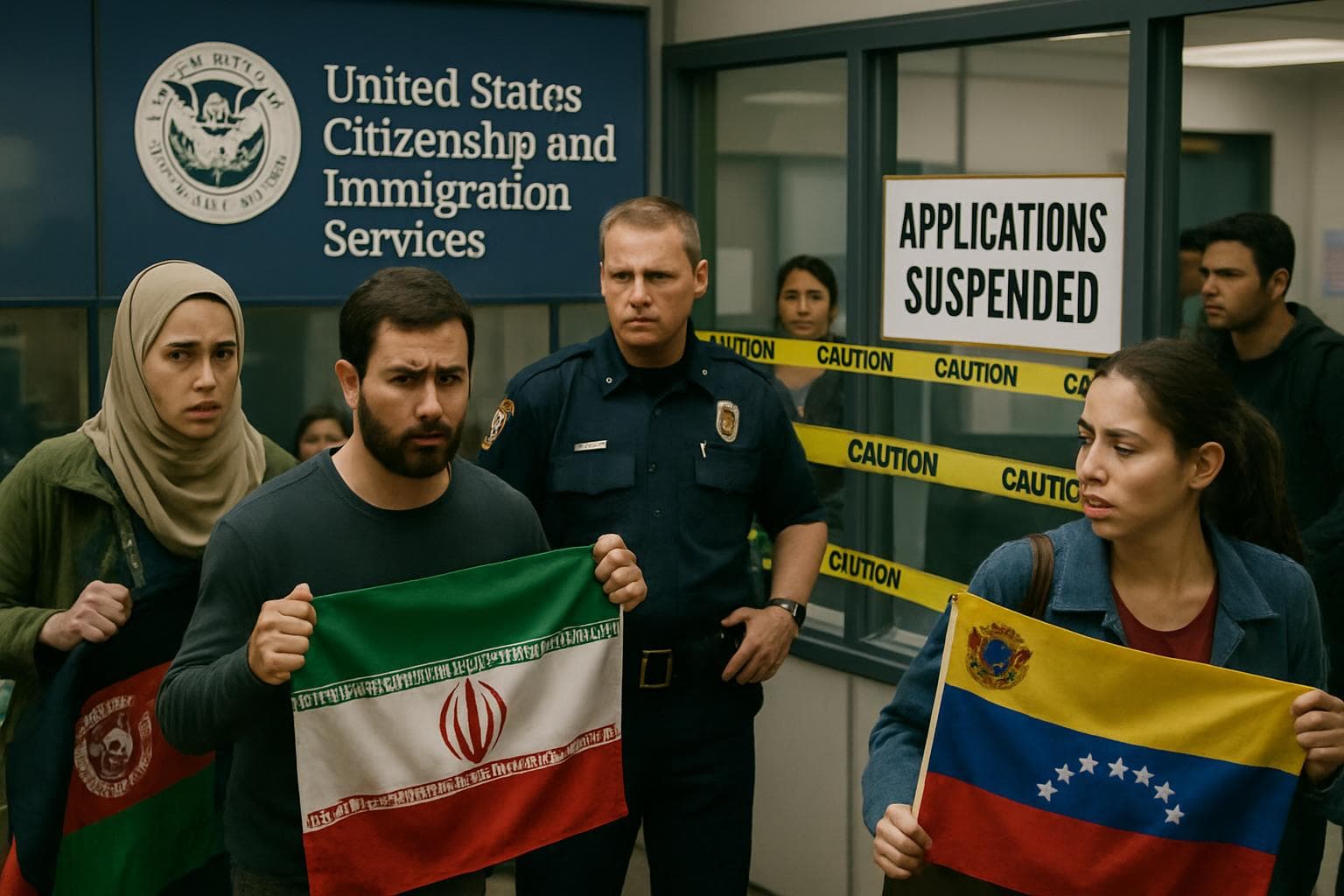
The Trump administration has announced a sweeping pause on immigration applications from 19 countries, intensifying its focus on national security. This decision affects naturalization ceremonies and asylum processes, leaving many migrants in uncertainty.
Immigration Applications on Hold
The US Citizenship and Immigration Services (USCIS) has halted the processing of citizenship and green card applications from countries already under a travel ban since June. This includes Afghanistan, Iran, and Venezuela, among others. The move follows a recent shooting in Washington, D.C., involving an Afghan national, which has heightened security concerns.
"The Trump administration is making every effort to ensure individuals becoming citizens are the best of the best," said Matthew Tragesser, a USCIS spokesperson. The administration's stance is that citizenship is a privilege, not a right, and this policy reflects that belief.
Impact on Asylum Seekers
The policy shift has left asylum seekers, like Reza Hussaini from Afghanistan, in a state of limbo. Hussaini, who fled Taliban persecution, fears deportation back to a hostile environment. "It kind of puts me in a corner," he expressed, highlighting the uncertainty surrounding his future in the US.
Legal experts and immigration advocates are concerned about the broader implications of these policies. Sharvari Dalal-Dheini from the American Immigration Lawyers Association noted reports of canceled naturalization and adjustment of status interviews, emphasizing the collective anxiety among affected communities.
Legal and Political Implications
The administration's actions have sparked criticism and are expected to face legal challenges. Advocates argue that the policies amount to collective punishment, particularly targeting Afghan nationals following the recent attack on National Guard members.
Faisal Al-Juburi of Raíces, a legal aid group, described the policies as demoralizing, creating a sense of unease among immigrants. "We can’t go by what ifs, because right now, there is no clear picture," he said, underscoring the need for legal clarity.
WHAT THIS MIGHT MEAN
The Trump administration's immigration policies are likely to face significant legal scrutiny, with potential court challenges questioning their legality. If upheld, these policies could reshape the landscape of legal immigration, prioritizing national security over humanitarian considerations. Politically, the administration's stance may bolster support among constituents favoring stricter immigration controls, but it also risks alienating communities advocating for immigrant rights. As the situation unfolds, the balance between security and compassion remains a contentious issue in the US immigration debate.
Related Articles

US and Israel Intensify Military Campaign as Iran's Capabilities Dwindle

Intensified US-Israel Strikes on Iran Spark Global Outcry

Senate Blocks Resolution to Limit Trump's Military Actions in Iran
Spain's Sánchez Stands Firm Against Trump's Trade Threat Over Iran Stance
Iran Postpones Khamenei Funeral Amid Escalating US-Israeli Strikes
UK-Iran Tensions: Starmer Defends Cautious Approach Amid Trump Criticism
US Immigration Policy Tightens Amid National Security Concerns
In This Article
 Ethan Brooks| Published
 HIGHLIGHTS
- The Trump administration has paused immigration applications from 19 countries, citing national security concerns.
- Naturalization ceremonies and asylum decisions are on hold, affecting migrants from countries like Afghanistan, Iran, and Venezuela.
- The policy follows a shooting incident involving an Afghan national, intensifying scrutiny on migrants from travel ban countries.
- Legal experts predict challenges to these policies, which impact nearly 1.5 million pending asylum cases.
- Immigration advocates warn of increased uncertainty and fear among affected communities.
The Trump administration has announced a sweeping pause on immigration applications from 19 countries, intensifying its focus on national security. This decision affects naturalization ceremonies and asylum processes, leaving many migrants in uncertainty.
Immigration Applications on Hold
The US Citizenship and Immigration Services (USCIS) has halted the processing of citizenship and green card applications from countries already under a travel ban since June. This includes Afghanistan, Iran, and Venezuela, among others. The move follows a recent shooting in Washington, D.C., involving an Afghan national, which has heightened security concerns.
"The Trump administration is making every effort to ensure individuals becoming citizens are the best of the best," said Matthew Tragesser, a USCIS spokesperson. The administration's stance is that citizenship is a privilege, not a right, and this policy reflects that belief.
Impact on Asylum Seekers
The policy shift has left asylum seekers, like Reza Hussaini from Afghanistan, in a state of limbo. Hussaini, who fled Taliban persecution, fears deportation back to a hostile environment. "It kind of puts me in a corner," he expressed, highlighting the uncertainty surrounding his future in the US.
Legal experts and immigration advocates are concerned about the broader implications of these policies. Sharvari Dalal-Dheini from the American Immigration Lawyers Association noted reports of canceled naturalization and adjustment of status interviews, emphasizing the collective anxiety among affected communities.
Legal and Political Implications
The administration's actions have sparked criticism and are expected to face legal challenges. Advocates argue that the policies amount to collective punishment, particularly targeting Afghan nationals following the recent attack on National Guard members.
Faisal Al-Juburi of Raíces, a legal aid group, described the policies as demoralizing, creating a sense of unease among immigrants. "We can’t go by what ifs, because right now, there is no clear picture," he said, underscoring the need for legal clarity.
WHAT THIS MIGHT MEAN
The Trump administration's immigration policies are likely to face significant legal scrutiny, with potential court challenges questioning their legality. If upheld, these policies could reshape the landscape of legal immigration, prioritizing national security over humanitarian considerations. Politically, the administration's stance may bolster support among constituents favoring stricter immigration controls, but it also risks alienating communities advocating for immigrant rights. As the situation unfolds, the balance between security and compassion remains a contentious issue in the US immigration debate.
Related Articles
US and Israel Intensify Military Campaign as Iran's Capabilities Dwindle
Intensified US-Israel Strikes on Iran Spark Global Outcry
Senate Blocks Resolution to Limit Trump's Military Actions in Iran
Spain's Sánchez Stands Firm Against Trump's Trade Threat Over Iran Stance
Iran Postpones Khamenei Funeral Amid Escalating US-Israeli Strikes
UK-Iran Tensions: Starmer Defends Cautious Approach Amid Trump Criticism