
US-Japan Trade Deal Sparks Global Market Rally and Sets New Precedent
In This Article
HIGHLIGHTS
- The US and Japan have reached a significant trade agreement, reducing tariffs on Japanese imports to 15%, down from a threatened 25%.
- Japan will invest $550 billion in the US, focusing on sectors like pharmaceuticals and semiconductors, boosting job creation and innovation.
- The deal has led to a rally in global financial markets, with notable gains in Japanese and European stocks.
- The agreement sets a precedent for other countries, such as South Korea and Taiwan, who are in trade talks with the US.
- The deal is expected to ease tensions in global trade, providing stability and planning certainty for businesses.
In a landmark move, the United States and Japan have finalized a trade agreement that is poised to reshape global trade dynamics. Announced by President Donald Trump, the deal reduces tariffs on Japanese imports to 15%, a significant drop from the previously threatened 25%. This agreement is being hailed as a pivotal moment in international trade, particularly in the wake of Trump's "Liberation Day" tariffs that had unsettled global markets earlier this year.
Economic Impact and Market Reactions
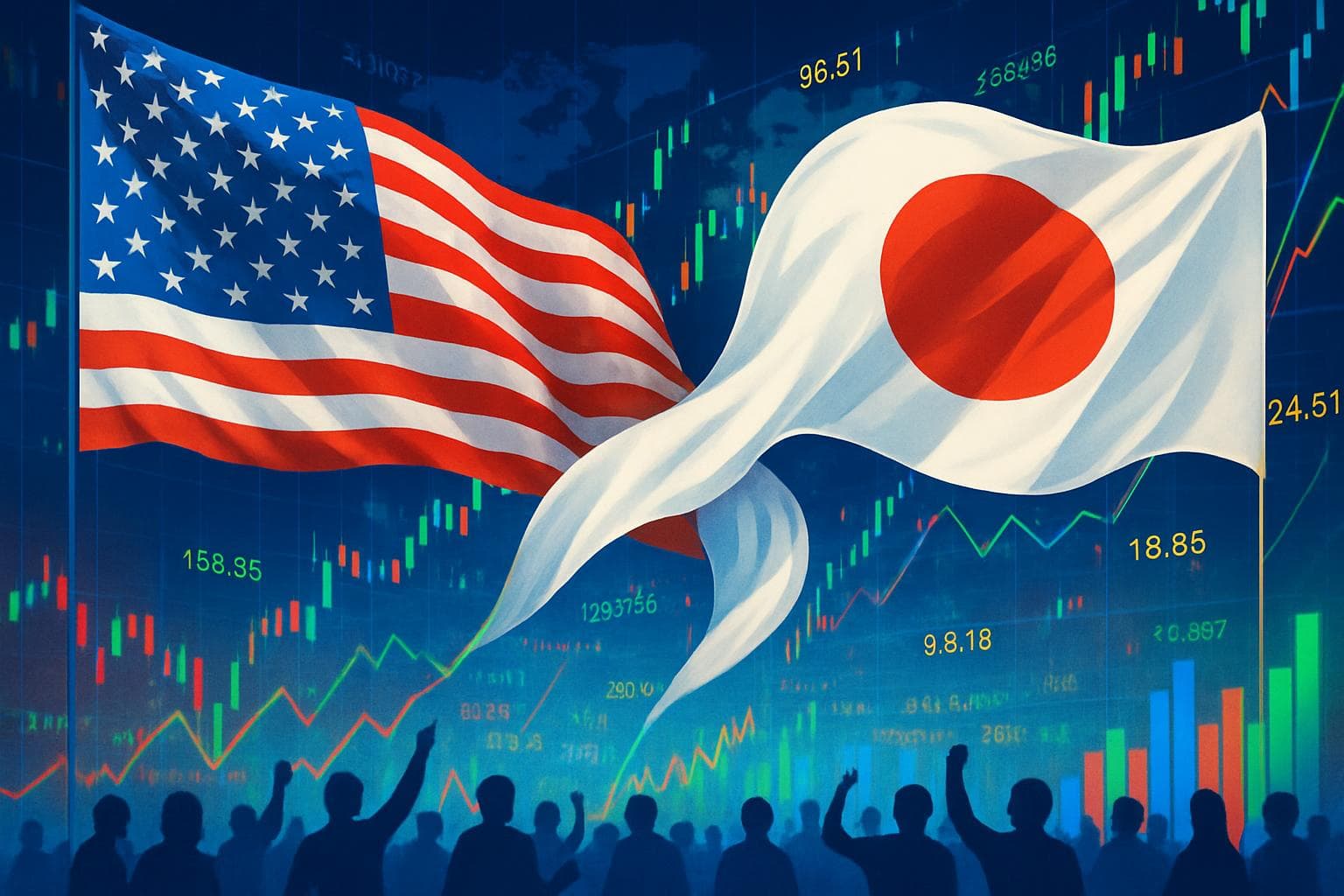
The announcement has triggered a positive response in financial markets worldwide. The Nikkei index in Tokyo surged by 3.5%, while European markets, including the FTSE 100, reached record highs. In the US, the Dow Jones and S&P indices also saw substantial gains. This market optimism is fueled by speculation that similar agreements might soon be reached with the European Union, which is currently in negotiations with the US.
Strategic Investments and Industry Implications
As part of the deal, Japan has committed to investing $550 billion in the US, targeting key sectors such as pharmaceuticals and semiconductors. This investment is expected to create jobs and foster innovation, further strengthening economic ties between the two nations. The automotive industry, a major component of Japan's economy, stands to benefit significantly from the reduced tariffs, with companies like Toyota, Honda, and Nissan poised to increase their market share in the US.
Broader Trade Implications
The US-Japan agreement sets a benchmark for other countries engaged in trade negotiations with the US. South Korea and Taiwan, in particular, are closely monitoring the terms of this deal as they navigate their own discussions. The agreement also underscores Japan's strategic positioning in global trade, as it continues to balance its economic interests with those of its international partners.
Agricultural and Consumer Goods
In addition to industrial goods, the deal includes provisions for increased Japanese imports of US agricultural products, such as rice. This move aims to address Japan's domestic rice shortage while potentially unsettling local farmers concerned about market competition.
WHAT THIS MIGHT MEAN
The US-Japan trade deal could pave the way for similar agreements with other major economies, potentially easing global trade tensions. However, the pressure is now on for countries like the EU to negotiate favorable terms before the looming deadline for increased tariffs. Experts suggest that while the deal brings short-term stability, the long-term implications for global trade relations remain uncertain. As countries like South Korea and Taiwan enter their own negotiations, the outcomes will likely influence the broader geopolitical landscape and economic alliances.
Related Articles

Spain's Sánchez Stands Firm Against Trump's Trade Threat Over Iran Stance

Senate Blocks Resolution to Limit Trump's Military Actions in Iran

Iran Postpones Khamenei Funeral Amid Escalating US-Israeli Strikes

US Supreme Court Ruling Sparks Trade Uncertainty in Asia and Beyond

Congress Subpoenas Attorney General Bondi in Epstein Investigation

Cuba Faces Widespread Blackout Amid Deepening Fuel Crisis
US-Japan Trade Deal Sparks Global Market Rally and Sets New Precedent
In This Article
 Ethan Brooks| Published
 HIGHLIGHTS
- The US and Japan have reached a significant trade agreement, reducing tariffs on Japanese imports to 15%, down from a threatened 25%.
- Japan will invest $550 billion in the US, focusing on sectors like pharmaceuticals and semiconductors, boosting job creation and innovation.
- The deal has led to a rally in global financial markets, with notable gains in Japanese and European stocks.
- The agreement sets a precedent for other countries, such as South Korea and Taiwan, who are in trade talks with the US.
- The deal is expected to ease tensions in global trade, providing stability and planning certainty for businesses.
In a landmark move, the United States and Japan have finalized a trade agreement that is poised to reshape global trade dynamics. Announced by President Donald Trump, the deal reduces tariffs on Japanese imports to 15%, a significant drop from the previously threatened 25%. This agreement is being hailed as a pivotal moment in international trade, particularly in the wake of Trump's "Liberation Day" tariffs that had unsettled global markets earlier this year.
Economic Impact and Market Reactions
The announcement has triggered a positive response in financial markets worldwide. The Nikkei index in Tokyo surged by 3.5%, while European markets, including the FTSE 100, reached record highs. In the US, the Dow Jones and S&P indices also saw substantial gains. This market optimism is fueled by speculation that similar agreements might soon be reached with the European Union, which is currently in negotiations with the US.
Strategic Investments and Industry Implications
As part of the deal, Japan has committed to investing $550 billion in the US, targeting key sectors such as pharmaceuticals and semiconductors. This investment is expected to create jobs and foster innovation, further strengthening economic ties between the two nations. The automotive industry, a major component of Japan's economy, stands to benefit significantly from the reduced tariffs, with companies like Toyota, Honda, and Nissan poised to increase their market share in the US.
Broader Trade Implications
The US-Japan agreement sets a benchmark for other countries engaged in trade negotiations with the US. South Korea and Taiwan, in particular, are closely monitoring the terms of this deal as they navigate their own discussions. The agreement also underscores Japan's strategic positioning in global trade, as it continues to balance its economic interests with those of its international partners.
Agricultural and Consumer Goods
In addition to industrial goods, the deal includes provisions for increased Japanese imports of US agricultural products, such as rice. This move aims to address Japan's domestic rice shortage while potentially unsettling local farmers concerned about market competition.
WHAT THIS MIGHT MEAN
The US-Japan trade deal could pave the way for similar agreements with other major economies, potentially easing global trade tensions. However, the pressure is now on for countries like the EU to negotiate favorable terms before the looming deadline for increased tariffs. Experts suggest that while the deal brings short-term stability, the long-term implications for global trade relations remain uncertain. As countries like South Korea and Taiwan enter their own negotiations, the outcomes will likely influence the broader geopolitical landscape and economic alliances.
Related Articles
Spain's Sánchez Stands Firm Against Trump's Trade Threat Over Iran Stance
Senate Blocks Resolution to Limit Trump's Military Actions in Iran
Iran Postpones Khamenei Funeral Amid Escalating US-Israeli Strikes
US Supreme Court Ruling Sparks Trade Uncertainty in Asia and Beyond
Congress Subpoenas Attorney General Bondi in Epstein Investigation
Cuba Faces Widespread Blackout Amid Deepening Fuel Crisis