
US Judge Halts Deportation of British Campaigner Amid Free Speech Dispute
In This Article
HIGHLIGHTS
- A US judge temporarily blocked the detention of British campaigner Imran Ahmed, who challenged his US visa removal.
- Ahmed, founder of the Center for Countering Digital Hate, was accused by the Trump administration of pressuring tech platforms to censor American viewpoints.
- The legal challenge claims Ahmed's potential deportation violates his First Amendment rights and lacks credible basis.
- Ahmed's organization has faced backlash from Elon Musk's social media company, X, over reports on rising hate speech.
- The case highlights tensions between US policies and European regulations on social media content.
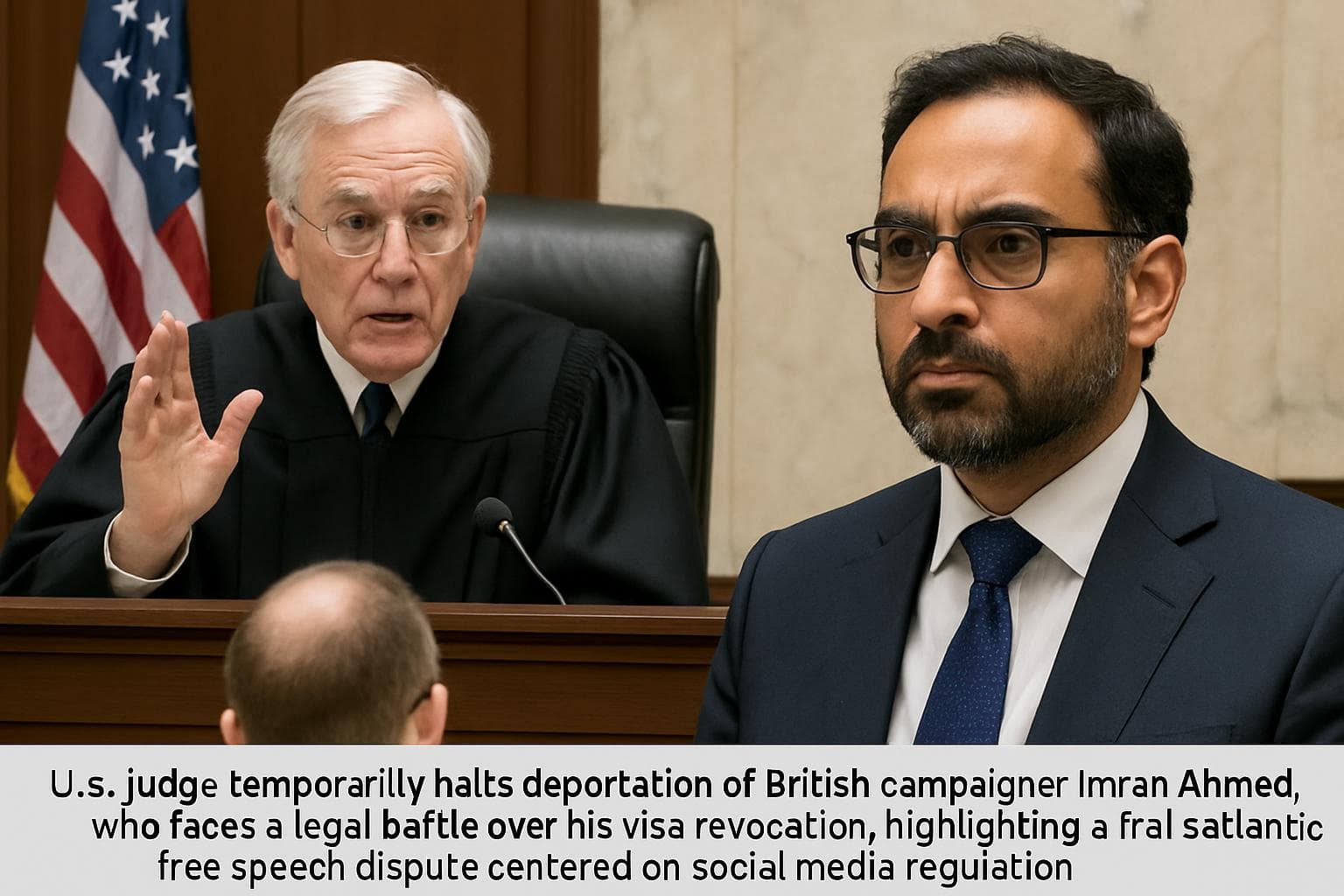
In a significant legal development, a US judge has temporarily blocked the detention of British social media campaigner Imran Ahmed, who is embroiled in a legal battle against the US government over the revocation of his visa. Ahmed, the founder of the Center for Countering Digital Hate (CCDH), has been at the forefront of efforts to scrutinize social media platforms, including Elon Musk's X, for their handling of hate speech and misinformation.
Legal Battle Over Visa Revocation
Imran Ahmed, a US permanent resident, was among five Europeans whose visas were revoked by the Trump administration, accused of attempting to coerce tech platforms into censoring American viewpoints. The move sparked criticism from European leaders who defended the work of organizations monitoring online content. Ahmed, who resides in Washington DC with his American wife and child, warned that his detention and potential deportation would separate him from his family.
Court Ruling and Legal Arguments
On Thursday, US District Judge Vernon S. Broderick granted Ahmed's request for a temporary restraining order, preventing his detention without a hearing. Ahmed's legal team, led by Roberta Kaplan, argues that the government's actions are unconstitutional, violating his First Amendment rights. "The federal government can't deport a green card holder like Imran Ahmed simply because it doesn't like what he has to say," Kaplan stated.
Broader Implications and Reactions
The case has drawn attention to the broader conflict between US policies and European regulations on social media content. The CCDH has previously clashed with Elon Musk's company, X, over reports of increased hate speech since Musk's takeover. Musk's attempt to sue the organization was dismissed, though an appeal is pending. Ahmed's legal challenge underscores the ongoing debate over freedom of speech and the role of tech companies in moderating content.
WHAT THIS MIGHT MEAN
The temporary restraining order granted by Judge Broderick provides Imran Ahmed with a reprieve, allowing him to remain in the US while his case is heard. However, the legal battle is far from over, as the US government may continue to pursue its case against him. The outcome could set a precedent for how foreign nationals involved in social media regulation are treated under US law.
Politically, the case highlights the tension between US and European approaches to regulating online content. If the US government intensifies its stance against European campaigners, it could strain transatlantic relations and complicate efforts to establish unified standards for social media regulation.
Experts suggest that the case could prompt further scrutiny of the balance between national security concerns and the protection of free speech, particularly in the context of digital platforms that operate across international borders.
Images from the Web

Related Articles
Judge Blocks Demotion of Senator Mark Kelly Over 'Illegal Orders' Video
Elon Musk Defends Tweets in Twitter Takeover Trial

US Military Strikes on Alleged Drug Boats Raise Legal Concerns

Geneva Peace Talks: Russia and Ukraine Seek Resolution Amid Ongoing Conflict

Clintons to Testify as Epstein Files Spark Allegations of Cover-Up
Don Lemon Pleads Not Guilty in Minnesota Church Protest Case
US Judge Halts Deportation of British Campaigner Amid Free Speech Dispute
In This Article
 Ethan Brooks| Published
 HIGHLIGHTS
- A US judge temporarily blocked the detention of British campaigner Imran Ahmed, who challenged his US visa removal.
- Ahmed, founder of the Center for Countering Digital Hate, was accused by the Trump administration of pressuring tech platforms to censor American viewpoints.
- The legal challenge claims Ahmed's potential deportation violates his First Amendment rights and lacks credible basis.
- Ahmed's organization has faced backlash from Elon Musk's social media company, X, over reports on rising hate speech.
- The case highlights tensions between US policies and European regulations on social media content.
In a significant legal development, a US judge has temporarily blocked the detention of British social media campaigner Imran Ahmed, who is embroiled in a legal battle against the US government over the revocation of his visa. Ahmed, the founder of the Center for Countering Digital Hate (CCDH), has been at the forefront of efforts to scrutinize social media platforms, including Elon Musk's X, for their handling of hate speech and misinformation.
Legal Battle Over Visa Revocation
Imran Ahmed, a US permanent resident, was among five Europeans whose visas were revoked by the Trump administration, accused of attempting to coerce tech platforms into censoring American viewpoints. The move sparked criticism from European leaders who defended the work of organizations monitoring online content. Ahmed, who resides in Washington DC with his American wife and child, warned that his detention and potential deportation would separate him from his family.
Court Ruling and Legal Arguments
On Thursday, US District Judge Vernon S. Broderick granted Ahmed's request for a temporary restraining order, preventing his detention without a hearing. Ahmed's legal team, led by Roberta Kaplan, argues that the government's actions are unconstitutional, violating his First Amendment rights. "The federal government can't deport a green card holder like Imran Ahmed simply because it doesn't like what he has to say," Kaplan stated.
Broader Implications and Reactions
The case has drawn attention to the broader conflict between US policies and European regulations on social media content. The CCDH has previously clashed with Elon Musk's company, X, over reports of increased hate speech since Musk's takeover. Musk's attempt to sue the organization was dismissed, though an appeal is pending. Ahmed's legal challenge underscores the ongoing debate over freedom of speech and the role of tech companies in moderating content.
WHAT THIS MIGHT MEAN
The temporary restraining order granted by Judge Broderick provides Imran Ahmed with a reprieve, allowing him to remain in the US while his case is heard. However, the legal battle is far from over, as the US government may continue to pursue its case against him. The outcome could set a precedent for how foreign nationals involved in social media regulation are treated under US law.
Politically, the case highlights the tension between US and European approaches to regulating online content. If the US government intensifies its stance against European campaigners, it could strain transatlantic relations and complicate efforts to establish unified standards for social media regulation.
Experts suggest that the case could prompt further scrutiny of the balance between national security concerns and the protection of free speech, particularly in the context of digital platforms that operate across international borders.
Images from the Web
Related Articles
Judge Blocks Demotion of Senator Mark Kelly Over 'Illegal Orders' Video
Elon Musk Defends Tweets in Twitter Takeover Trial
US Military Strikes on Alleged Drug Boats Raise Legal Concerns
Geneva Peace Talks: Russia and Ukraine Seek Resolution Amid Ongoing Conflict
Clintons to Testify as Epstein Files Spark Allegations of Cover-Up
Don Lemon Pleads Not Guilty in Minnesota Church Protest Case