
US Proposes NATO-Style Security Guarantees for Ukraine Amid Peace Talks
In This Article
HIGHLIGHTS
- The US has proposed NATO-style security guarantees for Ukraine, modeled on Article 5, to support a potential ceasefire.
- Ukraine's President Zelensky has indicated a willingness to drop NATO ambitions in exchange for robust security assurances.
- The Donbas region remains a contentious issue, with Russia demanding full control, which Ukraine refuses to concede.
- European leaders are considering a multinational force to support Ukraine, but significant territorial disagreements persist.
- US President Trump and European leaders express optimism about reaching a peace deal, though challenges remain.
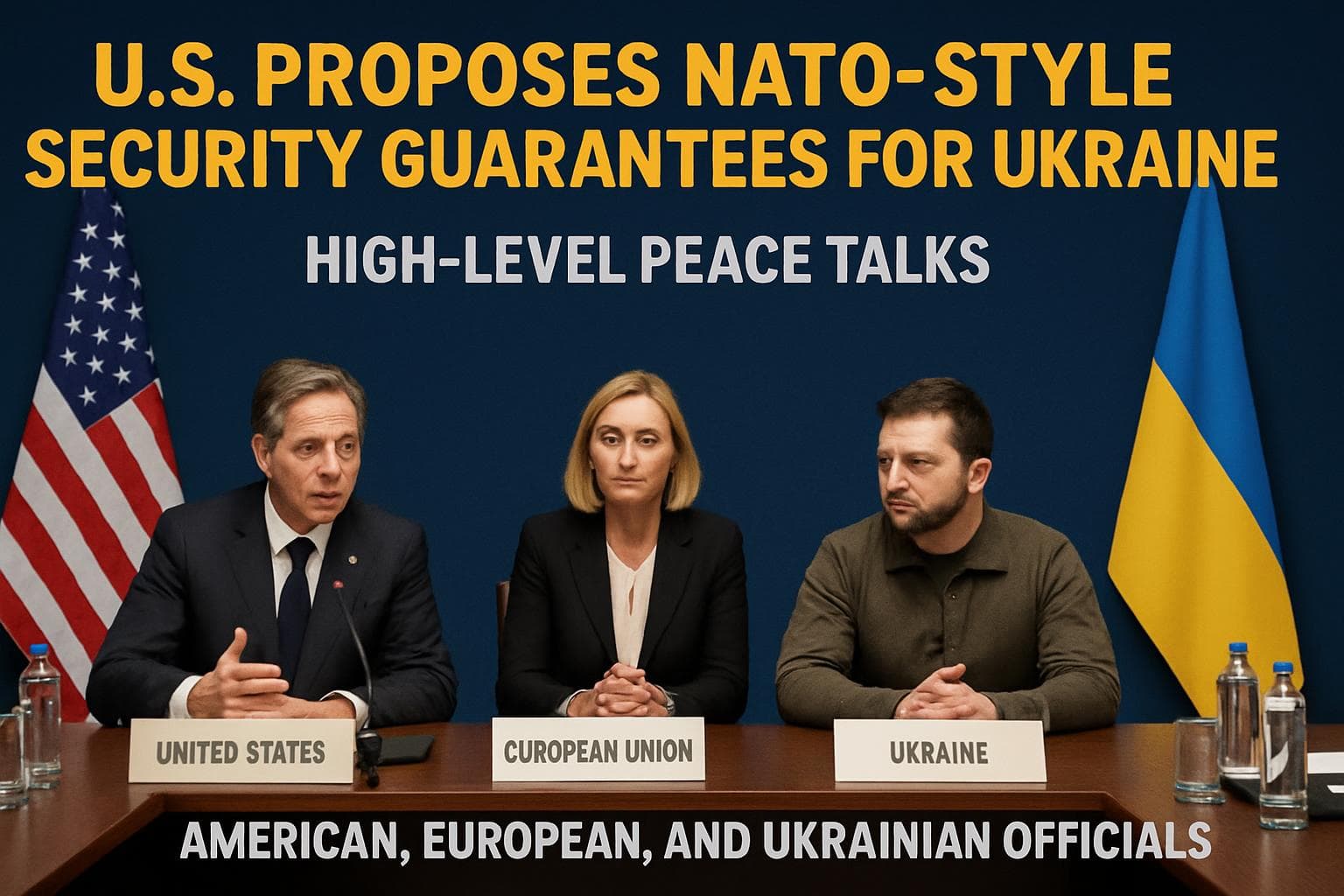
In a significant development in the ongoing Russia-Ukraine conflict, the United States has offered NATO-style security guarantees to Ukraine, aiming to facilitate a ceasefire. This proposal emerged from high-level discussions in Berlin involving US, European, and Ukrainian officials, with the intent to end the war that has ravaged Ukraine since 2022.
Security Guarantees and NATO Ambitions
The US proposal, described as the "platinum standard" by American officials, seeks to provide Ukraine with security assurances akin to NATO's Article 5, which mandates mutual defense among member states. This offer comes as Ukraine's President Volodymyr Zelensky signals a potential compromise by dropping Ukraine's NATO membership aspirations in exchange for these guarantees. "We need clear security guarantees to prevent another Russian invasion," Zelensky emphasized.
Contentious Donbas Region
Despite progress on security discussions, the status of the Donbas region remains a major hurdle. Russia insists on full control over the area, which Ukraine staunchly opposes. The US has suggested creating an "economic-free zone" in the contested region, but this would require Ukraine to withdraw from territories it still controls, a proposal not mirrored by Russian concessions.
European Involvement and Multinational Force
European leaders, including Germany's Chancellor Friedrich Merz and the UK's Prime Minister Keir Starmer, have expressed support for a multinational force to aid Ukraine. This coalition, backed by the US, aims to bolster Ukraine's defense capabilities and ensure peace. However, the details of territorial agreements remain unresolved, with European leaders stressing that "nothing is agreed until everything is agreed."
Optimism and Challenges Ahead
US President Donald Trump, who has been actively involved in the negotiations, expressed optimism about reaching a peace deal, stating, "We are closer now than we have ever been." However, he acknowledged the complexity of the situation, particularly regarding territorial concessions. European leaders echoed this sentiment, highlighting the importance of robust security guarantees to ensure lasting peace.
WHAT THIS MIGHT MEAN
The proposed security guarantees could mark a pivotal moment in the Russia-Ukraine conflict, potentially leading to a ceasefire. However, the unresolved status of the Donbas region poses a significant challenge. If Ukraine and Russia fail to reach an agreement on territorial issues, the peace process could stall. Experts suggest that the involvement of a European-led multinational force might deter further aggression, but the success of this initiative hinges on Russia's willingness to compromise.
Politically, the US and European leaders face pressure to secure a deal that not only ends the conflict but also ensures long-term stability in the region. The outcome of these talks could redefine security dynamics in Eastern Europe, with implications for NATO and EU relations. As negotiations continue, the international community watches closely, hoping for a resolution that respects Ukraine's sovereignty and deters future conflicts.
Related Articles
UK-Iran Tensions: Starmer Defends Cautious Approach Amid Trump Criticism
Spain's Sánchez Stands Firm Against Trump's Trade Threat Over Iran Stance
Russian LNG Tanker Sinks in Mediterranean Amid Accusations of Ukrainian Drone Attack

UK Faces Dilemmas Amid Iran Conflict and China Spying Allegations
Senate Blocks Resolution to Limit Trump's Military Actions in Iran
Iran Postpones Khamenei Funeral Amid Escalating US-Israeli Strikes
US Proposes NATO-Style Security Guarantees for Ukraine Amid Peace Talks
In This Article
 Ethan Brooks| Published
 HIGHLIGHTS
- The US has proposed NATO-style security guarantees for Ukraine, modeled on Article 5, to support a potential ceasefire.
- Ukraine's President Zelensky has indicated a willingness to drop NATO ambitions in exchange for robust security assurances.
- The Donbas region remains a contentious issue, with Russia demanding full control, which Ukraine refuses to concede.
- European leaders are considering a multinational force to support Ukraine, but significant territorial disagreements persist.
- US President Trump and European leaders express optimism about reaching a peace deal, though challenges remain.
In a significant development in the ongoing Russia-Ukraine conflict, the United States has offered NATO-style security guarantees to Ukraine, aiming to facilitate a ceasefire. This proposal emerged from high-level discussions in Berlin involving US, European, and Ukrainian officials, with the intent to end the war that has ravaged Ukraine since 2022.
Security Guarantees and NATO Ambitions
The US proposal, described as the "platinum standard" by American officials, seeks to provide Ukraine with security assurances akin to NATO's Article 5, which mandates mutual defense among member states. This offer comes as Ukraine's President Volodymyr Zelensky signals a potential compromise by dropping Ukraine's NATO membership aspirations in exchange for these guarantees. "We need clear security guarantees to prevent another Russian invasion," Zelensky emphasized.
Contentious Donbas Region
Despite progress on security discussions, the status of the Donbas region remains a major hurdle. Russia insists on full control over the area, which Ukraine staunchly opposes. The US has suggested creating an "economic-free zone" in the contested region, but this would require Ukraine to withdraw from territories it still controls, a proposal not mirrored by Russian concessions.
European Involvement and Multinational Force
European leaders, including Germany's Chancellor Friedrich Merz and the UK's Prime Minister Keir Starmer, have expressed support for a multinational force to aid Ukraine. This coalition, backed by the US, aims to bolster Ukraine's defense capabilities and ensure peace. However, the details of territorial agreements remain unresolved, with European leaders stressing that "nothing is agreed until everything is agreed."
Optimism and Challenges Ahead
US President Donald Trump, who has been actively involved in the negotiations, expressed optimism about reaching a peace deal, stating, "We are closer now than we have ever been." However, he acknowledged the complexity of the situation, particularly regarding territorial concessions. European leaders echoed this sentiment, highlighting the importance of robust security guarantees to ensure lasting peace.
WHAT THIS MIGHT MEAN
The proposed security guarantees could mark a pivotal moment in the Russia-Ukraine conflict, potentially leading to a ceasefire. However, the unresolved status of the Donbas region poses a significant challenge. If Ukraine and Russia fail to reach an agreement on territorial issues, the peace process could stall. Experts suggest that the involvement of a European-led multinational force might deter further aggression, but the success of this initiative hinges on Russia's willingness to compromise.
Politically, the US and European leaders face pressure to secure a deal that not only ends the conflict but also ensures long-term stability in the region. The outcome of these talks could redefine security dynamics in Eastern Europe, with implications for NATO and EU relations. As negotiations continue, the international community watches closely, hoping for a resolution that respects Ukraine's sovereignty and deters future conflicts.
Related Articles
UK-Iran Tensions: Starmer Defends Cautious Approach Amid Trump Criticism
Spain's Sánchez Stands Firm Against Trump's Trade Threat Over Iran Stance
Russian LNG Tanker Sinks in Mediterranean Amid Accusations of Ukrainian Drone Attack
UK Faces Dilemmas Amid Iran Conflict and China Spying Allegations
Senate Blocks Resolution to Limit Trump's Military Actions in Iran
Iran Postpones Khamenei Funeral Amid Escalating US-Israeli Strikes