
US Visa Revocation Bars Palestinian Leaders from UN Assembly

In This Article
HIGHLIGHTS
- The US has revoked visas for Palestinian President Mahmoud Abbas and 80 other officials ahead of the UN General Assembly, citing national security interests.
- The decision aligns with the Trump administration's stance against Palestinian statehood, drawing criticism for potentially violating the UN Headquarters Agreement.
- Israel's Foreign Minister Gideon Saar praised the US move, while Palestinian officials expressed astonishment and urged a reversal.
- The visa revocation occurs amid international efforts, led by France, to recognize a Palestinian state, which the US opposes.
- Tony Blair is involved in post-war Gaza discussions, but Palestinians have been largely excluded from these talks.
In a controversial move, the United States has revoked visas for Palestinian Authority President Mahmoud Abbas and 80 other officials, preventing them from attending the upcoming United Nations General Assembly in New York. The decision, announced by the US State Department, has sparked significant backlash, with accusations of violating the UN Headquarters Agreement, which mandates the US to facilitate travel for officials attending UN meetings.
US Justification and International Reactions
US Secretary of State Marco Rubio justified the visa revocation by accusing Palestinian leaders of undermining peace efforts and pursuing unilateral recognition of a Palestinian state. This action aligns with the Trump administration's firm stance against Palestinian statehood, a position that has been consistently supported by Israel's right-wing government. Israel's Foreign Minister Gideon Saar welcomed the decision, describing it as a "bold step" in support of Israel.
Palestinian officials, however, have expressed shock and disappointment. Abbas' office criticized the move as contradictory to international law and urged the US to reconsider. The Palestinian ambassador to the UN, Riyad Mansour, highlighted the importance of Palestinian representation at the assembly, emphasizing the potential breach of the UN Headquarters Agreement.
Broader Context and Implications
The visa revocation comes at a time when France is leading international efforts to recognize a Palestinian state, a move opposed by the Trump administration. The US has accused the Palestinian Authority and the Palestine Liberation Organization (PLO) of engaging in "lawfare" by raising grievances against Israel at international courts. The PLO, recognized by the UN as the sole legitimate representative of the Palestinian people, has been a key player in the ongoing Israel-Palestine conflict.
Meanwhile, former UK Prime Minister Tony Blair has been involved in discussions about post-war governance in Gaza, alongside US and Israeli officials. However, Palestinian voices have been notably absent from these talks, raising concerns about the exclusion of Palestinian perspectives in shaping their future.
WHAT THIS MIGHT MEAN
The US decision to revoke visas for Palestinian leaders could further strain US-Palestinian relations and complicate international efforts to mediate peace in the region. If the US maintains its stance, it may face criticism from other UN member states and human rights organizations for undermining diplomatic norms. The exclusion of Palestinian leaders from key discussions, such as those involving Tony Blair, could hinder progress towards a sustainable resolution to the Israel-Palestine conflict. As international pressure mounts, the US may need to reassess its approach to avoid isolating itself from global consensus on the issue.
Related Articles
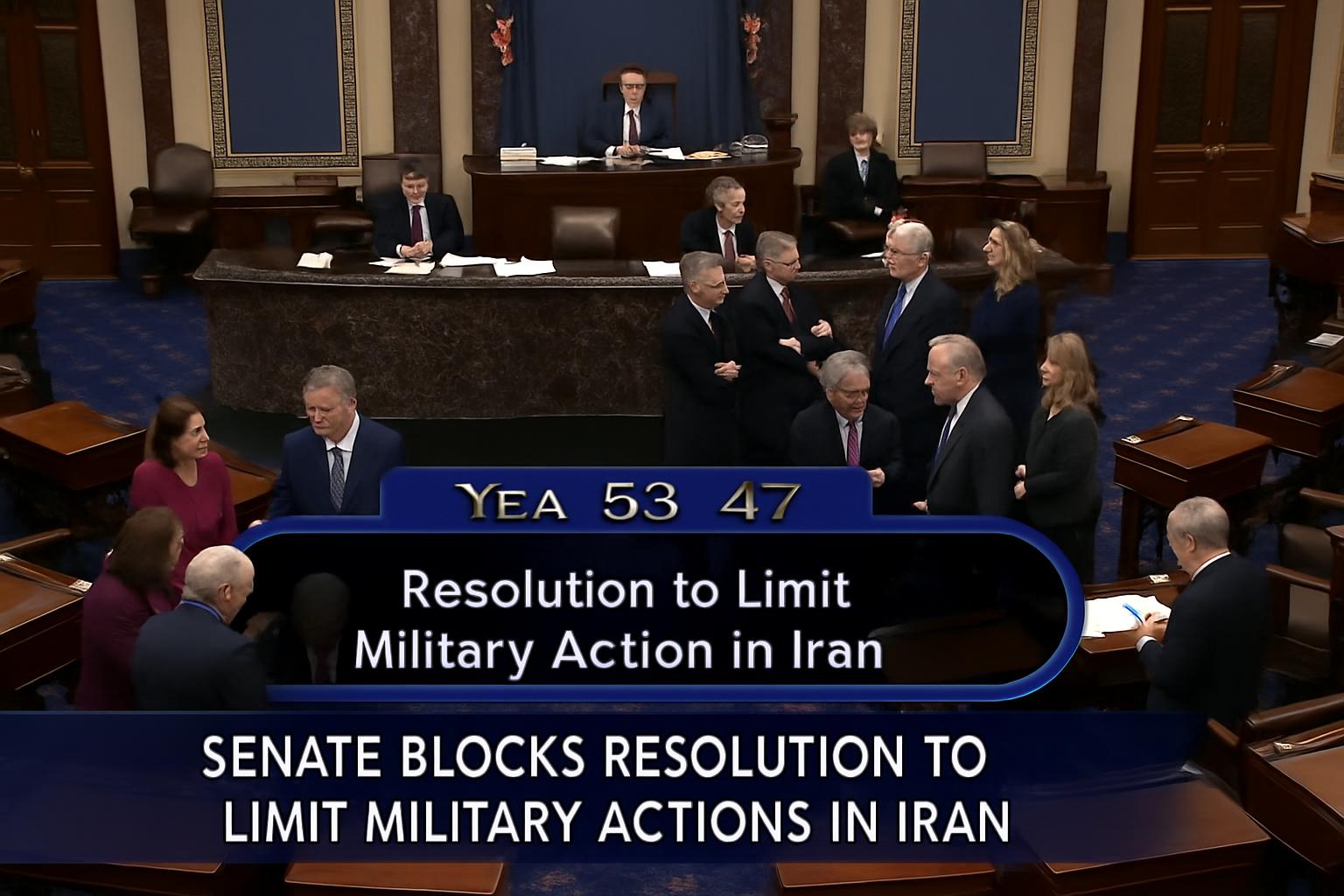
Senate Blocks Resolution to Limit Trump's Military Actions in Iran
Iran Postpones Khamenei Funeral Amid Escalating US-Israeli Strikes

US and Israel Intensify Military Campaign as Iran's Capabilities Dwindle

Intensified US-Israel Strikes on Iran Spark Global Outcry
Canada Calls for De-escalation Amid US-Israel Strikes on Iran

Violence Erupts Across Mexico Following Death of Drug Lord El Mencho
US Visa Revocation Bars Palestinian Leaders from UN Assembly
In This Article
 Ethan Brooks| Published
 HIGHLIGHTS
- The US has revoked visas for Palestinian President Mahmoud Abbas and 80 other officials ahead of the UN General Assembly, citing national security interests.
- The decision aligns with the Trump administration's stance against Palestinian statehood, drawing criticism for potentially violating the UN Headquarters Agreement.
- Israel's Foreign Minister Gideon Saar praised the US move, while Palestinian officials expressed astonishment and urged a reversal.
- The visa revocation occurs amid international efforts, led by France, to recognize a Palestinian state, which the US opposes.
- Tony Blair is involved in post-war Gaza discussions, but Palestinians have been largely excluded from these talks.
In a controversial move, the United States has revoked visas for Palestinian Authority President Mahmoud Abbas and 80 other officials, preventing them from attending the upcoming United Nations General Assembly in New York. The decision, announced by the US State Department, has sparked significant backlash, with accusations of violating the UN Headquarters Agreement, which mandates the US to facilitate travel for officials attending UN meetings.
US Justification and International Reactions
US Secretary of State Marco Rubio justified the visa revocation by accusing Palestinian leaders of undermining peace efforts and pursuing unilateral recognition of a Palestinian state. This action aligns with the Trump administration's firm stance against Palestinian statehood, a position that has been consistently supported by Israel's right-wing government. Israel's Foreign Minister Gideon Saar welcomed the decision, describing it as a "bold step" in support of Israel.
Palestinian officials, however, have expressed shock and disappointment. Abbas' office criticized the move as contradictory to international law and urged the US to reconsider. The Palestinian ambassador to the UN, Riyad Mansour, highlighted the importance of Palestinian representation at the assembly, emphasizing the potential breach of the UN Headquarters Agreement.
Broader Context and Implications
The visa revocation comes at a time when France is leading international efforts to recognize a Palestinian state, a move opposed by the Trump administration. The US has accused the Palestinian Authority and the Palestine Liberation Organization (PLO) of engaging in "lawfare" by raising grievances against Israel at international courts. The PLO, recognized by the UN as the sole legitimate representative of the Palestinian people, has been a key player in the ongoing Israel-Palestine conflict.
Meanwhile, former UK Prime Minister Tony Blair has been involved in discussions about post-war governance in Gaza, alongside US and Israeli officials. However, Palestinian voices have been notably absent from these talks, raising concerns about the exclusion of Palestinian perspectives in shaping their future.
WHAT THIS MIGHT MEAN
The US decision to revoke visas for Palestinian leaders could further strain US-Palestinian relations and complicate international efforts to mediate peace in the region. If the US maintains its stance, it may face criticism from other UN member states and human rights organizations for undermining diplomatic norms. The exclusion of Palestinian leaders from key discussions, such as those involving Tony Blair, could hinder progress towards a sustainable resolution to the Israel-Palestine conflict. As international pressure mounts, the US may need to reassess its approach to avoid isolating itself from global consensus on the issue.
Related Articles
Senate Blocks Resolution to Limit Trump's Military Actions in Iran
Iran Postpones Khamenei Funeral Amid Escalating US-Israeli Strikes
US and Israel Intensify Military Campaign as Iran's Capabilities Dwindle
Intensified US-Israel Strikes on Iran Spark Global Outcry
Canada Calls for De-escalation Amid US-Israel Strikes on Iran
Violence Erupts Across Mexico Following Death of Drug Lord El Mencho