
US and Ukraine Push for Russian Commitment in Peace Talks
In This Article
HIGHLIGHTS
- US and Ukrainian officials urge Russia to commit to peace after talks in Florida and Moscow.
- Progress hinges on Russia's willingness to de-escalate and cease hostilities, say negotiators.
- Major sticking points include security guarantees for Ukraine and territorial concessions.
- Ukrainian President Zelensky seeks clarity on US-Russia discussions amid ongoing conflict.
- NATO membership for Ukraine remains a contentious issue, with Russia strongly opposed.
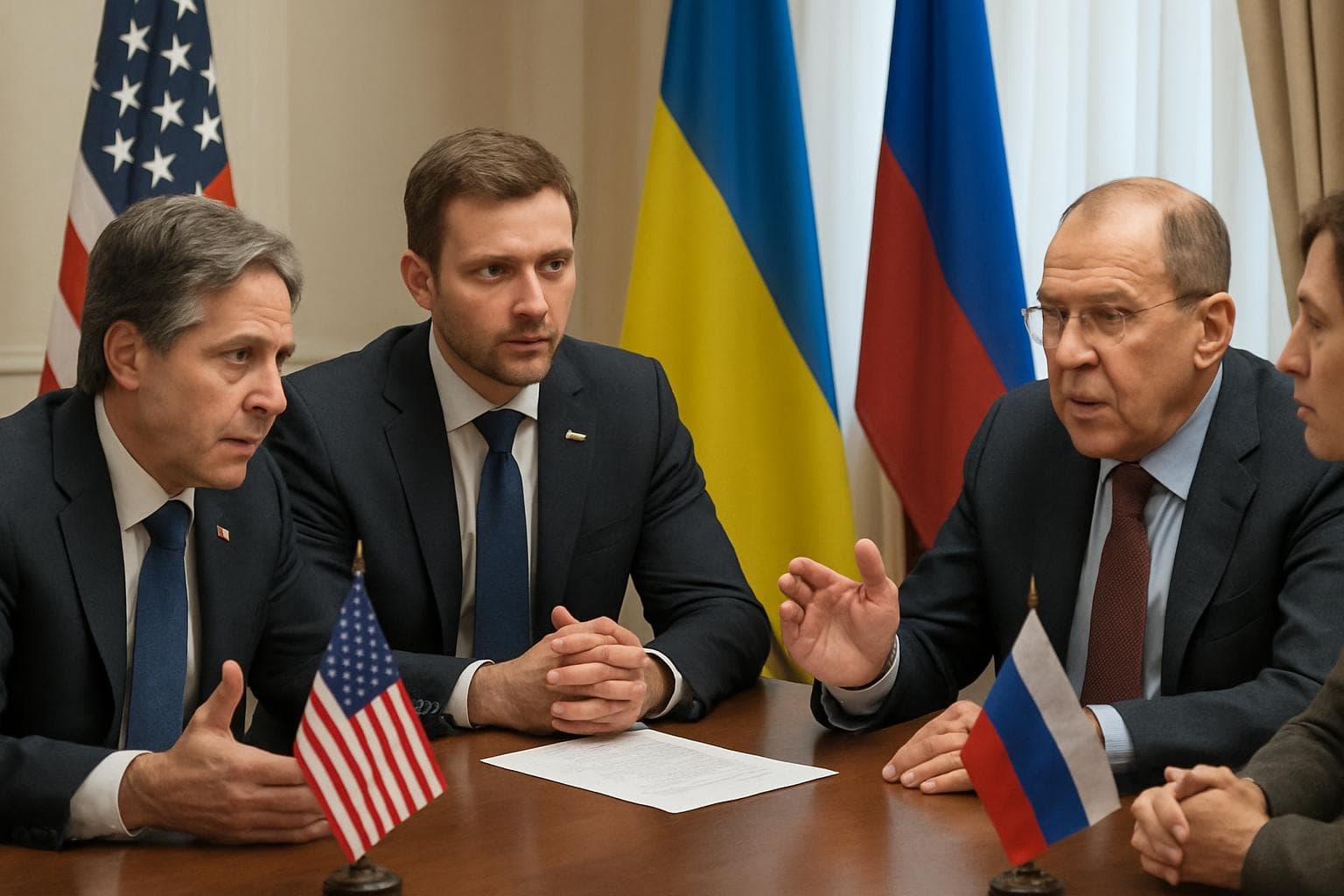
In a bid to end the prolonged conflict in Ukraine, US and Ukrainian negotiators have called on Russia to demonstrate a "serious commitment to long-term peace." This appeal follows a series of discussions held in Florida and Moscow, which have yet to yield a definitive breakthrough. The talks, involving US special envoy Steve Witkoff and Ukraine's national security council secretary Rustem Umerov, emphasized the necessity for Russia to take concrete steps towards de-escalation and cessation of violence.
Ongoing Negotiations and Key Issues
The negotiations, which are set to continue for a third day, have seen participation from notable figures such as Jared Kushner, former US President Donald Trump's son-in-law. Despite the constructive nature of the discussions, significant challenges remain. Key issues include security guarantees for Ukraine in a post-war scenario and territorial concessions, with Russia currently controlling approximately one-fifth of Ukrainian territory, including parts of the Donbas region.
Ukraine's Stance and International Dynamics
Ukrainian President Volodymyr Zelensky has expressed a desire for transparency regarding the US-Russia talks, particularly concerning any pretexts that Russian President Vladimir Putin might use to prolong the conflict. The leaked initial US peace plan, perceived as favorable to Moscow, has undergone revisions, but the latest version remains undisclosed. Meanwhile, the prospect of Ukraine joining NATO continues to be a divisive topic, with Russia firmly opposed and Trump signaling reluctance to support Ukraine's membership.
International Reactions and Developments
European leaders, including French President Emmanuel Macron, have underscored the importance of unity between the US and Europe on the Ukrainian issue. Concurrently, discussions within the European Union about using frozen Russian assets to fund Ukraine's reconstruction have sparked controversy, with Russia warning of severe repercussions. Amid these diplomatic efforts, the conflict persists, with recent Russian attacks on Ukrainian infrastructure and retaliatory strikes by Ukrainian drones.
WHAT THIS MIGHT MEAN
As negotiations progress, the potential outcomes remain uncertain. Should Russia demonstrate a genuine commitment to peace, it could pave the way for a comprehensive agreement that addresses security concerns and territorial disputes. However, continued Russian intransigence may prolong the conflict, necessitating further international intervention and support for Ukraine. The issue of NATO membership for Ukraine remains a pivotal factor, with its resolution likely to influence the broader geopolitical landscape in Europe. Experts suggest that a balanced approach, incorporating both diplomatic and military strategies, will be crucial in achieving a sustainable peace.
Related Articles
Russian LNG Tanker Sinks in Mediterranean Amid Accusations of Ukrainian Drone Attack
Spain's Sánchez Stands Firm Against Trump's Trade Threat Over Iran Stance
Senate Blocks Resolution to Limit Trump's Military Actions in Iran
UK-Iran Tensions: Starmer Defends Cautious Approach Amid Trump Criticism
Iran Postpones Khamenei Funeral Amid Escalating US-Israeli Strikes
Congress Subpoenas Attorney General Bondi in Epstein Investigation
US and Ukraine Push for Russian Commitment in Peace Talks
In This Article
 Ethan Brooks| Published
 HIGHLIGHTS
- US and Ukrainian officials urge Russia to commit to peace after talks in Florida and Moscow.
- Progress hinges on Russia's willingness to de-escalate and cease hostilities, say negotiators.
- Major sticking points include security guarantees for Ukraine and territorial concessions.
- Ukrainian President Zelensky seeks clarity on US-Russia discussions amid ongoing conflict.
- NATO membership for Ukraine remains a contentious issue, with Russia strongly opposed.
In a bid to end the prolonged conflict in Ukraine, US and Ukrainian negotiators have called on Russia to demonstrate a "serious commitment to long-term peace." This appeal follows a series of discussions held in Florida and Moscow, which have yet to yield a definitive breakthrough. The talks, involving US special envoy Steve Witkoff and Ukraine's national security council secretary Rustem Umerov, emphasized the necessity for Russia to take concrete steps towards de-escalation and cessation of violence.
Ongoing Negotiations and Key Issues
The negotiations, which are set to continue for a third day, have seen participation from notable figures such as Jared Kushner, former US President Donald Trump's son-in-law. Despite the constructive nature of the discussions, significant challenges remain. Key issues include security guarantees for Ukraine in a post-war scenario and territorial concessions, with Russia currently controlling approximately one-fifth of Ukrainian territory, including parts of the Donbas region.
Ukraine's Stance and International Dynamics
Ukrainian President Volodymyr Zelensky has expressed a desire for transparency regarding the US-Russia talks, particularly concerning any pretexts that Russian President Vladimir Putin might use to prolong the conflict. The leaked initial US peace plan, perceived as favorable to Moscow, has undergone revisions, but the latest version remains undisclosed. Meanwhile, the prospect of Ukraine joining NATO continues to be a divisive topic, with Russia firmly opposed and Trump signaling reluctance to support Ukraine's membership.
International Reactions and Developments
European leaders, including French President Emmanuel Macron, have underscored the importance of unity between the US and Europe on the Ukrainian issue. Concurrently, discussions within the European Union about using frozen Russian assets to fund Ukraine's reconstruction have sparked controversy, with Russia warning of severe repercussions. Amid these diplomatic efforts, the conflict persists, with recent Russian attacks on Ukrainian infrastructure and retaliatory strikes by Ukrainian drones.
WHAT THIS MIGHT MEAN
As negotiations progress, the potential outcomes remain uncertain. Should Russia demonstrate a genuine commitment to peace, it could pave the way for a comprehensive agreement that addresses security concerns and territorial disputes. However, continued Russian intransigence may prolong the conflict, necessitating further international intervention and support for Ukraine. The issue of NATO membership for Ukraine remains a pivotal factor, with its resolution likely to influence the broader geopolitical landscape in Europe. Experts suggest that a balanced approach, incorporating both diplomatic and military strategies, will be crucial in achieving a sustainable peace.
Related Articles
Russian LNG Tanker Sinks in Mediterranean Amid Accusations of Ukrainian Drone Attack
Spain's Sánchez Stands Firm Against Trump's Trade Threat Over Iran Stance
Senate Blocks Resolution to Limit Trump's Military Actions in Iran
UK-Iran Tensions: Starmer Defends Cautious Approach Amid Trump Criticism
Iran Postpones Khamenei Funeral Amid Escalating US-Israeli Strikes
Congress Subpoenas Attorney General Bondi in Epstein Investigation