
US Launches Second Phase of Gaza Peace Plan with New Governance Structure
In This Article
HIGHLIGHTS
- The US has initiated phase two of its Gaza peace plan, focusing on demilitarization and reconstruction, led by a technocratic Palestinian government.
- A ceasefire was established in October, but tensions remain high with accusations of violations and ongoing humanitarian challenges.
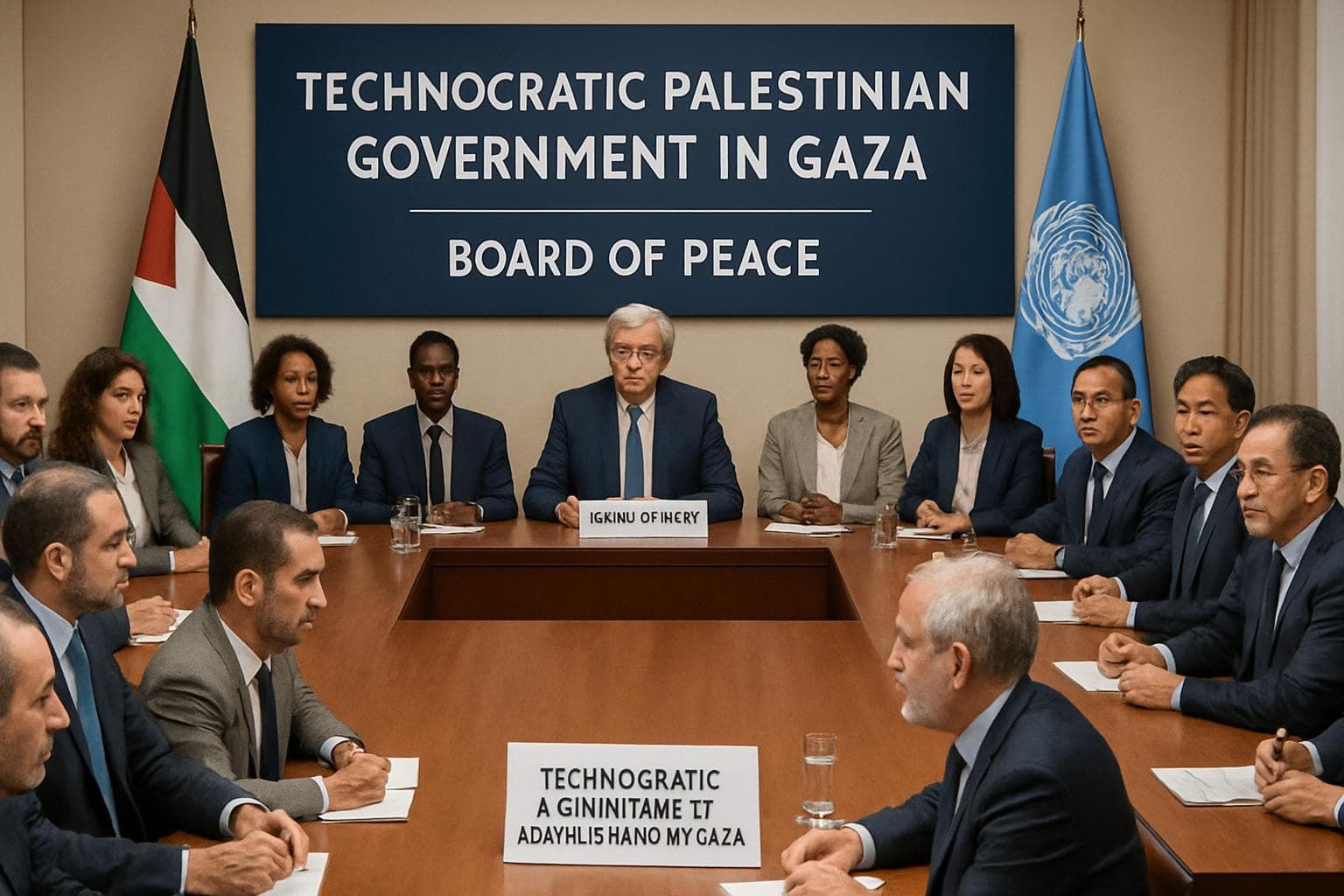
- The transitional government, the National Committee for the Administration of Gaza, will be overseen by a "Board of Peace" chaired by President Trump.
- Hamas's disarmament remains a contentious issue, with the group demanding an independent Palestinian state before relinquishing weapons.
- An International Stabilisation Force is set to support Palestinian police forces, aiming to stabilize the region further.
The United States has embarked on the second phase of its ambitious Gaza peace plan, aiming to stabilize the region through the establishment of a technocratic Palestinian government. Announced by US envoy Steve Witkoff, this phase seeks to demilitarize and reconstruct Gaza, following a fragile ceasefire agreement reached in October.
Technocratic Governance and Reconstruction
Central to this phase is the formation of the National Committee for the Administration of Gaza (NCAG), a transitional body tasked with overseeing the territory's governance. This committee, comprising 15 members, will be led by Ali Shaath, a former deputy planning minister in the Palestinian Authority. The initiative has garnered support from regional mediators, including Egypt, Qatar, and Turkey, who view it as a step towards stability and improved humanitarian conditions.
Challenges of Disarmament and Ceasefire Violations
Despite the ceasefire, tensions persist, with both sides accusing each other of violations. The ceasefire, which began on October 10, included a hostage-prisoner exchange and a partial Israeli withdrawal. However, Israeli strikes have resulted in the deaths of approximately 450 Palestinians since the truce's inception, according to Gaza's health ministry. The disarmament of Hamas remains a significant hurdle, as the group insists on the creation of an independent Palestinian state before surrendering its weapons.
International Oversight and Support
The transitional administration will operate under the supervision of a "Board of Peace," chaired by President Donald Trump. This board, expected to be announced at the World Economic Forum in Davos, will include international leaders and will be represented on the ground by Nickolay Mladenov, a respected Bulgarian diplomat and former UN Middle East envoy. Additionally, an International Stabilisation Force will be deployed to train and support vetted Palestinian police forces, furthering efforts to maintain peace and order.
Humanitarian Concerns and Future Prospects
The humanitarian situation in Gaza remains dire, with the United Nations emphasizing the urgent need for unrestricted aid. The US has warned Hamas of "serious consequences" should it fail to comply with its obligations, including the return of the last deceased Israeli hostage. As discussions continue in Cairo, the focus remains on further Israeli withdrawal and the reopening of critical crossings, such as Rafah, to alleviate the humanitarian crisis.
WHAT THIS MIGHT MEAN
The success of the second phase of the Gaza peace plan hinges on the cooperation of all parties involved. The disarmament of Hamas is a critical component, yet it remains a contentious issue that could derail progress if not addressed diplomatically. The establishment of a technocratic government offers a potential pathway to stability, but its effectiveness will depend on the support and collaboration of regional and international stakeholders.
Politically, the involvement of President Trump and the creation of a "Board of Peace" could either bolster the plan's credibility or complicate it, depending on the board's composition and actions. The deployment of the International Stabilisation Force may provide the necessary security framework to support these efforts, but its success will require careful coordination and clear mandates.
As the situation evolves, the international community will need to remain vigilant and responsive to ensure that humanitarian needs are met and that the peace process continues to move forward constructively.
Related Articles
Intensified US-Israel Strikes on Iran Spark Global Outcry
Senate Blocks Resolution to Limit Trump's Military Actions in Iran
Iran Postpones Khamenei Funeral Amid Escalating US-Israeli Strikes

UK Faces Dilemmas Amid Iran Conflict and China Spying Allegations
US and Israel Intensify Military Campaign as Iran's Capabilities Dwindle
Spain's Sánchez Stands Firm Against Trump's Trade Threat Over Iran Stance
US Launches Second Phase of Gaza Peace Plan with New Governance Structure
In This Article
 Ethan Brooks| Published
 HIGHLIGHTS
- The US has initiated phase two of its Gaza peace plan, focusing on demilitarization and reconstruction, led by a technocratic Palestinian government.
- A ceasefire was established in October, but tensions remain high with accusations of violations and ongoing humanitarian challenges.
- The transitional government, the National Committee for the Administration of Gaza, will be overseen by a "Board of Peace" chaired by President Trump.
- Hamas's disarmament remains a contentious issue, with the group demanding an independent Palestinian state before relinquishing weapons.
- An International Stabilisation Force is set to support Palestinian police forces, aiming to stabilize the region further.
The United States has embarked on the second phase of its ambitious Gaza peace plan, aiming to stabilize the region through the establishment of a technocratic Palestinian government. Announced by US envoy Steve Witkoff, this phase seeks to demilitarize and reconstruct Gaza, following a fragile ceasefire agreement reached in October.
Technocratic Governance and Reconstruction
Central to this phase is the formation of the National Committee for the Administration of Gaza (NCAG), a transitional body tasked with overseeing the territory's governance. This committee, comprising 15 members, will be led by Ali Shaath, a former deputy planning minister in the Palestinian Authority. The initiative has garnered support from regional mediators, including Egypt, Qatar, and Turkey, who view it as a step towards stability and improved humanitarian conditions.
Challenges of Disarmament and Ceasefire Violations
Despite the ceasefire, tensions persist, with both sides accusing each other of violations. The ceasefire, which began on October 10, included a hostage-prisoner exchange and a partial Israeli withdrawal. However, Israeli strikes have resulted in the deaths of approximately 450 Palestinians since the truce's inception, according to Gaza's health ministry. The disarmament of Hamas remains a significant hurdle, as the group insists on the creation of an independent Palestinian state before surrendering its weapons.
International Oversight and Support
The transitional administration will operate under the supervision of a "Board of Peace," chaired by President Donald Trump. This board, expected to be announced at the World Economic Forum in Davos, will include international leaders and will be represented on the ground by Nickolay Mladenov, a respected Bulgarian diplomat and former UN Middle East envoy. Additionally, an International Stabilisation Force will be deployed to train and support vetted Palestinian police forces, furthering efforts to maintain peace and order.
Humanitarian Concerns and Future Prospects
The humanitarian situation in Gaza remains dire, with the United Nations emphasizing the urgent need for unrestricted aid. The US has warned Hamas of "serious consequences" should it fail to comply with its obligations, including the return of the last deceased Israeli hostage. As discussions continue in Cairo, the focus remains on further Israeli withdrawal and the reopening of critical crossings, such as Rafah, to alleviate the humanitarian crisis.
WHAT THIS MIGHT MEAN
The success of the second phase of the Gaza peace plan hinges on the cooperation of all parties involved. The disarmament of Hamas is a critical component, yet it remains a contentious issue that could derail progress if not addressed diplomatically. The establishment of a technocratic government offers a potential pathway to stability, but its effectiveness will depend on the support and collaboration of regional and international stakeholders.
Politically, the involvement of President Trump and the creation of a "Board of Peace" could either bolster the plan's credibility or complicate it, depending on the board's composition and actions. The deployment of the International Stabilisation Force may provide the necessary security framework to support these efforts, but its success will require careful coordination and clear mandates.
As the situation evolves, the international community will need to remain vigilant and responsive to ensure that humanitarian needs are met and that the peace process continues to move forward constructively.
Related Articles
Intensified US-Israel Strikes on Iran Spark Global Outcry
Senate Blocks Resolution to Limit Trump's Military Actions in Iran
Iran Postpones Khamenei Funeral Amid Escalating US-Israeli Strikes
UK Faces Dilemmas Amid Iran Conflict and China Spying Allegations
US and Israel Intensify Military Campaign as Iran's Capabilities Dwindle
Spain's Sánchez Stands Firm Against Trump's Trade Threat Over Iran Stance