
US Imposes Visa Bans on European Figures Over Social Media Regulation Dispute
In This Article
HIGHLIGHTS
- The US has denied visas to five Europeans, including former EU Commissioner Thierry Breton, over alleged efforts to suppress American viewpoints.
- The visa bans target individuals linked to the EU's Digital Services Act, which the US claims stifles free speech and burdens American tech firms.
- Secretary of State Marco Rubio described the individuals as part of a "global censorship-industrial complex" targeting American companies.
- The move is part of a broader Trump administration strategy to counter foreign influence on online speech using immigration law.
- Critics, including those banned, argue the US actions are an authoritarian attack on free speech and an attempt to silence dissent.
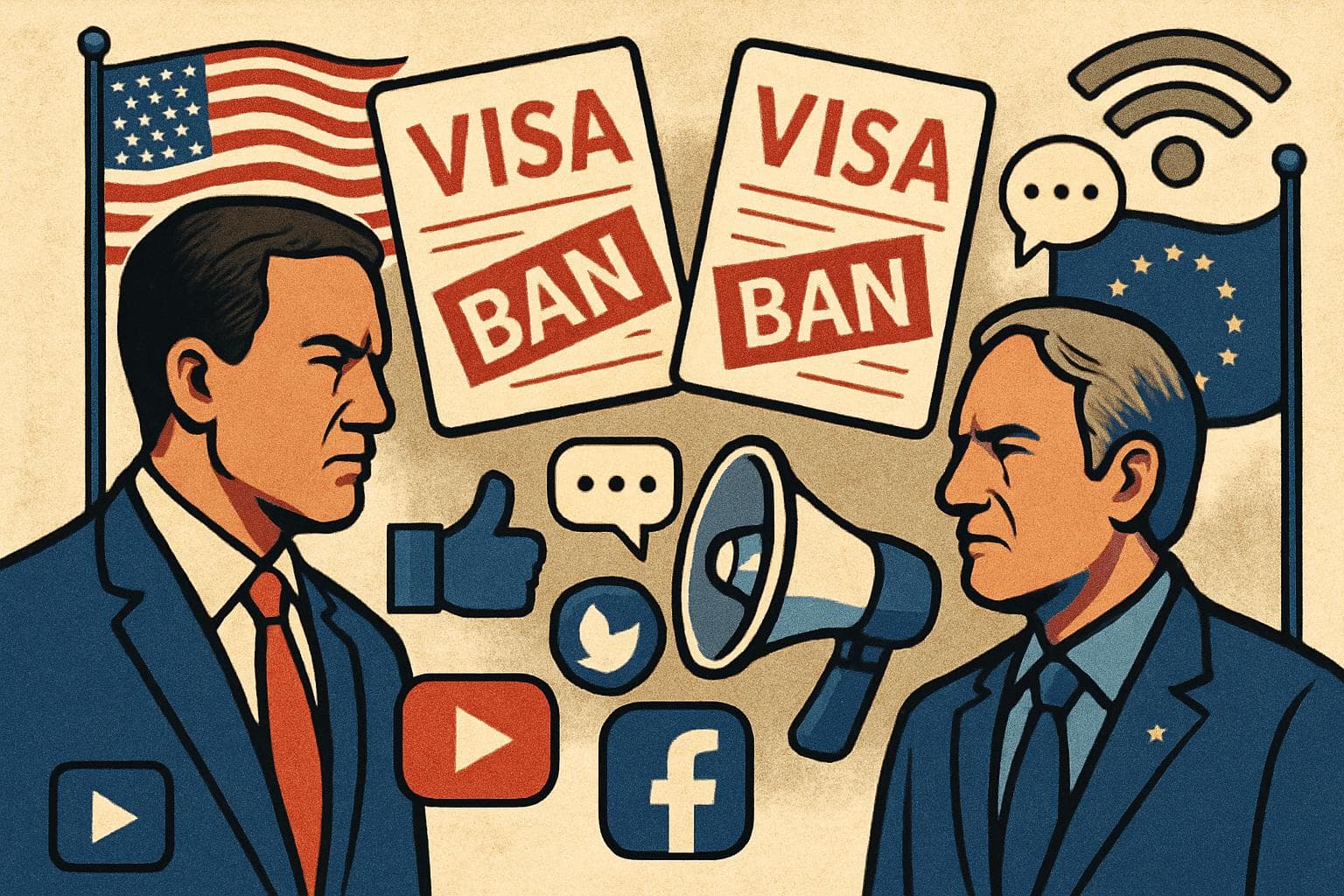
In a significant diplomatic move, the United States has imposed visa bans on five European individuals, including former European Commissioner Thierry Breton, accusing them of orchestrating efforts to suppress American viewpoints on social media platforms. The decision, announced by Secretary of State Marco Rubio, marks a new chapter in the ongoing transatlantic debate over digital regulation and free speech.
Background on the Visa Bans
The individuals targeted by the visa bans are accused of leading initiatives under the European Union's Digital Services Act (DSA), a regulatory framework designed to combat hate speech and misinformation online. The US administration, however, views the DSA as an overreach that stifles free speech and imposes undue burdens on American tech companies. "These radical activists and weaponized NGOs have advanced censorship crackdowns by foreign states," Rubio stated, emphasizing the perceived threat to American speakers and companies.
Key Figures and Reactions
Among those banned is Thierry Breton, a pivotal figure in the creation of the DSA, who has previously clashed with tech mogul Elon Musk over compliance with EU regulations. Breton responded to the visa denial by suggesting a "witch hunt" was underway, echoing historical references to political persecution. Other individuals affected include Clare Melford of the Global Disinformation Index and Imran Ahmed of the Center for Countering Digital Hate, both of whom have criticized the US action as an authoritarian attack on free speech.
Implications of the Ban
The visa bans are part of a broader strategy by the Trump administration to counter what it perceives as foreign influence over online discourse. By leveraging immigration law, the administration aims to challenge European regulations that it argues could lead to "civilisational erasure" by suppressing opposition to immigration policies. The move has sparked significant backlash from those affected, who argue that the US is using accusations of censorship to silence critics of its policies.
WHAT THIS MIGHT MEAN
The imposition of visa bans on European figures could further strain US-EU relations, particularly in the realm of digital policy and regulation. As the EU continues to enforce the Digital Services Act, American tech companies may face increased pressure to comply with European standards, potentially leading to further diplomatic tensions. Experts suggest that this move by the US could prompt a reevaluation of transatlantic cooperation on digital governance, with potential implications for international trade and technology policy. The situation underscores the complex interplay between national sovereignty, global digital regulation, and the protection of free speech in the digital age.
Related Articles
Elon Musk Defends Tweets in Twitter Takeover Trial
Spain's Sánchez Stands Firm Against Trump's Trade Threat Over Iran Stance
Iran Postpones Khamenei Funeral Amid Escalating US-Israeli Strikes
US-Iran Tensions Escalate Amid Renewed Nuclear Talks and Protests

Russian LNG Tanker Sinks in Mediterranean Amid Accusations of Ukrainian Drone Attack
Canada Calls for De-escalation Amid US-Israel Strikes on Iran
US Imposes Visa Bans on European Figures Over Social Media Regulation Dispute
In This Article
 Ethan Brooks| Published
 HIGHLIGHTS
- The US has denied visas to five Europeans, including former EU Commissioner Thierry Breton, over alleged efforts to suppress American viewpoints.
- The visa bans target individuals linked to the EU's Digital Services Act, which the US claims stifles free speech and burdens American tech firms.
- Secretary of State Marco Rubio described the individuals as part of a "global censorship-industrial complex" targeting American companies.
- The move is part of a broader Trump administration strategy to counter foreign influence on online speech using immigration law.
- Critics, including those banned, argue the US actions are an authoritarian attack on free speech and an attempt to silence dissent.
In a significant diplomatic move, the United States has imposed visa bans on five European individuals, including former European Commissioner Thierry Breton, accusing them of orchestrating efforts to suppress American viewpoints on social media platforms. The decision, announced by Secretary of State Marco Rubio, marks a new chapter in the ongoing transatlantic debate over digital regulation and free speech.
Background on the Visa Bans
The individuals targeted by the visa bans are accused of leading initiatives under the European Union's Digital Services Act (DSA), a regulatory framework designed to combat hate speech and misinformation online. The US administration, however, views the DSA as an overreach that stifles free speech and imposes undue burdens on American tech companies. "These radical activists and weaponized NGOs have advanced censorship crackdowns by foreign states," Rubio stated, emphasizing the perceived threat to American speakers and companies.
Key Figures and Reactions
Among those banned is Thierry Breton, a pivotal figure in the creation of the DSA, who has previously clashed with tech mogul Elon Musk over compliance with EU regulations. Breton responded to the visa denial by suggesting a "witch hunt" was underway, echoing historical references to political persecution. Other individuals affected include Clare Melford of the Global Disinformation Index and Imran Ahmed of the Center for Countering Digital Hate, both of whom have criticized the US action as an authoritarian attack on free speech.
Implications of the Ban
The visa bans are part of a broader strategy by the Trump administration to counter what it perceives as foreign influence over online discourse. By leveraging immigration law, the administration aims to challenge European regulations that it argues could lead to "civilisational erasure" by suppressing opposition to immigration policies. The move has sparked significant backlash from those affected, who argue that the US is using accusations of censorship to silence critics of its policies.
WHAT THIS MIGHT MEAN
The imposition of visa bans on European figures could further strain US-EU relations, particularly in the realm of digital policy and regulation. As the EU continues to enforce the Digital Services Act, American tech companies may face increased pressure to comply with European standards, potentially leading to further diplomatic tensions. Experts suggest that this move by the US could prompt a reevaluation of transatlantic cooperation on digital governance, with potential implications for international trade and technology policy. The situation underscores the complex interplay between national sovereignty, global digital regulation, and the protection of free speech in the digital age.
Related Articles
Elon Musk Defends Tweets in Twitter Takeover Trial
Spain's Sánchez Stands Firm Against Trump's Trade Threat Over Iran Stance
Iran Postpones Khamenei Funeral Amid Escalating US-Israeli Strikes
US-Iran Tensions Escalate Amid Renewed Nuclear Talks and Protests
Russian LNG Tanker Sinks in Mediterranean Amid Accusations of Ukrainian Drone Attack
Canada Calls for De-escalation Amid US-Israel Strikes on Iran