
Controversial West Bank Settlement Plan Sparks International Outcry
In This Article
HIGHLIGHTS
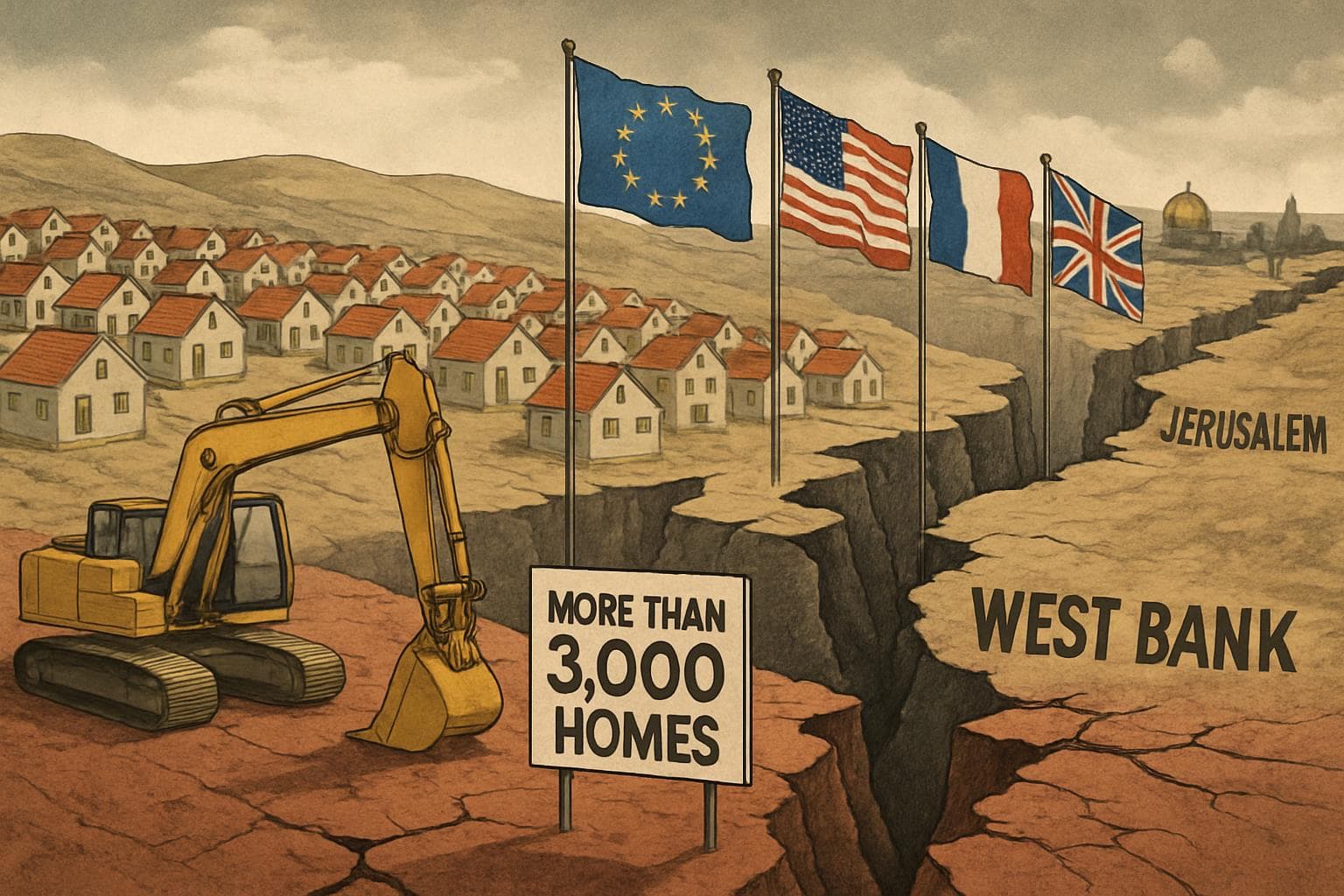
- Israeli Finance Minister Bezalel Smotrich announced plans for over 3,000 homes in the controversial E1 settlement project in the West Bank.
- The E1 project, if approved, would effectively divide the West Bank and cut it off from East Jerusalem, complicating the prospect of a Palestinian state.
- The international community, including the EU, UK, and Germany, strongly opposes the plan, citing violations of international law.
- Smotrich claims the project will "bury the idea of a Palestinian state," while the US State Department emphasizes the need for a stable West Bank for regional peace.
- The plan has sparked widespread condemnation from countries like Qatar, Iraq, and Jordan, as well as Israeli NGOs like Peace Now.
Israeli Finance Minister Bezalel Smotrich has reignited tensions in the Middle East with the announcement of plans to construct over 3,000 homes in the contentious E1 settlement project in the occupied West Bank. This development, which has been frozen for decades due to international opposition, threatens to sever the West Bank from East Jerusalem, a move that critics argue would dismantle the possibility of a future Palestinian state.
E1 Project and Its Implications
The E1 project, located between Jerusalem and the Maale Adumim settlement, has long been a flashpoint in Israeli-Palestinian relations. Smotrich, a far-right figure in Israeli politics, declared that the project would "bury the idea of a Palestinian state," asserting that the land was divinely granted to the Jewish people. The plan's approval would further entrench Israeli settlements in the West Bank, which are deemed illegal under international law.
Global Reactions and Legal Concerns
The announcement has drawn swift condemnation from the international community. The European Union, United Kingdom, and Germany have all voiced strong objections, with UK Foreign Minister David Lammy labeling the proposal a "flagrant breach of international law." The EU reiterated its stance against any territorial changes not agreed upon by both parties involved.
Meanwhile, the US State Department has emphasized the importance of a stable West Bank for regional security, though it has not directly addressed the E1 project. Countries in the Middle East, including Qatar, Iraq, and Jordan, have also condemned the plan, highlighting its potential to disrupt the already fragile peace process.
Domestic and International Opposition
Within Israel, NGOs like Peace Now have criticized the government's actions, accusing it of deepening the annexation of the West Bank and undermining the two-state solution. The plan's revival comes amid a backdrop of increasing international recognition of a Palestinian state, a move Israel has consistently opposed.
WHAT THIS MIGHT MEAN
The approval of the E1 settlement project could have far-reaching implications for the Middle East peace process. If the plan proceeds, it may further isolate Israel on the international stage and exacerbate tensions with Palestinian authorities. The move could also prompt a reevaluation of diplomatic relations between Israel and countries that support Palestinian statehood.
Experts warn that the project could lead to increased instability in the region, potentially sparking protests and violence. The international community's response, particularly from key players like the United States, will be crucial in determining the future of the E1 project and its impact on the Israeli-Palestinian conflict.
Related Articles

Middle East Conflict Drives UK Energy Prices to New Highs

UK Faces Dilemmas Amid Iran Conflict and China Spying Allegations

US and Israel Intensify Military Campaign as Iran's Capabilities Dwindle

Iran Postpones Khamenei Funeral Amid Escalating US-Israeli Strikes
Canada Calls for De-escalation Amid US-Israel Strikes on Iran

China Sets Lowest GDP Growth Target in Decades Amid Economic Challenges
Controversial West Bank Settlement Plan Sparks International Outcry
In This Article
 James Okoro| Published
 HIGHLIGHTS
- Israeli Finance Minister Bezalel Smotrich announced plans for over 3,000 homes in the controversial E1 settlement project in the West Bank.
- The E1 project, if approved, would effectively divide the West Bank and cut it off from East Jerusalem, complicating the prospect of a Palestinian state.
- The international community, including the EU, UK, and Germany, strongly opposes the plan, citing violations of international law.
- Smotrich claims the project will "bury the idea of a Palestinian state," while the US State Department emphasizes the need for a stable West Bank for regional peace.
- The plan has sparked widespread condemnation from countries like Qatar, Iraq, and Jordan, as well as Israeli NGOs like Peace Now.
Israeli Finance Minister Bezalel Smotrich has reignited tensions in the Middle East with the announcement of plans to construct over 3,000 homes in the contentious E1 settlement project in the occupied West Bank. This development, which has been frozen for decades due to international opposition, threatens to sever the West Bank from East Jerusalem, a move that critics argue would dismantle the possibility of a future Palestinian state.
E1 Project and Its Implications
The E1 project, located between Jerusalem and the Maale Adumim settlement, has long been a flashpoint in Israeli-Palestinian relations. Smotrich, a far-right figure in Israeli politics, declared that the project would "bury the idea of a Palestinian state," asserting that the land was divinely granted to the Jewish people. The plan's approval would further entrench Israeli settlements in the West Bank, which are deemed illegal under international law.
Global Reactions and Legal Concerns
The announcement has drawn swift condemnation from the international community. The European Union, United Kingdom, and Germany have all voiced strong objections, with UK Foreign Minister David Lammy labeling the proposal a "flagrant breach of international law." The EU reiterated its stance against any territorial changes not agreed upon by both parties involved.
Meanwhile, the US State Department has emphasized the importance of a stable West Bank for regional security, though it has not directly addressed the E1 project. Countries in the Middle East, including Qatar, Iraq, and Jordan, have also condemned the plan, highlighting its potential to disrupt the already fragile peace process.
Domestic and International Opposition
Within Israel, NGOs like Peace Now have criticized the government's actions, accusing it of deepening the annexation of the West Bank and undermining the two-state solution. The plan's revival comes amid a backdrop of increasing international recognition of a Palestinian state, a move Israel has consistently opposed.
WHAT THIS MIGHT MEAN
The approval of the E1 settlement project could have far-reaching implications for the Middle East peace process. If the plan proceeds, it may further isolate Israel on the international stage and exacerbate tensions with Palestinian authorities. The move could also prompt a reevaluation of diplomatic relations between Israel and countries that support Palestinian statehood.
Experts warn that the project could lead to increased instability in the region, potentially sparking protests and violence. The international community's response, particularly from key players like the United States, will be crucial in determining the future of the E1 project and its impact on the Israeli-Palestinian conflict.
Related Articles
Middle East Conflict Drives UK Energy Prices to New Highs
UK Faces Dilemmas Amid Iran Conflict and China Spying Allegations
US and Israel Intensify Military Campaign as Iran's Capabilities Dwindle
Iran Postpones Khamenei Funeral Amid Escalating US-Israeli Strikes
Canada Calls for De-escalation Amid US-Israel Strikes on Iran
China Sets Lowest GDP Growth Target in Decades Amid Economic Challenges