
European Leaders and Zelensky Discuss Peace and Economic Pressure on Russia
In This Article
HIGHLIGHTS
- European leaders met with Ukraine's President Zelensky in London to discuss peace talks and economic pressure on Russia.
- Zelensky ruled out territorial concessions to Russia, citing legal and moral obligations under Ukrainian and international law.
- The US-backed peace proposal faced criticism for being too favorable to Russia, with European leaders expressing skepticism.
- Discussions included the potential use of frozen Russian assets to support Ukraine's reconstruction efforts.
- The EU is considering a reparations loan for Ukraine, though Belgium has raised concerns about potential liabilities.
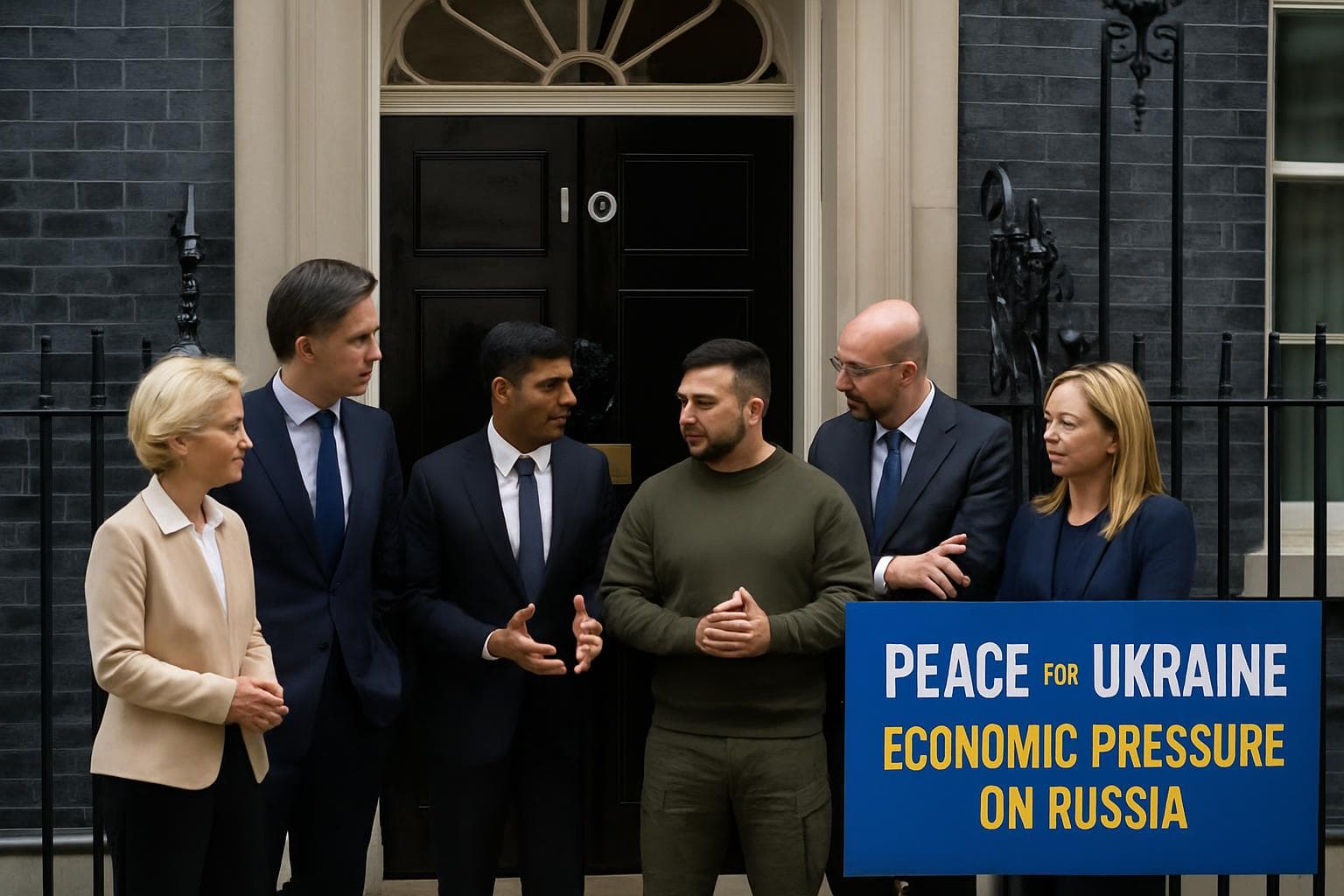
In a significant diplomatic gathering in London, European leaders convened with Ukraine's President Volodymyr Zelensky to deliberate on the ongoing conflict with Russia and explore avenues for peace. The talks, held at Downing Street, underscored the urgency of finding a resolution that respects Ukraine's territorial integrity while increasing economic pressure on Moscow.
Diplomatic Push for Peace
President Zelensky, steadfast in his position, reiterated Ukraine's refusal to cede any territory to Russia, emphasizing that such concessions would violate Ukrainian law and international norms. "We have no legal or moral right to surrender our land," Zelensky stated, highlighting the importance of robust security guarantees to prevent future aggression.
The meeting, attended by UK Prime Minister Sir Keir Starmer, French President Emmanuel Macron, and German Chancellor Friedrich Merz, aimed to align European support for Ukraine amid US pressure for a swift peace deal. The leaders expressed concerns that a hasty agreement could embolden Russia, potentially destabilizing the region further.
Criticism of US Peace Proposal
The US-backed peace proposal, initially comprising 28 points, has been met with skepticism from European leaders. Critics argue that the plan disproportionately favors Russian interests, particularly regarding territorial control in the eastern Donbas region and the Zaporizhzhia nuclear power plant. Zelensky indicated that the proposal had been revised to 20 points, maintaining Ukraine's core demands.
German Chancellor Merz voiced his doubts about the US proposal, while European Commission President Ursula von der Leyen emphasized the EU's commitment to increasing pressure on Russia to negotiate.
Economic Measures and Frozen Assets
A key topic of discussion was the potential use of frozen Russian assets to aid Ukraine's reconstruction. With over £180 billion immobilized in European banks, leaders are considering a reparations loan to channel these funds to Kyiv. However, Belgium has expressed concerns about the legal implications and potential retaliation from Moscow.
The UK has pledged to contribute £8 billion of frozen assets, contingent on a coordinated European effort. The EU is set to discuss the proposal further at an upcoming summit, aiming to finalize the plan by December.
WHAT THIS MIGHT MEAN
As the diplomatic efforts continue, the outcome of these talks could significantly impact the geopolitical landscape in Europe. Should a consensus be reached on utilizing frozen Russian assets, it could set a precedent for international reparations in conflict scenarios. However, the legal complexities and potential backlash from Russia pose challenges that European leaders must navigate carefully.
The steadfast refusal by Ukraine to cede territory underscores the complexities of achieving a lasting peace. Any agreement will require balancing Ukraine's sovereignty with the strategic interests of Western allies. As negotiations progress, the role of the US and its influence on the peace process will remain a critical factor in shaping the future of the region.
Related Articles
Russian LNG Tanker Sinks in Mediterranean Amid Accusations of Ukrainian Drone Attack
US and Israel Intensify Military Campaign as Iran's Capabilities Dwindle
Intensified US-Israel Strikes on Iran Spark Global Outcry
Diplomatic Tensions Rise as Trump Criticizes Starmer's Iran Policy
Violence Erupts Across Mexico Following Death of Drug Lord El Mencho
Russia-Ukraine Conflict: Four Years of Unyielding Struggle and Human Resilience
European Leaders and Zelensky Discuss Peace and Economic Pressure on Russia
In This Article
 Ethan Brooks| Published
 HIGHLIGHTS
- European leaders met with Ukraine's President Zelensky in London to discuss peace talks and economic pressure on Russia.
- Zelensky ruled out territorial concessions to Russia, citing legal and moral obligations under Ukrainian and international law.
- The US-backed peace proposal faced criticism for being too favorable to Russia, with European leaders expressing skepticism.
- Discussions included the potential use of frozen Russian assets to support Ukraine's reconstruction efforts.
- The EU is considering a reparations loan for Ukraine, though Belgium has raised concerns about potential liabilities.
In a significant diplomatic gathering in London, European leaders convened with Ukraine's President Volodymyr Zelensky to deliberate on the ongoing conflict with Russia and explore avenues for peace. The talks, held at Downing Street, underscored the urgency of finding a resolution that respects Ukraine's territorial integrity while increasing economic pressure on Moscow.
Diplomatic Push for Peace
President Zelensky, steadfast in his position, reiterated Ukraine's refusal to cede any territory to Russia, emphasizing that such concessions would violate Ukrainian law and international norms. "We have no legal or moral right to surrender our land," Zelensky stated, highlighting the importance of robust security guarantees to prevent future aggression.
The meeting, attended by UK Prime Minister Sir Keir Starmer, French President Emmanuel Macron, and German Chancellor Friedrich Merz, aimed to align European support for Ukraine amid US pressure for a swift peace deal. The leaders expressed concerns that a hasty agreement could embolden Russia, potentially destabilizing the region further.
Criticism of US Peace Proposal
The US-backed peace proposal, initially comprising 28 points, has been met with skepticism from European leaders. Critics argue that the plan disproportionately favors Russian interests, particularly regarding territorial control in the eastern Donbas region and the Zaporizhzhia nuclear power plant. Zelensky indicated that the proposal had been revised to 20 points, maintaining Ukraine's core demands.
German Chancellor Merz voiced his doubts about the US proposal, while European Commission President Ursula von der Leyen emphasized the EU's commitment to increasing pressure on Russia to negotiate.
Economic Measures and Frozen Assets
A key topic of discussion was the potential use of frozen Russian assets to aid Ukraine's reconstruction. With over £180 billion immobilized in European banks, leaders are considering a reparations loan to channel these funds to Kyiv. However, Belgium has expressed concerns about the legal implications and potential retaliation from Moscow.
The UK has pledged to contribute £8 billion of frozen assets, contingent on a coordinated European effort. The EU is set to discuss the proposal further at an upcoming summit, aiming to finalize the plan by December.
WHAT THIS MIGHT MEAN
As the diplomatic efforts continue, the outcome of these talks could significantly impact the geopolitical landscape in Europe. Should a consensus be reached on utilizing frozen Russian assets, it could set a precedent for international reparations in conflict scenarios. However, the legal complexities and potential backlash from Russia pose challenges that European leaders must navigate carefully.
The steadfast refusal by Ukraine to cede territory underscores the complexities of achieving a lasting peace. Any agreement will require balancing Ukraine's sovereignty with the strategic interests of Western allies. As negotiations progress, the role of the US and its influence on the peace process will remain a critical factor in shaping the future of the region.
Related Articles
Russian LNG Tanker Sinks in Mediterranean Amid Accusations of Ukrainian Drone Attack
US and Israel Intensify Military Campaign as Iran's Capabilities Dwindle
Intensified US-Israel Strikes on Iran Spark Global Outcry
Diplomatic Tensions Rise as Trump Criticizes Starmer's Iran Policy
Violence Erupts Across Mexico Following Death of Drug Lord El Mencho
Russia-Ukraine Conflict: Four Years of Unyielding Struggle and Human Resilience