
Bank of England Signals Possible December Rate Cut Amid Peaked Inflation
In This Article
HIGHLIGHTS
- The Bank of England has kept interest rates at 4% but signaled a potential rate cut in December, citing peaked inflation.
- Governor Andrew Bailey emphasized the need to confirm inflation trends and assess the impact of the upcoming budget before reducing rates.
- The decision to hold rates was narrowly passed by a 5-4 vote, with some members advocating for a quarter-point reduction.
- The upcoming budget by Chancellor Rachel Reeves is expected to include tax increases and measures to address the cost of living.
- Economists predict that the Bank's decision opens the door for a rate cut, contingent on the budget's economic impact.
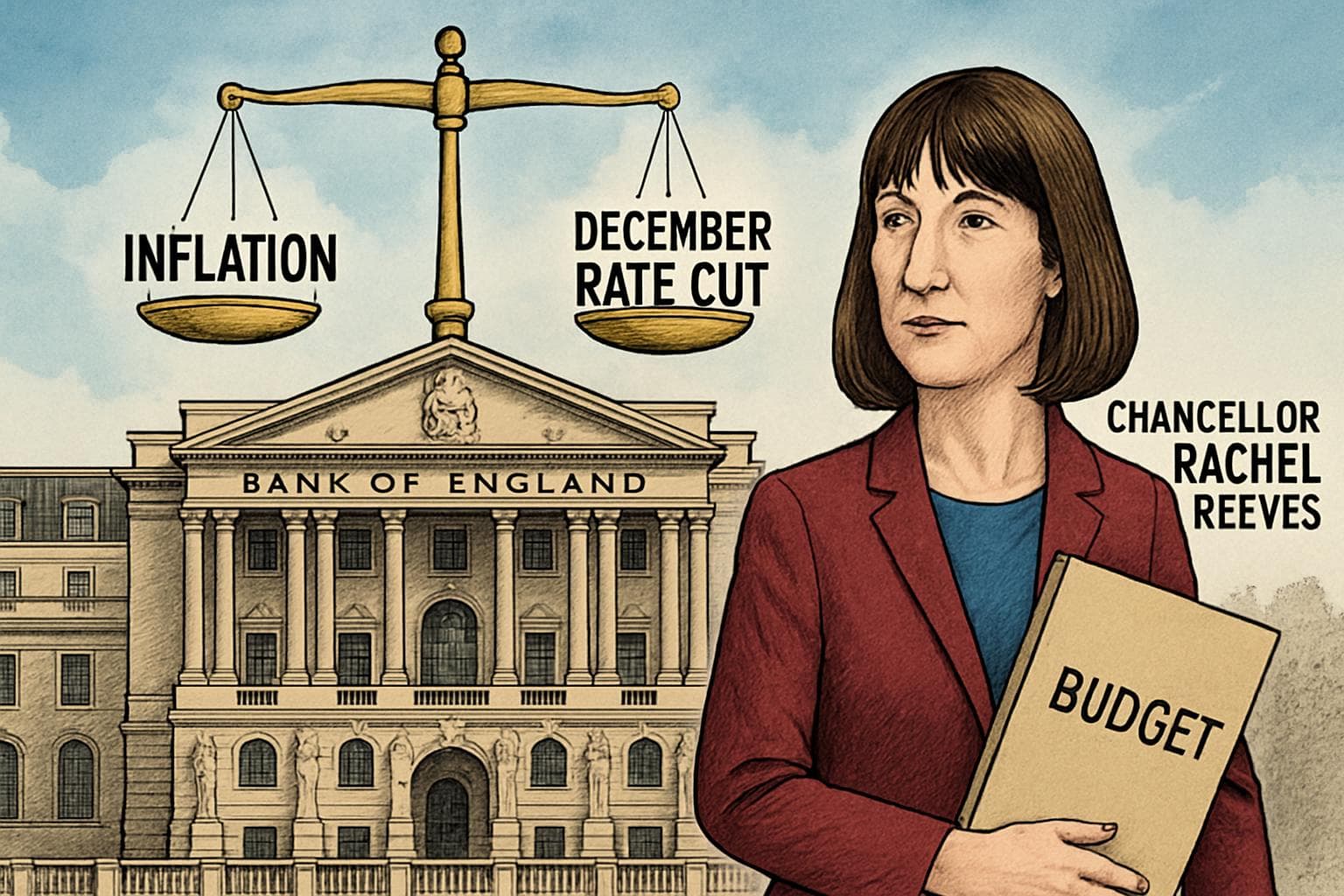
The Bank of England has maintained its interest rate at 4% but has indicated a potential rate cut in December, following signs that inflation has peaked. This decision comes ahead of Chancellor Rachel Reeves's crucial budget announcement, which is expected to address tax and spending strategies.
Interest Rates Held Amid Inflation Concerns
The Bank's Monetary Policy Committee (MPC) voted by a narrow margin of 5-4 to keep borrowing costs unchanged for the second consecutive meeting. Governor Andrew Bailey, who held the casting vote, stated that the Bank aims to ensure inflation is on track to meet the 2% target before considering further rate cuts. "We held interest rates at 4% today. We still think rates are on a gradual path downwards," Bailey remarked.
Economic Implications of the Upcoming Budget
With the budget set for November 26, the Chancellor is anticipated to introduce tax hikes and measures to combat the rising cost of living. Reeves welcomed the Bank's forecast of a faster-than-expected decline in inflation, stating, "At the budget later this month, I will take the fair choices necessary to build strong economic foundations."
Market Reactions and Future Projections
Financial markets have responded to the Bank's decision, with a nearly 60% chance of a quarter-point rate reduction next month. Economists suggest that the budget's economic impact will be crucial in determining the Bank's next steps. Janet Mui, head of market analysis at RBC Brewin Dolphin, noted, "There is a plausible case for even weaker demand, hence pushing inflation lower from 2026."
Labour Market and Inflation Dynamics
The Bank expressed concerns about the economy's strength, predicting unemployment could rise above 5% early next year. Labour costs and consumer prices remain key uncertainties, with the Bank's research indicating that inflation expectations are influenced by recent experiences, particularly food price movements.
WHAT THIS MIGHT MEAN
As the Bank of England navigates its monetary policy, the upcoming budget will play a pivotal role in shaping economic conditions. Should the budget introduce significant tax increases, it could dampen economic growth, prompting the Bank to consider a rate cut to stimulate demand. Conversely, if the budget effectively addresses cost-of-living challenges, it may alleviate inflation pressures, supporting a more gradual approach to rate adjustments.
Experts will closely monitor the budget's impact on inflation and employment trends, as these factors will influence the Bank's future decisions. Governor Bailey's cautious approach underscores the complexity of balancing inflation control with economic growth, highlighting the importance of data-driven policy-making in uncertain times.
Related Articles
Bank of England Holds Interest Rates Steady Amid Inflation and Economic Concerns
Bank of England Poised to Hold Interest Rates Amid Inflation Concerns
Middle East Conflict Drives UK Energy Prices to New Highs
Reform UK Pledges to Retain and Reform Budget Watchdog Amid Leadership Changes
UK House Prices Surpass £300,000 for the First Time, Halifax Reports
UK Inflation Drops to 3% in January, Sparking Interest Rate Cut Speculation
Bank of England Signals Possible December Rate Cut Amid Peaked Inflation
In This Article
 Daniel Rivera| Published
 HIGHLIGHTS
- The Bank of England has kept interest rates at 4% but signaled a potential rate cut in December, citing peaked inflation.
- Governor Andrew Bailey emphasized the need to confirm inflation trends and assess the impact of the upcoming budget before reducing rates.
- The decision to hold rates was narrowly passed by a 5-4 vote, with some members advocating for a quarter-point reduction.
- The upcoming budget by Chancellor Rachel Reeves is expected to include tax increases and measures to address the cost of living.
- Economists predict that the Bank's decision opens the door for a rate cut, contingent on the budget's economic impact.
The Bank of England has maintained its interest rate at 4% but has indicated a potential rate cut in December, following signs that inflation has peaked. This decision comes ahead of Chancellor Rachel Reeves's crucial budget announcement, which is expected to address tax and spending strategies.
Interest Rates Held Amid Inflation Concerns
The Bank's Monetary Policy Committee (MPC) voted by a narrow margin of 5-4 to keep borrowing costs unchanged for the second consecutive meeting. Governor Andrew Bailey, who held the casting vote, stated that the Bank aims to ensure inflation is on track to meet the 2% target before considering further rate cuts. "We held interest rates at 4% today. We still think rates are on a gradual path downwards," Bailey remarked.
Economic Implications of the Upcoming Budget
With the budget set for November 26, the Chancellor is anticipated to introduce tax hikes and measures to combat the rising cost of living. Reeves welcomed the Bank's forecast of a faster-than-expected decline in inflation, stating, "At the budget later this month, I will take the fair choices necessary to build strong economic foundations."
Market Reactions and Future Projections
Financial markets have responded to the Bank's decision, with a nearly 60% chance of a quarter-point rate reduction next month. Economists suggest that the budget's economic impact will be crucial in determining the Bank's next steps. Janet Mui, head of market analysis at RBC Brewin Dolphin, noted, "There is a plausible case for even weaker demand, hence pushing inflation lower from 2026."
Labour Market and Inflation Dynamics
The Bank expressed concerns about the economy's strength, predicting unemployment could rise above 5% early next year. Labour costs and consumer prices remain key uncertainties, with the Bank's research indicating that inflation expectations are influenced by recent experiences, particularly food price movements.
WHAT THIS MIGHT MEAN
As the Bank of England navigates its monetary policy, the upcoming budget will play a pivotal role in shaping economic conditions. Should the budget introduce significant tax increases, it could dampen economic growth, prompting the Bank to consider a rate cut to stimulate demand. Conversely, if the budget effectively addresses cost-of-living challenges, it may alleviate inflation pressures, supporting a more gradual approach to rate adjustments.
Experts will closely monitor the budget's impact on inflation and employment trends, as these factors will influence the Bank's future decisions. Governor Bailey's cautious approach underscores the complexity of balancing inflation control with economic growth, highlighting the importance of data-driven policy-making in uncertain times.
Related Articles
Bank of England Holds Interest Rates Steady Amid Inflation and Economic Concerns
Bank of England Poised to Hold Interest Rates Amid Inflation Concerns
Middle East Conflict Drives UK Energy Prices to New Highs
Reform UK Pledges to Retain and Reform Budget Watchdog Amid Leadership Changes
UK House Prices Surpass £300,000 for the First Time, Halifax Reports
UK Inflation Drops to 3% in January, Sparking Interest Rate Cut Speculation