
EU Agrees on €90bn Loan to Bolster Ukraine Amid Financial Strain
In This Article
HIGHLIGHTS
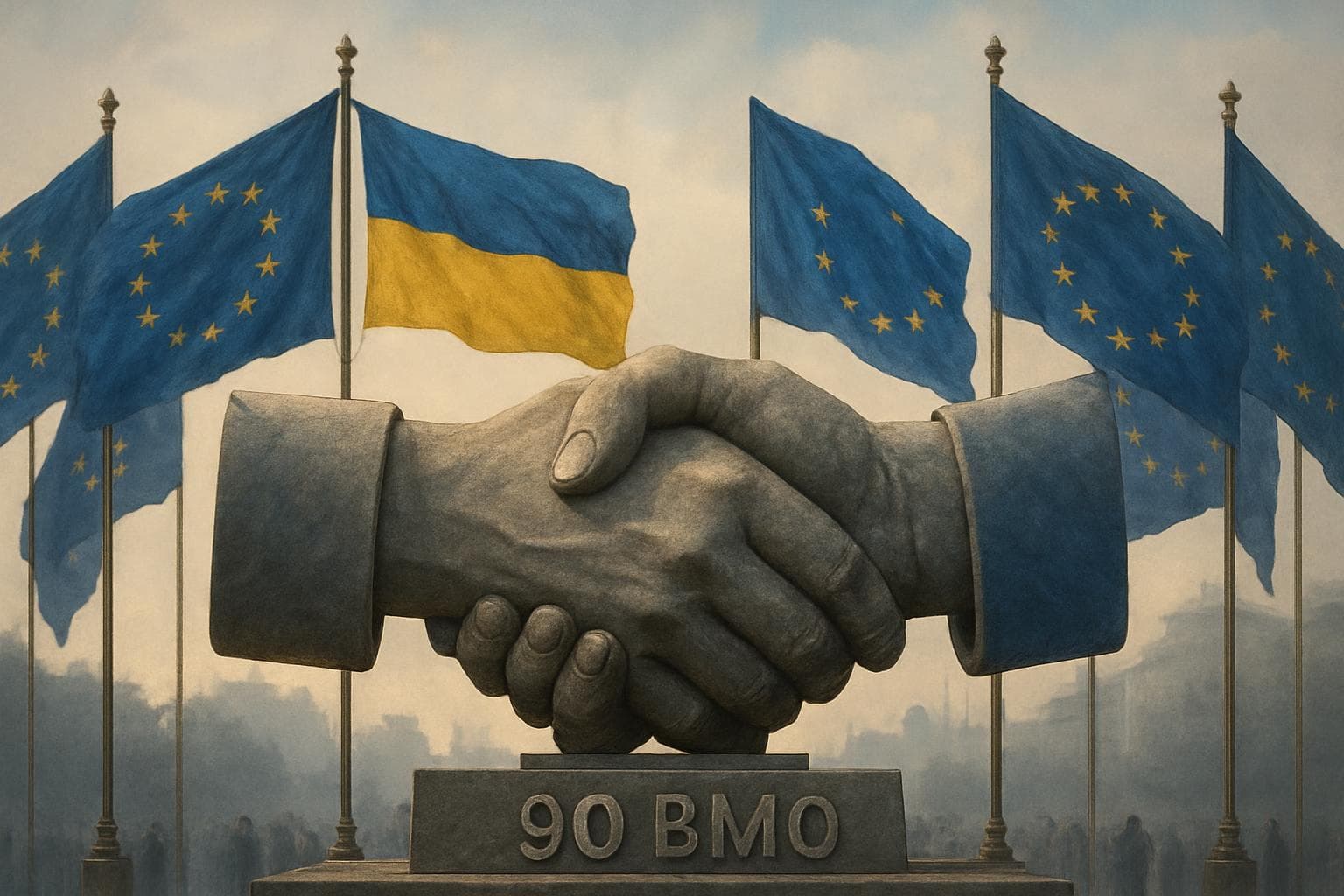
- The EU has agreed to provide Ukraine with a €90bn interest-free loan to support its financial needs over the next two years.
- The loan will be raised through EU budget headroom, not using frozen Russian assets, which remain earmarked for future war reparations.
- Hungary, Slovakia, and the Czech Republic are exempt from the loan guarantees, following negotiations led by Hungarian Prime Minister Viktor Orban.
- Ukrainian President Volodymyr Zelensky emphasized the urgent need for funds to prevent a reduction in military capabilities, particularly drone production.
- EU leaders, including French President Emmanuel Macron and German Chancellor Friedrich Merz, have hailed the agreement as a significant step in supporting Ukraine.
The European Union has finalized a €90bn interest-free loan to Ukraine, aiming to alleviate the financial pressures faced by the war-torn nation over the next two years. This decision, reached after extensive negotiations, marks a significant commitment by the EU to support Ukraine's ongoing military and budgetary needs.
Financial Lifeline for Ukraine
Ukrainian President Volodymyr Zelensky has expressed relief over the EU's decision, describing the loan as a crucial boost to the country's resilience. The funds are intended to cover two-thirds of Ukraine's estimated financial requirements from 2026 to 2027, as the nation grapples with the economic fallout from the ongoing conflict with Russia. Zelensky had previously warned that without financial aid, Ukraine might have to significantly cut back on drone production, a key component of its defense strategy.
Exemptions and Political Dynamics
The loan agreement excludes Hungary, Slovakia, and the Czech Republic from financial guarantees, a concession secured by Hungarian Prime Minister Viktor Orban. Despite Orban's initial opposition to funding Kyiv, the exemption allows these countries to avoid direct financial obligations. Meanwhile, the EU's decision not to use frozen Russian assets for the loan has been met with mixed reactions. While some EU leaders, like German Chancellor Friedrich Merz, advocated for using these assets, the complexity of legal and political challenges led to the current compromise.
Future of Frozen Russian Assets
The €210bn in frozen Russian assets remain a contentious issue. Although these funds are earmarked for future war reparations, the EU has yet to finalize a mechanism for their use. French President Emmanuel Macron and other EU leaders have emphasized the importance of holding Russia accountable, with Macron stating that borrowing on capital markets was the most practical solution for now.
WHAT THIS MIGHT MEAN
The EU's decision to provide a €90bn loan to Ukraine is a temporary solution to the country's immediate financial needs. However, the unresolved issue of frozen Russian assets continues to loom large. If Russia refuses to pay reparations, the EU may eventually need to devise a legal framework to utilize these assets, potentially leading to further diplomatic tensions.
Politically, the exemption of Hungary, Slovakia, and the Czech Republic from loan guarantees reflects the EU's ongoing struggle to maintain unity among its member states. As the conflict in Ukraine persists, the EU will likely face continued pressure to balance financial support for Ukraine with the diverse political interests of its members.
Looking ahead, the EU's financial aid package could set a precedent for future international support mechanisms in conflict zones, highlighting the complexities of funding war efforts while navigating geopolitical challenges.
Related Articles
Russian LNG Tanker Sinks in Mediterranean Amid Accusations of Ukrainian Drone Attack
Spain's Sánchez Stands Firm Against Trump's Trade Threat Over Iran Stance
BAE Systems Reports Record Sales Amid Worker Strikes and Calls for Defence Spending Clarity
Geneva Talks See 'Meaningful Progress' Amid Tensions Over Ukraine-Russia Conflict
Geneva Peace Talks: Russia and Ukraine Seek Resolution Amid Ongoing Conflict
German Chancellor Warns of Eroding Global Order at Munich Security Conference
EU Agrees on €90bn Loan to Bolster Ukraine Amid Financial Strain
In This Article
 Daniel Rivera| Published
 HIGHLIGHTS
- The EU has agreed to provide Ukraine with a €90bn interest-free loan to support its financial needs over the next two years.
- The loan will be raised through EU budget headroom, not using frozen Russian assets, which remain earmarked for future war reparations.
- Hungary, Slovakia, and the Czech Republic are exempt from the loan guarantees, following negotiations led by Hungarian Prime Minister Viktor Orban.
- Ukrainian President Volodymyr Zelensky emphasized the urgent need for funds to prevent a reduction in military capabilities, particularly drone production.
- EU leaders, including French President Emmanuel Macron and German Chancellor Friedrich Merz, have hailed the agreement as a significant step in supporting Ukraine.
The European Union has finalized a €90bn interest-free loan to Ukraine, aiming to alleviate the financial pressures faced by the war-torn nation over the next two years. This decision, reached after extensive negotiations, marks a significant commitment by the EU to support Ukraine's ongoing military and budgetary needs.
Financial Lifeline for Ukraine
Ukrainian President Volodymyr Zelensky has expressed relief over the EU's decision, describing the loan as a crucial boost to the country's resilience. The funds are intended to cover two-thirds of Ukraine's estimated financial requirements from 2026 to 2027, as the nation grapples with the economic fallout from the ongoing conflict with Russia. Zelensky had previously warned that without financial aid, Ukraine might have to significantly cut back on drone production, a key component of its defense strategy.
Exemptions and Political Dynamics
The loan agreement excludes Hungary, Slovakia, and the Czech Republic from financial guarantees, a concession secured by Hungarian Prime Minister Viktor Orban. Despite Orban's initial opposition to funding Kyiv, the exemption allows these countries to avoid direct financial obligations. Meanwhile, the EU's decision not to use frozen Russian assets for the loan has been met with mixed reactions. While some EU leaders, like German Chancellor Friedrich Merz, advocated for using these assets, the complexity of legal and political challenges led to the current compromise.
Future of Frozen Russian Assets
The €210bn in frozen Russian assets remain a contentious issue. Although these funds are earmarked for future war reparations, the EU has yet to finalize a mechanism for their use. French President Emmanuel Macron and other EU leaders have emphasized the importance of holding Russia accountable, with Macron stating that borrowing on capital markets was the most practical solution for now.
WHAT THIS MIGHT MEAN
The EU's decision to provide a €90bn loan to Ukraine is a temporary solution to the country's immediate financial needs. However, the unresolved issue of frozen Russian assets continues to loom large. If Russia refuses to pay reparations, the EU may eventually need to devise a legal framework to utilize these assets, potentially leading to further diplomatic tensions.
Politically, the exemption of Hungary, Slovakia, and the Czech Republic from loan guarantees reflects the EU's ongoing struggle to maintain unity among its member states. As the conflict in Ukraine persists, the EU will likely face continued pressure to balance financial support for Ukraine with the diverse political interests of its members.
Looking ahead, the EU's financial aid package could set a precedent for future international support mechanisms in conflict zones, highlighting the complexities of funding war efforts while navigating geopolitical challenges.
Related Articles
Russian LNG Tanker Sinks in Mediterranean Amid Accusations of Ukrainian Drone Attack
Spain's Sánchez Stands Firm Against Trump's Trade Threat Over Iran Stance
BAE Systems Reports Record Sales Amid Worker Strikes and Calls for Defence Spending Clarity
Geneva Talks See 'Meaningful Progress' Amid Tensions Over Ukraine-Russia Conflict
Geneva Peace Talks: Russia and Ukraine Seek Resolution Amid Ongoing Conflict
German Chancellor Warns of Eroding Global Order at Munich Security Conference