
Lifetime ISAs Under Scrutiny for Potential Financial Pitfalls
In This Article
HIGHLIGHTS
- MPs warn that Lifetime ISAs may leave savers with less money due to early withdrawal penalties.
- The Treasury Committee suggests the dual-purpose design of LISAs may lead to poor investment choices.
- Lifetime ISAs can affect eligibility for benefits like universal credit, unlike other pension schemes.
- The government is considering reforms as the product may not be the best use of public funds.
- In 2023-24, more people incurred penalties for unauthorized withdrawals than used LISAs to buy homes.
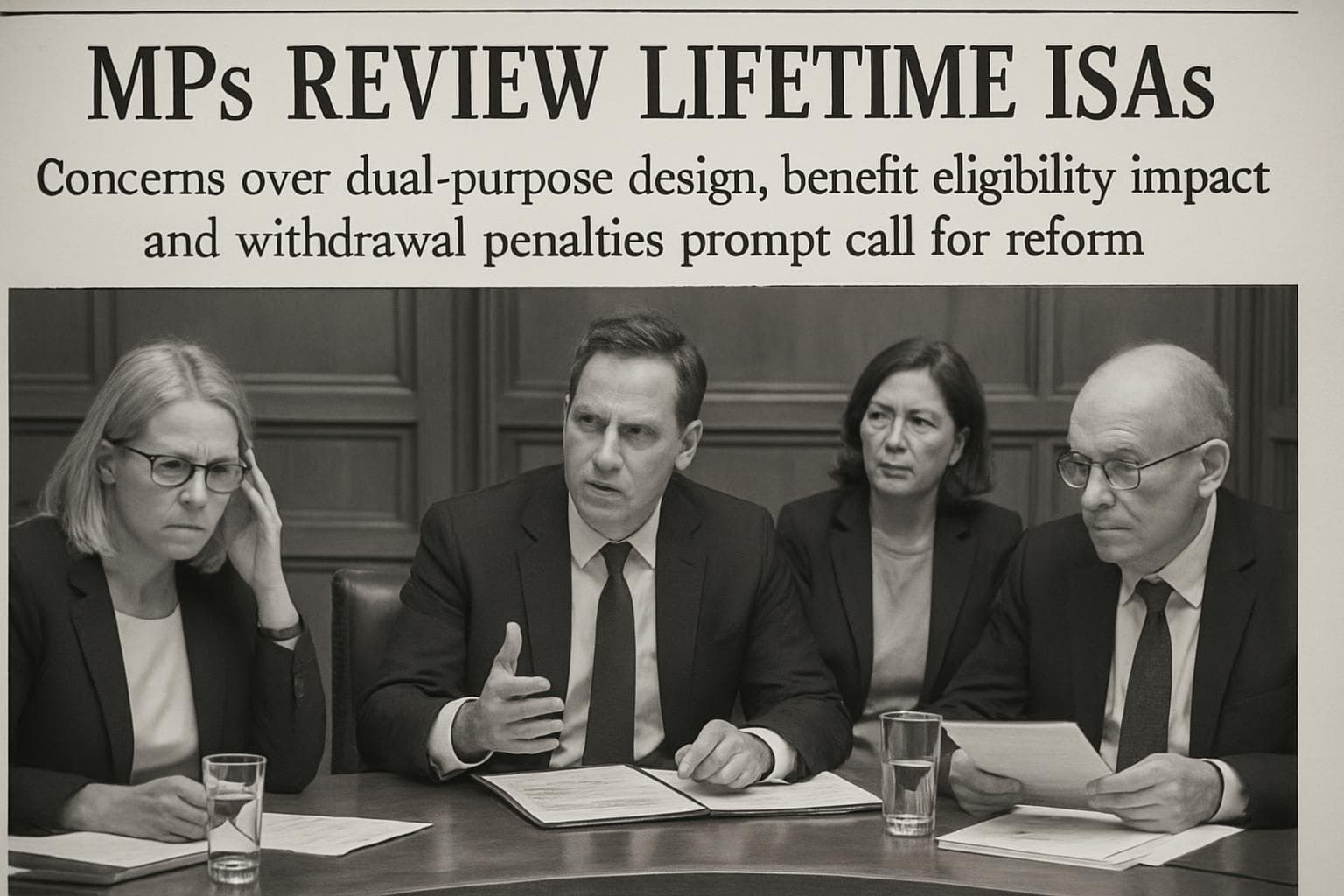
Lifetime Individual Savings Accounts (LISAs), designed to aid individuals in saving for retirement or purchasing a first home, are facing criticism from a cross-party committee of MPs. Concerns have been raised that these accounts may not be the most effective use of public funds and could lead to savers making suboptimal financial decisions.
Dual-Purpose Design Raises Concerns
Introduced in 2017 under the Conservative government, LISAs allow individuals under 40 to save up to £4,000 annually, with a 25% government bonus. However, the Treasury Committee's recent report highlights that the dual-purpose nature of LISAs may inadvertently steer savers away from more suitable investment strategies. The committee noted that cash LISAs might be appropriate for those saving for a first home but may not offer the best outcomes for retirement savings, as they limit access to higher-risk, higher-return investments like bonds and equities.
Impact on Benefit Eligibility
A significant issue identified by the committee is the impact of LISA savings on eligibility for benefits such as universal credit and housing benefit. Unlike other pension schemes, savings in a LISA can affect benefit eligibility, which the committee described as "nonsensical." The report suggests that if this discrepancy is not addressed, LISAs should be clearly labeled as inferior products for those who may qualify for such benefits.
Withdrawal Penalties and Public Spending
The report also draws attention to the 25% charge on early withdrawals, which can result in savers losing 6.25% of their contributions. In the 2023-24 period, nearly double the number of people made unauthorized withdrawals compared to those who used their LISA to purchase a home. This trend suggests the product may not be functioning as intended. The committee questioned whether the estimated £3 billion in bonuses over the next five years represents the best use of public money, especially given current fiscal constraints.
Calls for Reform
Dame Meg Hillier, chair of the Treasury Committee, emphasized the need to reassess the LISA's effectiveness in achieving its goals of aiding homebuyers and early retirement savers. With the government considering ISA reforms, this presents an opportune moment to evaluate whether LISAs are the optimal solution for these financial objectives.
WHAT THIS MIGHT MEAN
As the government reviews the structure and efficacy of Lifetime ISAs, potential reforms could include adjusting withdrawal penalties or altering how LISA savings impact benefit eligibility. Such changes could make LISAs more attractive and equitable for a broader range of savers. However, any reform will need to balance the product's original goals with fiscal responsibility, especially in light of public spending scrutiny. Financial experts suggest that clearer guidance and education on investment strategies could also help savers make more informed decisions, potentially mitigating some of the current pitfalls associated with LISAs.
Related Articles
MPs Launch Inquiry into Office for Budget Responsibility's Role and Influence

UK Government Revives EV Grants to Boost Electric Car Adoption
UK Government Warns Councils Against Four-Day Work Week Amid Performance Concerns
UK Welfare Bill Passes Amid Labour Rebellion and Government Concessions
UK Welfare Reform Bill Passes Amid Controversy and Concessions

MPs Vote to Remove Conditional Immunity for Troubles-Era Crimes
Lifetime ISAs Under Scrutiny for Potential Financial Pitfalls
In This Article
 Daniel Rivera| Published
 HIGHLIGHTS
- MPs warn that Lifetime ISAs may leave savers with less money due to early withdrawal penalties.
- The Treasury Committee suggests the dual-purpose design of LISAs may lead to poor investment choices.
- Lifetime ISAs can affect eligibility for benefits like universal credit, unlike other pension schemes.
- The government is considering reforms as the product may not be the best use of public funds.
- In 2023-24, more people incurred penalties for unauthorized withdrawals than used LISAs to buy homes.
Lifetime Individual Savings Accounts (LISAs), designed to aid individuals in saving for retirement or purchasing a first home, are facing criticism from a cross-party committee of MPs. Concerns have been raised that these accounts may not be the most effective use of public funds and could lead to savers making suboptimal financial decisions.
Dual-Purpose Design Raises Concerns
Introduced in 2017 under the Conservative government, LISAs allow individuals under 40 to save up to £4,000 annually, with a 25% government bonus. However, the Treasury Committee's recent report highlights that the dual-purpose nature of LISAs may inadvertently steer savers away from more suitable investment strategies. The committee noted that cash LISAs might be appropriate for those saving for a first home but may not offer the best outcomes for retirement savings, as they limit access to higher-risk, higher-return investments like bonds and equities.
Impact on Benefit Eligibility
A significant issue identified by the committee is the impact of LISA savings on eligibility for benefits such as universal credit and housing benefit. Unlike other pension schemes, savings in a LISA can affect benefit eligibility, which the committee described as "nonsensical." The report suggests that if this discrepancy is not addressed, LISAs should be clearly labeled as inferior products for those who may qualify for such benefits.
Withdrawal Penalties and Public Spending
The report also draws attention to the 25% charge on early withdrawals, which can result in savers losing 6.25% of their contributions. In the 2023-24 period, nearly double the number of people made unauthorized withdrawals compared to those who used their LISA to purchase a home. This trend suggests the product may not be functioning as intended. The committee questioned whether the estimated £3 billion in bonuses over the next five years represents the best use of public money, especially given current fiscal constraints.
Calls for Reform
Dame Meg Hillier, chair of the Treasury Committee, emphasized the need to reassess the LISA's effectiveness in achieving its goals of aiding homebuyers and early retirement savers. With the government considering ISA reforms, this presents an opportune moment to evaluate whether LISAs are the optimal solution for these financial objectives.
WHAT THIS MIGHT MEAN
As the government reviews the structure and efficacy of Lifetime ISAs, potential reforms could include adjusting withdrawal penalties or altering how LISA savings impact benefit eligibility. Such changes could make LISAs more attractive and equitable for a broader range of savers. However, any reform will need to balance the product's original goals with fiscal responsibility, especially in light of public spending scrutiny. Financial experts suggest that clearer guidance and education on investment strategies could also help savers make more informed decisions, potentially mitigating some of the current pitfalls associated with LISAs.
Related Articles
MPs Launch Inquiry into Office for Budget Responsibility's Role and Influence
UK Government Revives EV Grants to Boost Electric Car Adoption
UK Government Warns Councils Against Four-Day Work Week Amid Performance Concerns
UK Welfare Bill Passes Amid Labour Rebellion and Government Concessions
UK Welfare Reform Bill Passes Amid Controversy and Concessions
MPs Vote to Remove Conditional Immunity for Troubles-Era Crimes