
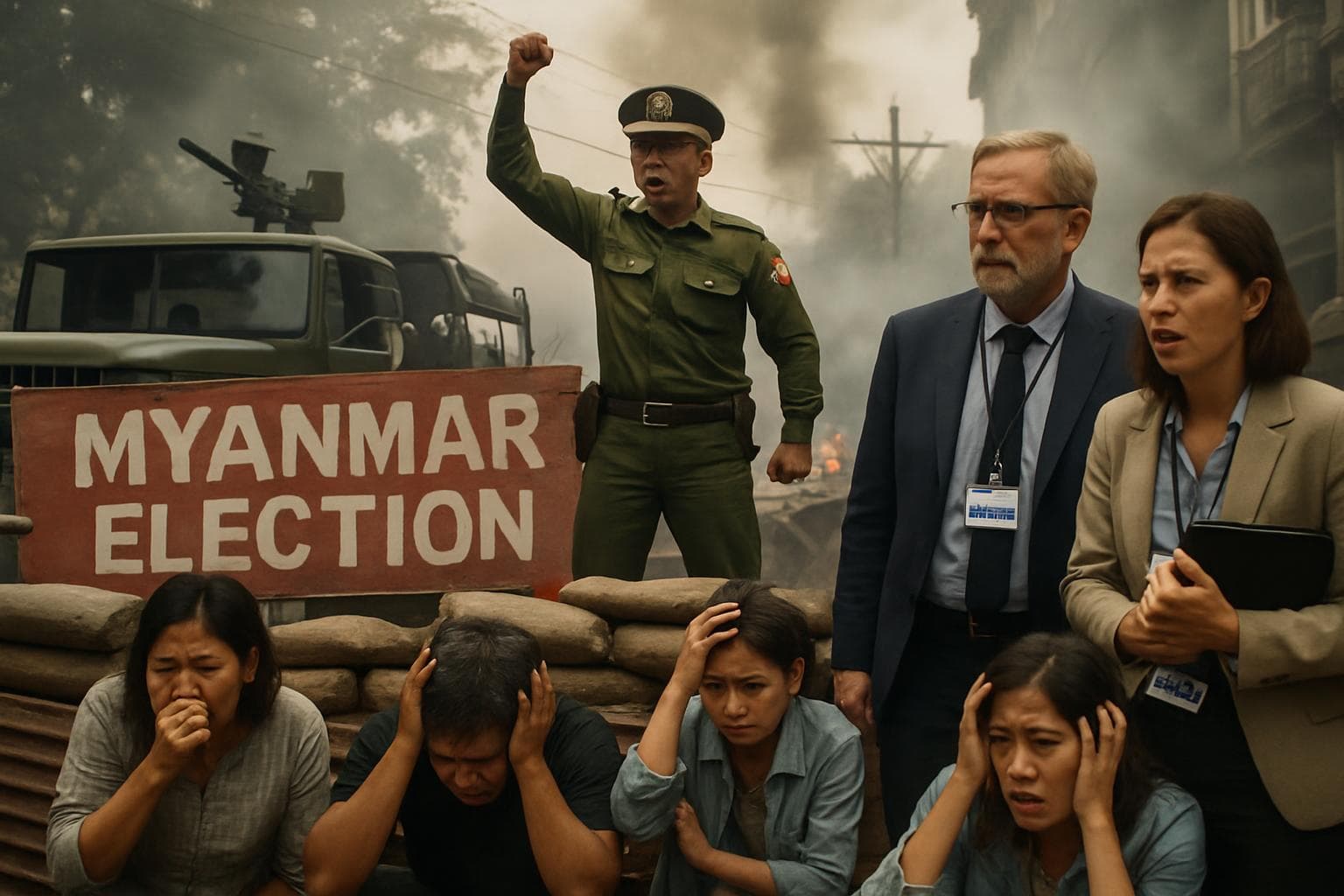
Myanmar's Controversial Election: Military-Backed Party Claims Victory Amidst Violence and Criticism
In This Article
HIGHLIGHTS
- At least 170 civilians were killed in military air strikes during Myanmar's election period, according to the UN.
- The military-backed Union and Solidarity Party (USDP) secured a sweeping victory in the election, winning a majority in both legislative chambers.
- The election has been widely criticized as a sham by international bodies and human rights groups, with significant voter suppression and exclusion of opposition parties.
- The election took place amidst ongoing civil war and political turmoil following the 2021 coup that ousted Aung San Suu Kyi.
- The military junta is expected to maintain control through proxy political parties, despite international condemnation.
Myanmar's recent election, marred by violence and international criticism, concluded with the military-backed Union and Solidarity Party (USDP) claiming a decisive victory. According to state media, the USDP secured a majority in both legislative chambers, winning 232 of 263 seats in the lower house and 109 of 157 seats in the upper house. The election, held in three phases from December 2025 to late January 2026, has been denounced as a sham by numerous countries and human rights organizations.
Civilian Casualties and Military Strikes
The United Nations reported that at least 170 civilians were killed in military air strikes during the election period. The UN's rights office cited "credible sources" for these figures, noting that 408 military aerial attacks occurred between December and late January. James Rodehaver, head of the UN Human Rights' Myanmar team, highlighted the challenges in obtaining complete data due to communication barriers and fear among locals.
Election Results and Political Context
The USDP's victory was anticipated given the tightly controlled electoral process. The election took place amidst a civil war that erupted following the military coup in 2021, which saw the ousting and imprisonment of democratically elected leader Aung San Suu Kyi. Her party, the National League for Democracy, was barred from participating, and many opposition candidates and ethnic groups were excluded.
International Condemnation and Local Impact
The election has faced widespread condemnation. UN rights chief Volker Turk described it as "staged by the military," emphasizing that voters were coerced by fear, undermining their civil and political rights. The Association of Southeast Asian Nations and several Western countries have refused to endorse the process. Despite this, Myanmar's military government insists the polls were free and fair.
Future Political Landscape
Myanmar's parliament is set to convene in March to elect a president, with a new government expected to take office in April. The military, which is guaranteed 25% of parliamentary seats, is likely to maintain significant influence. Junta chief Min Aung Hlaing is anticipated to play a central role in the next administration, defending the election as a step toward stability.
WHAT THIS MIGHT MEAN
The international community's response to Myanmar's election could shape future diplomatic relations and economic sanctions. Continued condemnation may lead to increased isolation for the military junta, potentially impacting Myanmar's economy and international standing. Domestically, the election results could exacerbate existing tensions, with the military's grip on power likely to provoke further unrest and resistance from pro-democracy groups. The situation remains volatile, with the potential for both political and humanitarian crises if the military continues to suppress opposition and dissent.
Related Articles
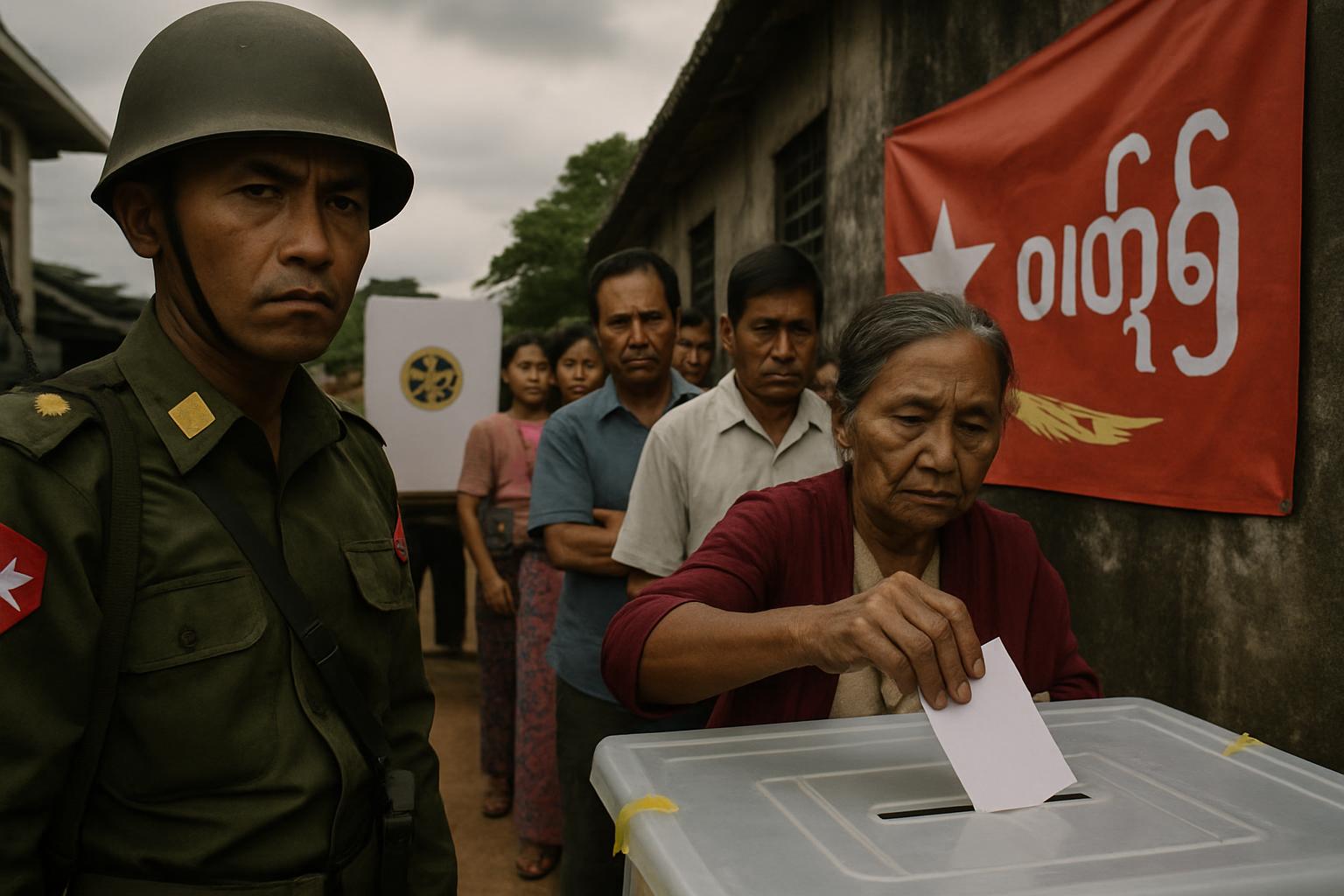
Myanmar's Controversial Election: Military-Backed Party Set for Victory Amidst Criticism
Intensified US-Israel Strikes on Iran Spark Global Outcry
Palestinian-American Teen Killed by Israeli Settlers in West Bank Sparks Calls for Accountability
US-Iran Tensions Escalate Amid Military Buildup and Diplomatic Deadlock
Trump's Board of Peace Pledges $7 Billion for Gaza Amidst International Skepticism
UK-US Tensions Rise Over Chagos Islands Sovereignty Deal
Myanmar's Controversial Election: Military-Backed Party Claims Victory Amidst Violence and Criticism
In This Article
 Ethan Brooks| Published
 HIGHLIGHTS
- At least 170 civilians were killed in military air strikes during Myanmar's election period, according to the UN.
- The military-backed Union and Solidarity Party (USDP) secured a sweeping victory in the election, winning a majority in both legislative chambers.
- The election has been widely criticized as a sham by international bodies and human rights groups, with significant voter suppression and exclusion of opposition parties.
- The election took place amidst ongoing civil war and political turmoil following the 2021 coup that ousted Aung San Suu Kyi.
- The military junta is expected to maintain control through proxy political parties, despite international condemnation.
Myanmar's recent election, marred by violence and international criticism, concluded with the military-backed Union and Solidarity Party (USDP) claiming a decisive victory. According to state media, the USDP secured a majority in both legislative chambers, winning 232 of 263 seats in the lower house and 109 of 157 seats in the upper house. The election, held in three phases from December 2025 to late January 2026, has been denounced as a sham by numerous countries and human rights organizations.
Civilian Casualties and Military Strikes
The United Nations reported that at least 170 civilians were killed in military air strikes during the election period. The UN's rights office cited "credible sources" for these figures, noting that 408 military aerial attacks occurred between December and late January. James Rodehaver, head of the UN Human Rights' Myanmar team, highlighted the challenges in obtaining complete data due to communication barriers and fear among locals.
Election Results and Political Context
The USDP's victory was anticipated given the tightly controlled electoral process. The election took place amidst a civil war that erupted following the military coup in 2021, which saw the ousting and imprisonment of democratically elected leader Aung San Suu Kyi. Her party, the National League for Democracy, was barred from participating, and many opposition candidates and ethnic groups were excluded.
International Condemnation and Local Impact
The election has faced widespread condemnation. UN rights chief Volker Turk described it as "staged by the military," emphasizing that voters were coerced by fear, undermining their civil and political rights. The Association of Southeast Asian Nations and several Western countries have refused to endorse the process. Despite this, Myanmar's military government insists the polls were free and fair.
Future Political Landscape
Myanmar's parliament is set to convene in March to elect a president, with a new government expected to take office in April. The military, which is guaranteed 25% of parliamentary seats, is likely to maintain significant influence. Junta chief Min Aung Hlaing is anticipated to play a central role in the next administration, defending the election as a step toward stability.
WHAT THIS MIGHT MEAN
The international community's response to Myanmar's election could shape future diplomatic relations and economic sanctions. Continued condemnation may lead to increased isolation for the military junta, potentially impacting Myanmar's economy and international standing. Domestically, the election results could exacerbate existing tensions, with the military's grip on power likely to provoke further unrest and resistance from pro-democracy groups. The situation remains volatile, with the potential for both political and humanitarian crises if the military continues to suppress opposition and dissent.
Related Articles
Myanmar's Controversial Election: Military-Backed Party Set for Victory Amidst Criticism
Intensified US-Israel Strikes on Iran Spark Global Outcry
Palestinian-American Teen Killed by Israeli Settlers in West Bank Sparks Calls for Accountability
US-Iran Tensions Escalate Amid Military Buildup and Diplomatic Deadlock
Trump's Board of Peace Pledges $7 Billion for Gaza Amidst International Skepticism
UK-US Tensions Rise Over Chagos Islands Sovereignty Deal