
Myanmar's Controversial Elections: A Bid for Legitimacy Amidst Turmoil
In This Article
HIGHLIGHTS
- Myanmar's military junta is conducting elections on December 28, 2025, amid widespread international condemnation and accusations of illegitimacy.
- The National League for Democracy, led by Aung San Suu Kyi, has been dissolved, and she remains imprisoned, raising doubts about the election's fairness.
- The election is taking place in a climate of fear, with new laws criminalizing criticism and increased military presence intimidating voters.
- China supports the election, viewing it as a potential path to stability, despite ongoing conflict and increased military strikes in the country.
- Many citizens, fearing repercussions, feel compelled to vote, though they express skepticism about the election's authenticity.
As Myanmar prepares for its first election since the military coup in 2021, skepticism and fear pervade the nation. The December 28, 2025, polls, orchestrated by the ruling military junta, are widely criticized as a ploy to legitimize their grip on power. With the National League for Democracy (NLD) disbanded and its leader, Aung San Suu Kyi, imprisoned, the election's credibility is under intense scrutiny.
A Climate of Fear and Intimidation
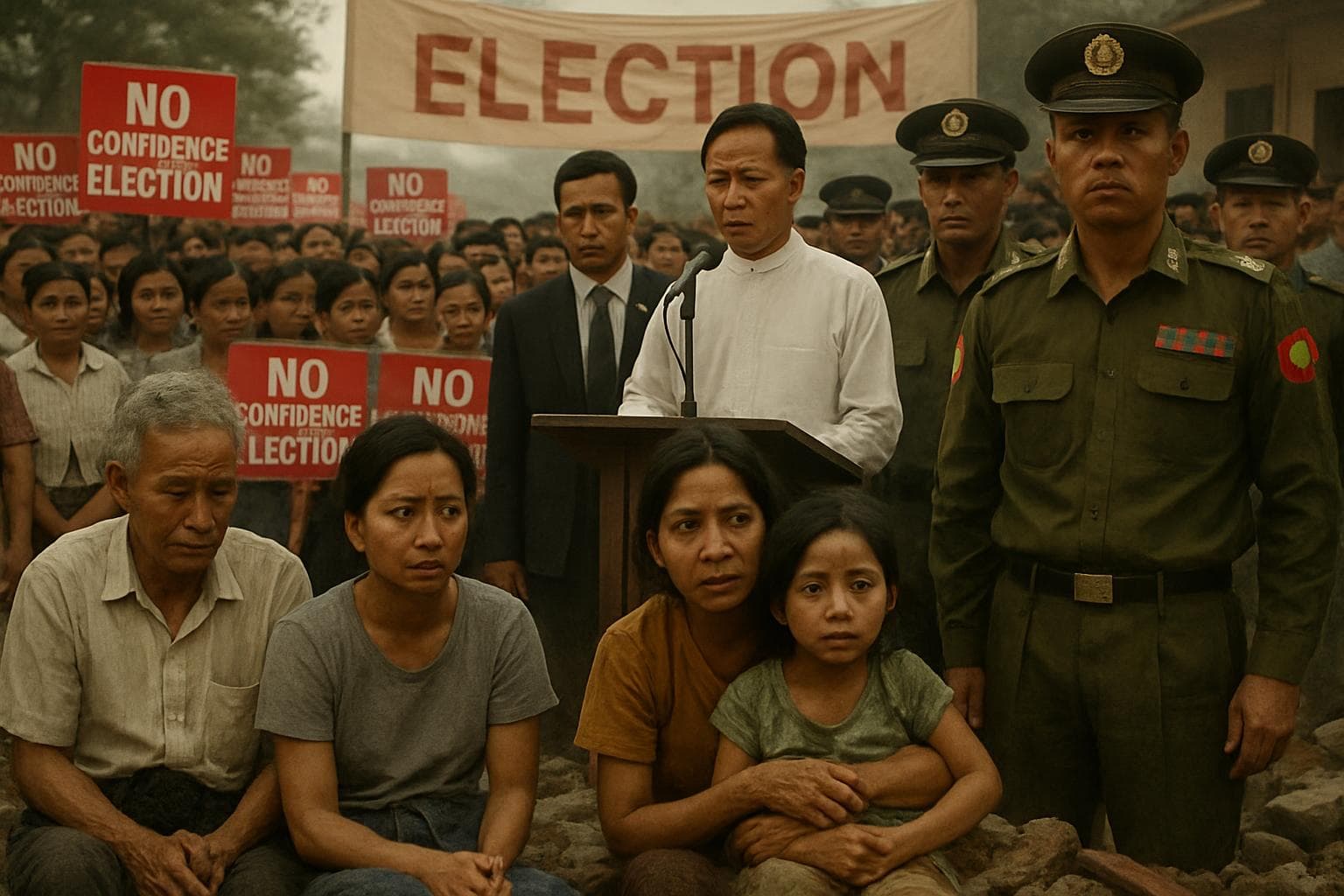
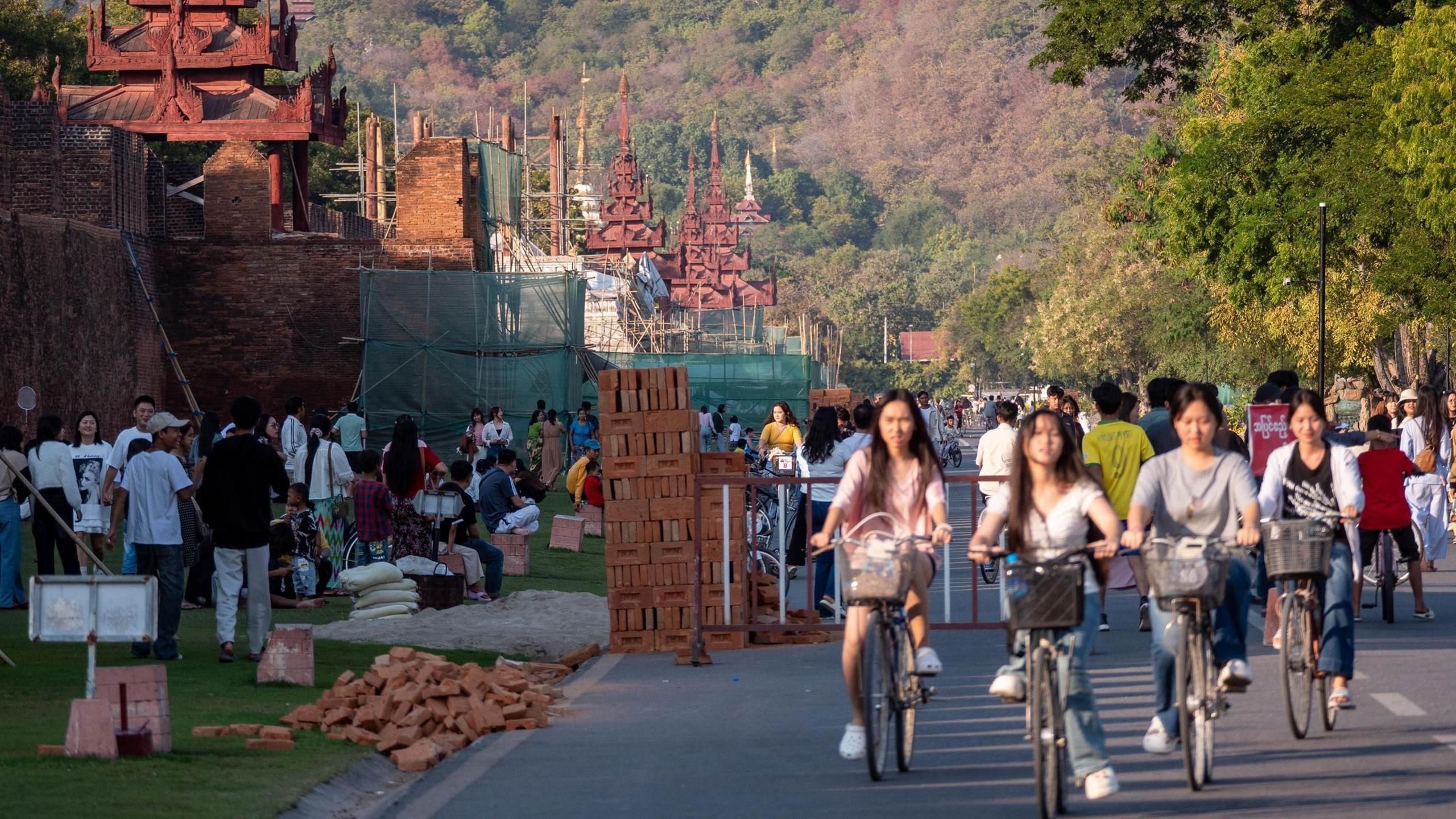
In Mandalay, a rally for the military-backed Union Solidarity and Development Party (USDP) highlighted the tense atmosphere. Retired Lieutenant-General Tayza Kyaw addressed a weary crowd, many of whom were earthquake victims hoping for aid. However, the presence of plain-clothes military intelligence officers stifled open dialogue, with attendees wary of speaking to journalists. "This election is a lie," one woman confided privately, reflecting the pervasive fear of repercussions for dissent.
International and Domestic Reactions
The junta, led by spokesperson Zaw Min Tun, insists the election is for the people of Myanmar, dismissing international criticism as irrelevant. However, Western governments and the United Nations have labeled the vote a sham. China, a crucial ally, supports the election, viewing it as a step towards stability despite ongoing conflict. Military strikes have intensified, with civilian infrastructure frequently targeted, exacerbating the humanitarian crisis.
The Human Cost of Conflict
The military's desperation is evident in increased conscription-related abductions, with young people fleeing military-controlled areas to avoid forced service. The junta's paranoia has led to draconian laws criminalizing election criticism, resulting in over 200 arrests since July. In cities like Yangon, authorities are reportedly coercing residents to vote, further undermining the election's legitimacy.
WHAT THIS MIGHT MEAN
The outcome of Myanmar's elections could have significant implications for the country's future. If the junta succeeds in consolidating power, it may further entrench military rule, exacerbating the ongoing civil war and humanitarian crisis. Conversely, continued international condemnation and domestic unrest could pressure the junta to seek genuine reforms. Experts suggest that China's support may be pivotal, potentially influencing the junta's approach to governance and conflict resolution. As Myanmar stands at a crossroads, the international community's response will be crucial in shaping the nation's trajectory.
Images from the Web
Related Articles
Peru's Political Turmoil: President José Jerí Ousted Amid Scandal
China Sets Lowest GDP Growth Target in Decades Amid Economic Challenges

UK Faces Dilemmas Amid Iran Conflict and China Spying Allegations
Intensified US-Israel Strikes on Iran Spark Global Outcry

Labour MP's Husband Arrested in UK-China Espionage Probe
Canada Calls for De-escalation Amid US-Israel Strikes on Iran
Myanmar's Controversial Elections: A Bid for Legitimacy Amidst Turmoil
In This Article
 Alex Carter| Published
 HIGHLIGHTS
- Myanmar's military junta is conducting elections on December 28, 2025, amid widespread international condemnation and accusations of illegitimacy.
- The National League for Democracy, led by Aung San Suu Kyi, has been dissolved, and she remains imprisoned, raising doubts about the election's fairness.
- The election is taking place in a climate of fear, with new laws criminalizing criticism and increased military presence intimidating voters.
- China supports the election, viewing it as a potential path to stability, despite ongoing conflict and increased military strikes in the country.
- Many citizens, fearing repercussions, feel compelled to vote, though they express skepticism about the election's authenticity.
As Myanmar prepares for its first election since the military coup in 2021, skepticism and fear pervade the nation. The December 28, 2025, polls, orchestrated by the ruling military junta, are widely criticized as a ploy to legitimize their grip on power. With the National League for Democracy (NLD) disbanded and its leader, Aung San Suu Kyi, imprisoned, the election's credibility is under intense scrutiny.
A Climate of Fear and Intimidation
In Mandalay, a rally for the military-backed Union Solidarity and Development Party (USDP) highlighted the tense atmosphere. Retired Lieutenant-General Tayza Kyaw addressed a weary crowd, many of whom were earthquake victims hoping for aid. However, the presence of plain-clothes military intelligence officers stifled open dialogue, with attendees wary of speaking to journalists. "This election is a lie," one woman confided privately, reflecting the pervasive fear of repercussions for dissent.
International and Domestic Reactions
The junta, led by spokesperson Zaw Min Tun, insists the election is for the people of Myanmar, dismissing international criticism as irrelevant. However, Western governments and the United Nations have labeled the vote a sham. China, a crucial ally, supports the election, viewing it as a step towards stability despite ongoing conflict. Military strikes have intensified, with civilian infrastructure frequently targeted, exacerbating the humanitarian crisis.
The Human Cost of Conflict
The military's desperation is evident in increased conscription-related abductions, with young people fleeing military-controlled areas to avoid forced service. The junta's paranoia has led to draconian laws criminalizing election criticism, resulting in over 200 arrests since July. In cities like Yangon, authorities are reportedly coercing residents to vote, further undermining the election's legitimacy.
WHAT THIS MIGHT MEAN
The outcome of Myanmar's elections could have significant implications for the country's future. If the junta succeeds in consolidating power, it may further entrench military rule, exacerbating the ongoing civil war and humanitarian crisis. Conversely, continued international condemnation and domestic unrest could pressure the junta to seek genuine reforms. Experts suggest that China's support may be pivotal, potentially influencing the junta's approach to governance and conflict resolution. As Myanmar stands at a crossroads, the international community's response will be crucial in shaping the nation's trajectory.
Images from the Web
Related Articles
Peru's Political Turmoil: President José Jerí Ousted Amid Scandal
China Sets Lowest GDP Growth Target in Decades Amid Economic Challenges
UK Faces Dilemmas Amid Iran Conflict and China Spying Allegations
Intensified US-Israel Strikes on Iran Spark Global Outcry
Labour MP's Husband Arrested in UK-China Espionage Probe
Canada Calls for De-escalation Amid US-Israel Strikes on Iran