
NASA Sets March Launch for Historic Artemis II Moon Mission

In This Article
HIGHLIGHTS
- NASA plans to launch the Artemis II mission on March 6, marking the first crewed lunar flyby in over 50 years.
- The mission involves a 10-day journey around the Moon with four astronauts aboard the Orion capsule.
- A successful wet dress rehearsal resolved previous hydrogen leaks, paving the way for the launch.
- Artemis II will travel further into space than any previous human mission, surpassing Apollo 13's record.
- The mission sets the stage for Artemis III, aiming for a lunar landing in 2028.
NASA is gearing up for a landmark mission as it targets March 6 for the launch of Artemis II, the first crewed mission to orbit the Moon in over half a century. This ambitious endeavor will see four astronauts embark on a 10-day journey around the Moon, setting the stage for future lunar exploration.
Successful Preparations and Crew Details
Following a successful "wet dress rehearsal" at the Kennedy Space Center in Florida, NASA announced the new launch date. The rehearsal, a critical pre-launch test, involved fueling the Space Launch System (SLS) rocket and simulating the countdown sequence. This marked a significant milestone after a previous attempt was halted due to a hydrogen fuel leak. "Every night I look up at the Moon and I see it and I get real excited because I can feel she's calling us and we're ready," said Lori Glaze, a NASA official, expressing the growing excitement for the mission.
The Artemis II crew comprises three American astronauts—Reid Wiseman, Victor Glover, and Christina Koch—and Canadian astronaut Jeremy Hansen. They will be quarantined in preparation for their journey aboard the Orion capsule, which will be mounted atop the 98-meter-tall SLS rocket.
Mission Objectives and Historical Context
The mission aims to take humans further into space than ever before, with the spacecraft traveling approximately 7,600 kilometers beyond the Moon's far side. This will surpass the distance record set by Apollo 13 in 1970. The astronauts will spend several hours studying and capturing images of the lunar surface before returning to Earth with a splashdown in the Pacific Ocean.
Artemis II is a precursor to Artemis III, scheduled for 2028, which will aim to land astronauts on the Moon for the first time since 1972. The mission is part of NASA's broader goal of advancing deep-space exploration and establishing a sustainable human presence on the Moon.
WHAT THIS MIGHT MEAN
The successful launch of Artemis II could significantly bolster NASA's plans for lunar exploration, potentially accelerating timelines for future missions. If the mission proceeds as planned, it will validate the capabilities of the Space Launch System and Orion capsule, crucial components for deep-space exploration. Experts suggest that a successful Artemis II mission will enhance international collaboration, particularly with the Canadian Space Agency, and could inspire renewed interest and investment in space exploration. As NASA looks toward Artemis III and beyond, the lessons learned from Artemis II will be instrumental in shaping the future of human spaceflight.
Images from the Web
Related Articles
NASA's Artemis II Moon Mission Faces Delay Due to Helium Flow Issue
Nasa Prepares for Historic Artemis II Mission to the Moon

Jim Lovell: The Astronaut Who Turned Adversity into Triumph Dies at 97
India's Historic Return to Space: Axiom Mission 4 Launches with International Crew
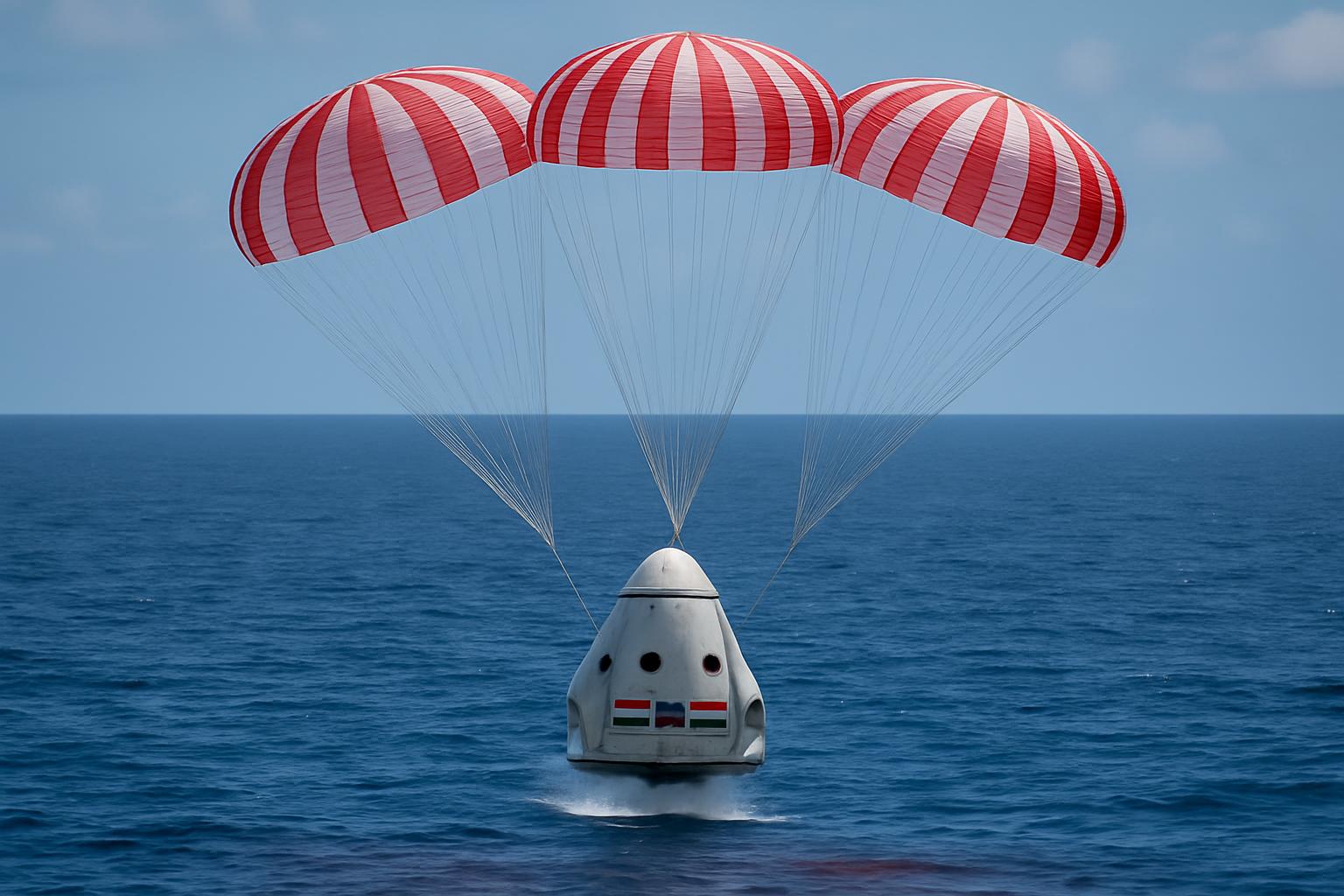
Historic Return: Shubhanshu Shukla and Axiom-4 Crew Head Back to Earth

NASA Conducts First Medical Evacuation from International Space Station
NASA Sets March Launch for Historic Artemis II Moon Mission
In This Article
 Leila Hassan| Published
 HIGHLIGHTS
- NASA plans to launch the Artemis II mission on March 6, marking the first crewed lunar flyby in over 50 years.
- The mission involves a 10-day journey around the Moon with four astronauts aboard the Orion capsule.
- A successful wet dress rehearsal resolved previous hydrogen leaks, paving the way for the launch.
- Artemis II will travel further into space than any previous human mission, surpassing Apollo 13's record.
- The mission sets the stage for Artemis III, aiming for a lunar landing in 2028.
NASA is gearing up for a landmark mission as it targets March 6 for the launch of Artemis II, the first crewed mission to orbit the Moon in over half a century. This ambitious endeavor will see four astronauts embark on a 10-day journey around the Moon, setting the stage for future lunar exploration.
Successful Preparations and Crew Details
Following a successful "wet dress rehearsal" at the Kennedy Space Center in Florida, NASA announced the new launch date. The rehearsal, a critical pre-launch test, involved fueling the Space Launch System (SLS) rocket and simulating the countdown sequence. This marked a significant milestone after a previous attempt was halted due to a hydrogen fuel leak. "Every night I look up at the Moon and I see it and I get real excited because I can feel she's calling us and we're ready," said Lori Glaze, a NASA official, expressing the growing excitement for the mission.
The Artemis II crew comprises three American astronauts—Reid Wiseman, Victor Glover, and Christina Koch—and Canadian astronaut Jeremy Hansen. They will be quarantined in preparation for their journey aboard the Orion capsule, which will be mounted atop the 98-meter-tall SLS rocket.
Mission Objectives and Historical Context
The mission aims to take humans further into space than ever before, with the spacecraft traveling approximately 7,600 kilometers beyond the Moon's far side. This will surpass the distance record set by Apollo 13 in 1970. The astronauts will spend several hours studying and capturing images of the lunar surface before returning to Earth with a splashdown in the Pacific Ocean.
Artemis II is a precursor to Artemis III, scheduled for 2028, which will aim to land astronauts on the Moon for the first time since 1972. The mission is part of NASA's broader goal of advancing deep-space exploration and establishing a sustainable human presence on the Moon.
WHAT THIS MIGHT MEAN
The successful launch of Artemis II could significantly bolster NASA's plans for lunar exploration, potentially accelerating timelines for future missions. If the mission proceeds as planned, it will validate the capabilities of the Space Launch System and Orion capsule, crucial components for deep-space exploration. Experts suggest that a successful Artemis II mission will enhance international collaboration, particularly with the Canadian Space Agency, and could inspire renewed interest and investment in space exploration. As NASA looks toward Artemis III and beyond, the lessons learned from Artemis II will be instrumental in shaping the future of human spaceflight.
Images from the Web
Related Articles
NASA's Artemis II Moon Mission Faces Delay Due to Helium Flow Issue
Nasa Prepares for Historic Artemis II Mission to the Moon
Jim Lovell: The Astronaut Who Turned Adversity into Triumph Dies at 97
India's Historic Return to Space: Axiom Mission 4 Launches with International Crew
Historic Return: Shubhanshu Shukla and Axiom-4 Crew Head Back to Earth
NASA Conducts First Medical Evacuation from International Space Station