
Russia's Recognition of Taliban Government Marks New Diplomatic Chapter
In This Article
HIGHLIGHTS
- Russia has officially recognized the Taliban government, becoming the first country to do so, as confirmed by both Afghan and Russian officials.
- Afghanistan's Foreign Minister Amir Khan Muttaqi praised the move as a "courageous" decision, hoping it sets a precedent for other nations.
- Russia aims to enhance economic cooperation with Afghanistan, focusing on sectors like energy and infrastructure, while also addressing terrorism and drug trafficking.
- The Taliban's human rights record, particularly regarding women's rights, remains a significant concern for many Western governments and international organizations.
- Russia's recognition follows its removal of the Taliban from its list of terrorist organizations and previous economic agreements with Afghanistan.
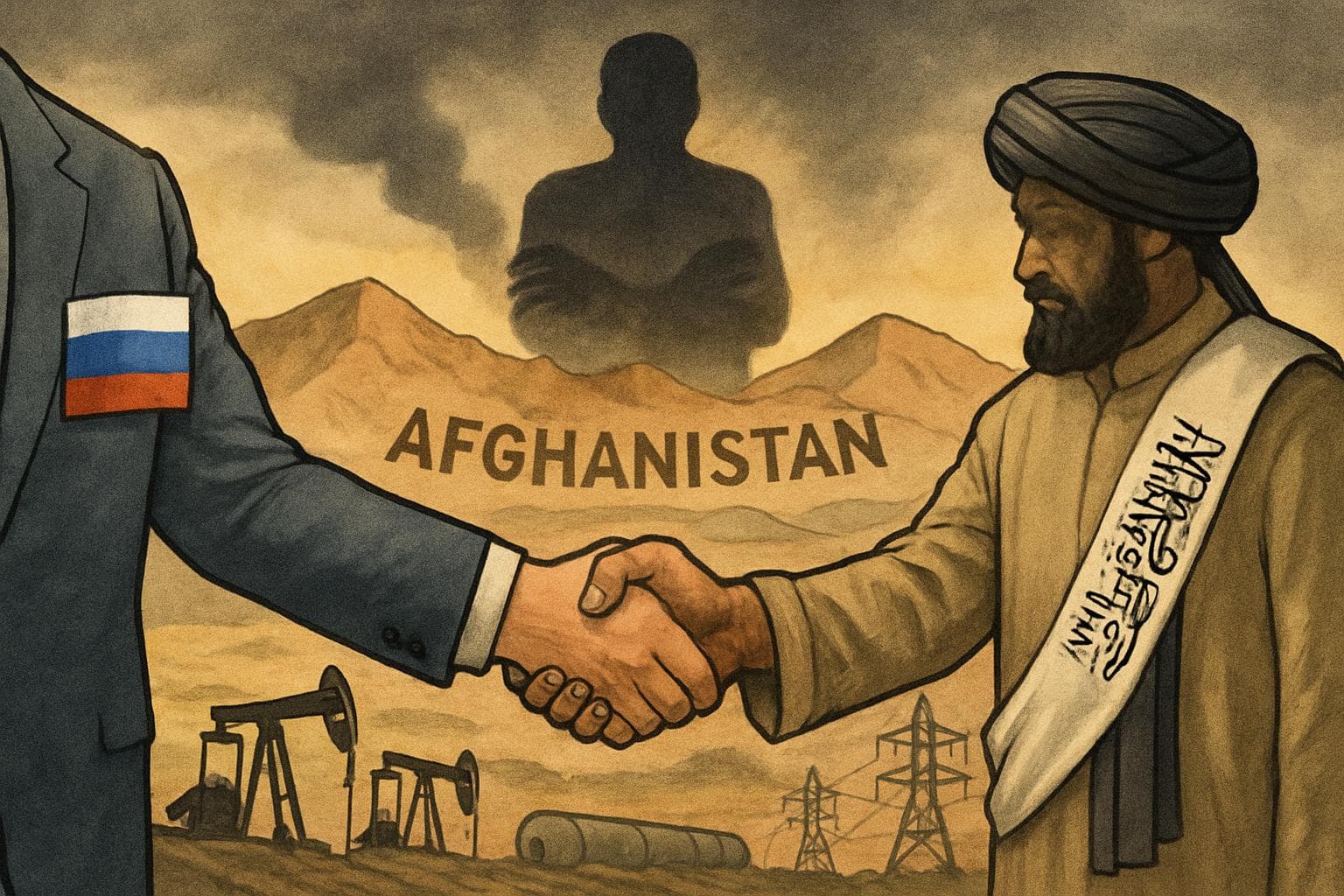
Russia has taken a significant diplomatic step by becoming the first nation to officially recognize the Taliban government in Afghanistan. This decision was announced following a meeting between Afghanistan's Foreign Minister Amir Khan Muttaqi and Russia's ambassador to Afghanistan, Dmitry Zhirnov, in Kabul. The move is seen as a bold gesture that could influence other countries' diplomatic stances towards the Taliban.
Diplomatic Relations and Economic Cooperation
The recognition marks a new phase in Russia-Afghanistan relations, with both nations expressing optimism about future cooperation. Russia's foreign ministry highlighted the potential for economic collaboration in areas such as energy, transportation, and infrastructure. The ministry also emphasized the importance of combating terrorism and drug trafficking, issues that have long plagued the region.
Russia's decision to recognize the Taliban comes after a series of diplomatic engagements, including the removal of the Taliban from Russia's list of terrorist organizations earlier this year. This move was intended to pave the way for a comprehensive partnership with Kabul. Russia has maintained a diplomatic presence in Afghanistan since the Taliban's return to power in 2021, underscoring its commitment to regional security and economic development.
Human Rights Concerns
Despite Russia's recognition, the Taliban's human rights record, particularly concerning women's rights, remains a contentious issue. Since regaining control in 2021, the Taliban have imposed strict interpretations of Islamic law, severely restricting women's access to education and public life. These actions have drawn widespread condemnation from Western governments and international organizations, with the United Nations labeling the situation as "gender apartheid."
The international community remains divided on how to engage with the Taliban, balancing the need for diplomatic relations with concerns over human rights violations. While some countries, like China and Pakistan, have accepted Taliban ambassadors, they have stopped short of official recognition.
WHAT THIS MIGHT MEAN
Russia's recognition of the Taliban government could potentially encourage other countries to reconsider their diplomatic stance towards Afghanistan. However, the Taliban's human rights record, especially regarding women's rights, will likely remain a significant barrier to broader international acceptance.
Economically, Russia's engagement with Afghanistan could lead to increased investment and development in the region, particularly in energy and infrastructure. This could provide much-needed economic relief to a country recovering from decades of conflict.
Politically, Russia's decision may strengthen its influence in Central Asia, positioning it as a key player in regional security and economic development. However, the move could also strain relations with Western nations that continue to oppose the Taliban's policies. As the situation evolves, the international community will closely monitor the implications of Russia's recognition on global diplomatic dynamics.
Related Articles
Pakistan's Airstrikes on Afghanistan Escalate Cross-Border Tensions
Palestinian-American Teen Killed by Israeli Settlers in West Bank Sparks Calls for Accountability
US-Iran Tensions Escalate Amid Military Buildup and Diplomatic Deadlock
China Sets Lowest GDP Growth Target in Decades Amid Economic Challenges

Sisters Tragically Drown at Eryri National Park's Watkin Path
Russian LNG Tanker Sinks in Mediterranean Amid Accusations of Ukrainian Drone Attack
Russia's Recognition of Taliban Government Marks New Diplomatic Chapter
In This Article
 James Okoro| Published
 HIGHLIGHTS
- Russia has officially recognized the Taliban government, becoming the first country to do so, as confirmed by both Afghan and Russian officials.
- Afghanistan's Foreign Minister Amir Khan Muttaqi praised the move as a "courageous" decision, hoping it sets a precedent for other nations.
- Russia aims to enhance economic cooperation with Afghanistan, focusing on sectors like energy and infrastructure, while also addressing terrorism and drug trafficking.
- The Taliban's human rights record, particularly regarding women's rights, remains a significant concern for many Western governments and international organizations.
- Russia's recognition follows its removal of the Taliban from its list of terrorist organizations and previous economic agreements with Afghanistan.
Russia has taken a significant diplomatic step by becoming the first nation to officially recognize the Taliban government in Afghanistan. This decision was announced following a meeting between Afghanistan's Foreign Minister Amir Khan Muttaqi and Russia's ambassador to Afghanistan, Dmitry Zhirnov, in Kabul. The move is seen as a bold gesture that could influence other countries' diplomatic stances towards the Taliban.
Diplomatic Relations and Economic Cooperation
The recognition marks a new phase in Russia-Afghanistan relations, with both nations expressing optimism about future cooperation. Russia's foreign ministry highlighted the potential for economic collaboration in areas such as energy, transportation, and infrastructure. The ministry also emphasized the importance of combating terrorism and drug trafficking, issues that have long plagued the region.
Russia's decision to recognize the Taliban comes after a series of diplomatic engagements, including the removal of the Taliban from Russia's list of terrorist organizations earlier this year. This move was intended to pave the way for a comprehensive partnership with Kabul. Russia has maintained a diplomatic presence in Afghanistan since the Taliban's return to power in 2021, underscoring its commitment to regional security and economic development.
Human Rights Concerns
Despite Russia's recognition, the Taliban's human rights record, particularly concerning women's rights, remains a contentious issue. Since regaining control in 2021, the Taliban have imposed strict interpretations of Islamic law, severely restricting women's access to education and public life. These actions have drawn widespread condemnation from Western governments and international organizations, with the United Nations labeling the situation as "gender apartheid."
The international community remains divided on how to engage with the Taliban, balancing the need for diplomatic relations with concerns over human rights violations. While some countries, like China and Pakistan, have accepted Taliban ambassadors, they have stopped short of official recognition.
WHAT THIS MIGHT MEAN
Russia's recognition of the Taliban government could potentially encourage other countries to reconsider their diplomatic stance towards Afghanistan. However, the Taliban's human rights record, especially regarding women's rights, will likely remain a significant barrier to broader international acceptance.
Economically, Russia's engagement with Afghanistan could lead to increased investment and development in the region, particularly in energy and infrastructure. This could provide much-needed economic relief to a country recovering from decades of conflict.
Politically, Russia's decision may strengthen its influence in Central Asia, positioning it as a key player in regional security and economic development. However, the move could also strain relations with Western nations that continue to oppose the Taliban's policies. As the situation evolves, the international community will closely monitor the implications of Russia's recognition on global diplomatic dynamics.
Related Articles
Pakistan's Airstrikes on Afghanistan Escalate Cross-Border Tensions
Palestinian-American Teen Killed by Israeli Settlers in West Bank Sparks Calls for Accountability
US-Iran Tensions Escalate Amid Military Buildup and Diplomatic Deadlock
China Sets Lowest GDP Growth Target in Decades Amid Economic Challenges
Sisters Tragically Drown at Eryri National Park's Watkin Path
Russian LNG Tanker Sinks in Mediterranean Amid Accusations of Ukrainian Drone Attack