
Sanseito's Electoral Gains Signal Shift in Japan's Political Landscape
In This Article
HIGHLIGHTS
- Sanseito, a far-right populist party, gained 14 seats in Japan's upper house elections, reflecting a shift in voter sentiment.
- The party's "Japanese First" agenda and anti-immigration stance have resonated amid Japan's cost-of-living crisis and economic challenges.
- Prime Minister Shigeru Ishiba's coalition lost its majority, increasing reliance on opposition parties like Sanseito.
- Sanseito's rise is attributed to its appeal among young conservatives and first-time voters disillusioned with mainstream politics.
- The party's leader, Sohei Kamiya, draws inspiration from Donald Trump, advocating for traditional values and reduced immigration.
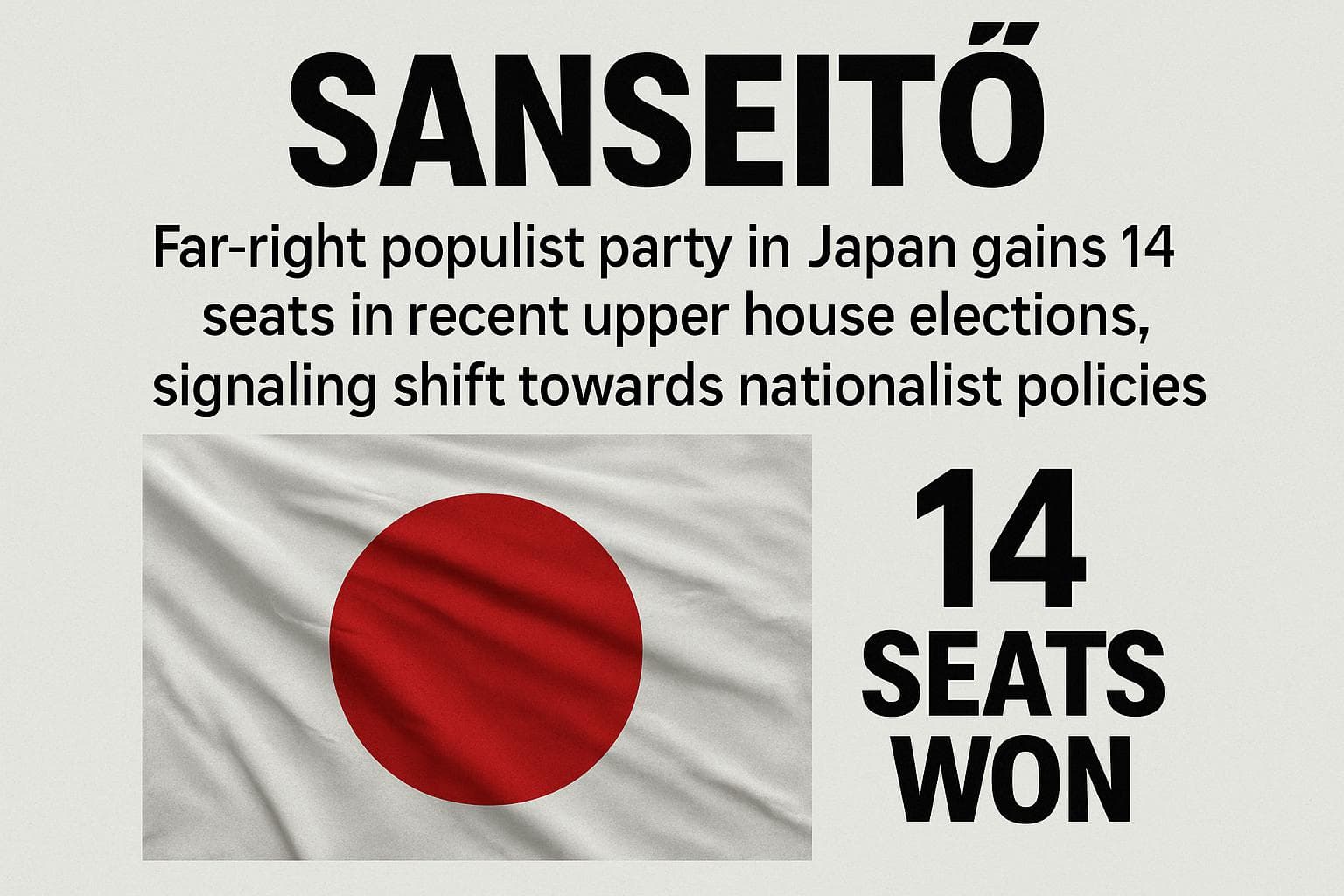
In a significant political development, Sanseito, a far-right populist party, has emerged as a major player in Japan's recent upper house elections, securing 14 seats. This marks a dramatic rise for a party that only held one seat previously, underscoring a growing shift in voter sentiment towards nationalist and anti-immigration policies.
Sanseito's Rise and Agenda
Founded during the Covid-19 pandemic, Sanseito initially gained attention through YouTube videos promoting conspiracy theories about vaccinations. The party has since broadened its appeal by advocating a "Japanese First" agenda, which includes curbing immigration and promoting traditional family values. This platform has resonated with many Japanese citizens amid a cost-of-living crisis exacerbated by global inflation and a devalued yen.
Impact on Japan's Political Dynamics
The election results have significant implications for Prime Minister Shigeru Ishiba's ruling coalition, which lost its majority in the upper house. This loss makes the coalition more dependent on opposition parties, including Sanseito, to maintain power. The party's success reflects a broader dissatisfaction with the status quo, as many voters feel mainstream parties have failed to address their economic concerns.
Appeal Among Disaffected Voters
Sanseito's support base includes young conservatives and first-time voters who are disillusioned with traditional political parties. Michael Cucek, a Japanese politics expert at Tokyo's Temple University, notes that the party draws much of its support from those hardest hit by economic challenges. The party's leader, Sohei Kamiya, has likened his political style to that of former US President Donald Trump, emphasizing boldness and a focus on national identity.
Broader Implications for Japan
The rise of Sanseito and similar parties suggests a growing openness to discussing issues like immigration, which were previously considered taboo. Jeffrey Hall, a lecturer at Kanda University, highlights the party's appeal among young men and its warnings about immigration's impact on Japanese culture. As Japan grapples with a shrinking and aging population, the number of foreign-born residents has reached a record high, intensifying debates over immigration policy.
WHAT THIS MIGHT MEAN
Sanseito's electoral success could signal a lasting shift in Japan's political landscape, potentially influencing the policies of mainstream parties. As the ruling coalition becomes more reliant on opposition support, there may be increased pressure to adopt more nationalist and conservative policies. This could lead to tighter immigration controls and a reevaluation of Japan's economic strategies.
Experts suggest that if Sanseito continues to gain traction, it could reshape the political discourse in Japan, making topics like immigration and national identity central to future elections. However, the party's rise also poses challenges, as it may deepen political polarization and complicate efforts to address Japan's economic and demographic issues comprehensively.
Related Articles

Congress Subpoenas Attorney General Bondi in Epstein Investigation

Senate Blocks Resolution to Limit Trump's Military Actions in Iran
US Supreme Court Ruling Sparks Trade Uncertainty in Asia and Beyond
Trump's New Tariff Strategy Sparks Global Trade Uncertainty

Tech Giants Pledge to Cover AI Data Center Energy Costs Amid Rising Electricity Concerns
Cuba Faces Widespread Blackout Amid Deepening Fuel Crisis
Sanseito's Electoral Gains Signal Shift in Japan's Political Landscape
In This Article
 Alex Carter| Published
 HIGHLIGHTS
- Sanseito, a far-right populist party, gained 14 seats in Japan's upper house elections, reflecting a shift in voter sentiment.
- The party's "Japanese First" agenda and anti-immigration stance have resonated amid Japan's cost-of-living crisis and economic challenges.
- Prime Minister Shigeru Ishiba's coalition lost its majority, increasing reliance on opposition parties like Sanseito.
- Sanseito's rise is attributed to its appeal among young conservatives and first-time voters disillusioned with mainstream politics.
- The party's leader, Sohei Kamiya, draws inspiration from Donald Trump, advocating for traditional values and reduced immigration.
In a significant political development, Sanseito, a far-right populist party, has emerged as a major player in Japan's recent upper house elections, securing 14 seats. This marks a dramatic rise for a party that only held one seat previously, underscoring a growing shift in voter sentiment towards nationalist and anti-immigration policies.
Sanseito's Rise and Agenda
Founded during the Covid-19 pandemic, Sanseito initially gained attention through YouTube videos promoting conspiracy theories about vaccinations. The party has since broadened its appeal by advocating a "Japanese First" agenda, which includes curbing immigration and promoting traditional family values. This platform has resonated with many Japanese citizens amid a cost-of-living crisis exacerbated by global inflation and a devalued yen.
Impact on Japan's Political Dynamics
The election results have significant implications for Prime Minister Shigeru Ishiba's ruling coalition, which lost its majority in the upper house. This loss makes the coalition more dependent on opposition parties, including Sanseito, to maintain power. The party's success reflects a broader dissatisfaction with the status quo, as many voters feel mainstream parties have failed to address their economic concerns.
Appeal Among Disaffected Voters
Sanseito's support base includes young conservatives and first-time voters who are disillusioned with traditional political parties. Michael Cucek, a Japanese politics expert at Tokyo's Temple University, notes that the party draws much of its support from those hardest hit by economic challenges. The party's leader, Sohei Kamiya, has likened his political style to that of former US President Donald Trump, emphasizing boldness and a focus on national identity.
Broader Implications for Japan
The rise of Sanseito and similar parties suggests a growing openness to discussing issues like immigration, which were previously considered taboo. Jeffrey Hall, a lecturer at Kanda University, highlights the party's appeal among young men and its warnings about immigration's impact on Japanese culture. As Japan grapples with a shrinking and aging population, the number of foreign-born residents has reached a record high, intensifying debates over immigration policy.
WHAT THIS MIGHT MEAN
Sanseito's electoral success could signal a lasting shift in Japan's political landscape, potentially influencing the policies of mainstream parties. As the ruling coalition becomes more reliant on opposition support, there may be increased pressure to adopt more nationalist and conservative policies. This could lead to tighter immigration controls and a reevaluation of Japan's economic strategies.
Experts suggest that if Sanseito continues to gain traction, it could reshape the political discourse in Japan, making topics like immigration and national identity central to future elections. However, the party's rise also poses challenges, as it may deepen political polarization and complicate efforts to address Japan's economic and demographic issues comprehensively.
Related Articles
Congress Subpoenas Attorney General Bondi in Epstein Investigation
Senate Blocks Resolution to Limit Trump's Military Actions in Iran
US Supreme Court Ruling Sparks Trade Uncertainty in Asia and Beyond
Trump's New Tariff Strategy Sparks Global Trade Uncertainty
Tech Giants Pledge to Cover AI Data Center Energy Costs Amid Rising Electricity Concerns
Cuba Faces Widespread Blackout Amid Deepening Fuel Crisis