
Swift Response Mitigates Tsunami Threat Across Pacific After Major Earthquake
In This Article
HIGHLIGHTS
- A powerful 8.8-magnitude earthquake near Russia's Kamchatka Peninsula triggered tsunami warnings across the Pacific, including Hawaii and the US west coast.
- Tsunami warnings were downgraded to advisories in many areas, with Hawaii experiencing waves nearly six feet high.
- The Pacific Tsunami Warning Center played a crucial role in alerting over three million people, preventing significant loss of life.
- Residents in affected areas, such as Maui, evacuated to higher ground, with some choosing to spend the night in safer locations.
- Despite the downgrades, authorities continue to caution against strong currents and advise staying out of the water.
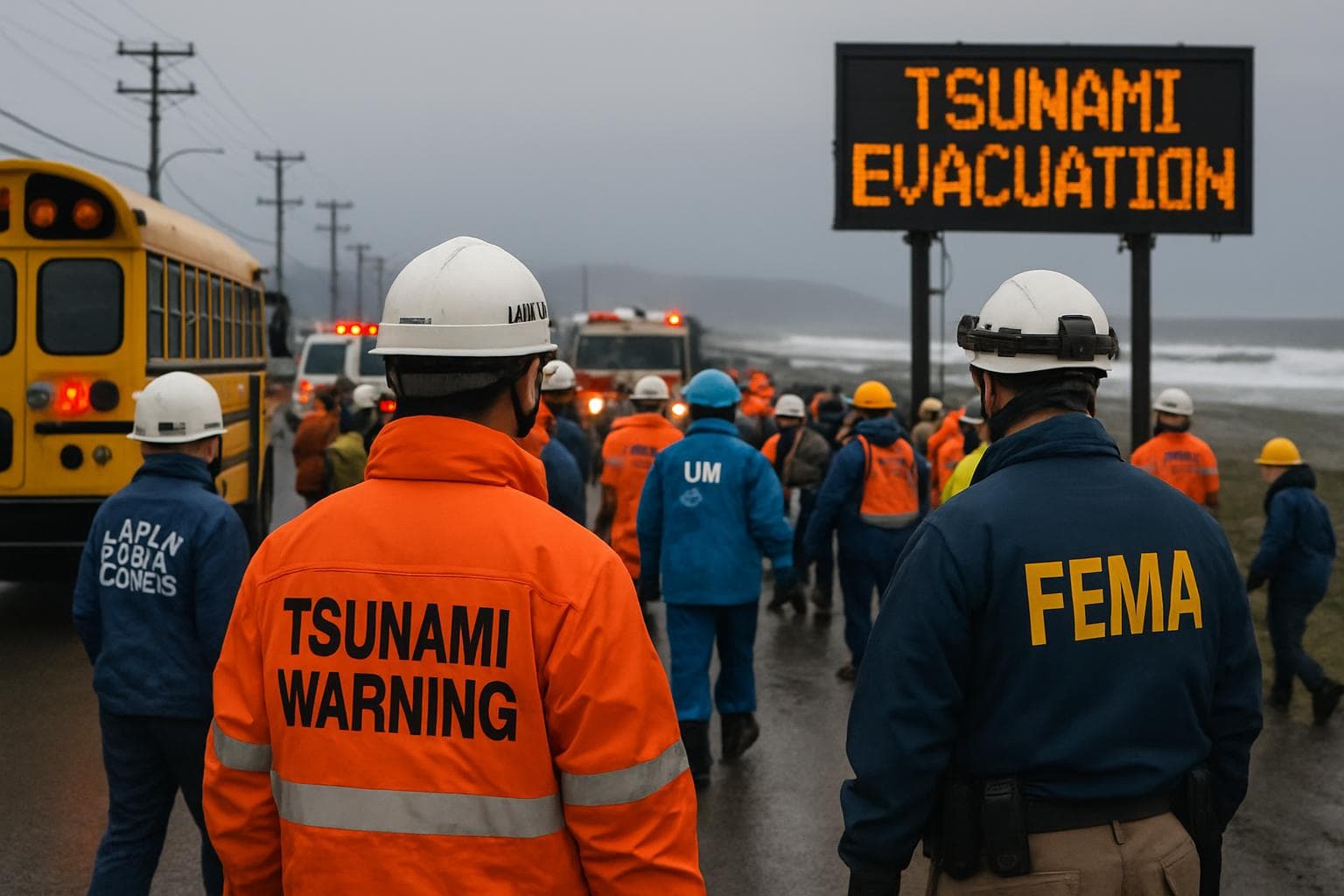
A massive 8.8-magnitude earthquake struck near Russia's Kamchatka Peninsula, triggering a series of tsunami warnings across the Pacific Ocean. The quake, one of the strongest ever recorded, prompted evacuation orders in regions as far-reaching as Japan, Hawaii, and the US west coast. However, the initial tsunami warnings have since been downgraded to advisories as the threat of catastrophic flooding recedes.
Tsunami Warnings and Evacuations
The Pacific Tsunami Warning Center (PTWC) was at the forefront of the response, issuing alerts that led to the evacuation of over three million people. In Hawaii, waves reaching nearly six feet were recorded, prompting residents to seek higher ground. Hawaii Governor Josh Green noted the absence of a "wave of consequence," although the potential for strong currents remains.
Impact on Coastal Communities
In Maui, residents like David Dorn took no chances, evacuating to safer locations despite the downgrades. "We try and take them all seriously," Dorn shared, highlighting the community's cautious approach. Meanwhile, Roger Pleasanton described the traffic as "like New York City," underscoring the urgency felt by many.
Global Preparedness and Response
The swift and coordinated response by global disaster agencies, including the PTWC, was instrumental in preventing a tragedy. The center's early warnings and accurate assessments were crucial in mitigating the impact of the tsunami waves, which reached up to four meters in some areas.
Ongoing Caution Advised
Although the immediate threat has lessened, authorities continue to advise caution. The National Tsunami Warning Center maintains advisories for large coastal areas, warning of potential strong currents and urging people to stay out of the water.
WHAT THIS MIGHT MEAN
The recent events underscore the importance of maintaining robust disaster response systems like the Pacific Tsunami Warning Center. Experts warn that funding cuts could jeopardize future preparedness efforts. As the situation stabilizes, attention may turn to evaluating and enhancing these systems to ensure continued efficacy. The incident also highlights the need for ongoing public education on tsunami risks and evacuation procedures, which could be crucial in future emergencies.
Images from the Web




Related Articles

Geneva Peace Talks Between Russia and Ukraine End Without Breakthrough

Geneva Talks See 'Meaningful Progress' Amid Tensions Over Ukraine-Russia Conflict

Geneva Peace Talks: Russia and Ukraine Seek Resolution Amid Ongoing Conflict
Russia's Messaging App Crackdown: WhatsApp and Telegram in the Crosshairs
Russian LNG Tanker Sinks in Mediterranean Amid Accusations of Ukrainian Drone Attack
US Supreme Court Ruling Sparks Trade Uncertainty in Asia and Beyond
Swift Response Mitigates Tsunami Threat Across Pacific After Major Earthquake
In This Article
 Ethan Brooks| Published
 HIGHLIGHTS
- A powerful 8.8-magnitude earthquake near Russia's Kamchatka Peninsula triggered tsunami warnings across the Pacific, including Hawaii and the US west coast.
- Tsunami warnings were downgraded to advisories in many areas, with Hawaii experiencing waves nearly six feet high.
- The Pacific Tsunami Warning Center played a crucial role in alerting over three million people, preventing significant loss of life.
- Residents in affected areas, such as Maui, evacuated to higher ground, with some choosing to spend the night in safer locations.
- Despite the downgrades, authorities continue to caution against strong currents and advise staying out of the water.
A massive 8.8-magnitude earthquake struck near Russia's Kamchatka Peninsula, triggering a series of tsunami warnings across the Pacific Ocean. The quake, one of the strongest ever recorded, prompted evacuation orders in regions as far-reaching as Japan, Hawaii, and the US west coast. However, the initial tsunami warnings have since been downgraded to advisories as the threat of catastrophic flooding recedes.
Tsunami Warnings and Evacuations
The Pacific Tsunami Warning Center (PTWC) was at the forefront of the response, issuing alerts that led to the evacuation of over three million people. In Hawaii, waves reaching nearly six feet were recorded, prompting residents to seek higher ground. Hawaii Governor Josh Green noted the absence of a "wave of consequence," although the potential for strong currents remains.
Impact on Coastal Communities
In Maui, residents like David Dorn took no chances, evacuating to safer locations despite the downgrades. "We try and take them all seriously," Dorn shared, highlighting the community's cautious approach. Meanwhile, Roger Pleasanton described the traffic as "like New York City," underscoring the urgency felt by many.
Global Preparedness and Response
The swift and coordinated response by global disaster agencies, including the PTWC, was instrumental in preventing a tragedy. The center's early warnings and accurate assessments were crucial in mitigating the impact of the tsunami waves, which reached up to four meters in some areas.
Ongoing Caution Advised
Although the immediate threat has lessened, authorities continue to advise caution. The National Tsunami Warning Center maintains advisories for large coastal areas, warning of potential strong currents and urging people to stay out of the water.
WHAT THIS MIGHT MEAN
The recent events underscore the importance of maintaining robust disaster response systems like the Pacific Tsunami Warning Center. Experts warn that funding cuts could jeopardize future preparedness efforts. As the situation stabilizes, attention may turn to evaluating and enhancing these systems to ensure continued efficacy. The incident also highlights the need for ongoing public education on tsunami risks and evacuation procedures, which could be crucial in future emergencies.
Images from the Web
Related Articles
Geneva Peace Talks Between Russia and Ukraine End Without Breakthrough
Geneva Talks See 'Meaningful Progress' Amid Tensions Over Ukraine-Russia Conflict
Geneva Peace Talks: Russia and Ukraine Seek Resolution Amid Ongoing Conflict
Russia's Messaging App Crackdown: WhatsApp and Telegram in the Crosshairs
Russian LNG Tanker Sinks in Mediterranean Amid Accusations of Ukrainian Drone Attack
US Supreme Court Ruling Sparks Trade Uncertainty in Asia and Beyond