
Thai Prime Minister Suspended Amid Controversy Over Leaked Call with Hun Sen
In This Article
HIGHLIGHTS
- Thailand's Constitutional Court has suspended Prime Minister Paetongtarn Shinawatra over a leaked phone call with Cambodia's former leader Hun Sen.
- The court is reviewing a petition by 36 senators accusing her of ethical violations and dishonesty, with a decision pending.
- The leaked conversation, which involved a border dispute, has sparked public outrage and political instability, with protests demanding her resignation.
- Paetongtarn's suspension comes as her ruling coalition faces a slim majority after losing a key ally, raising the possibility of a no-confidence vote.
- The Shinawatra family has been a central figure in Thai politics for two decades, often clashing with the conservative military establishment.
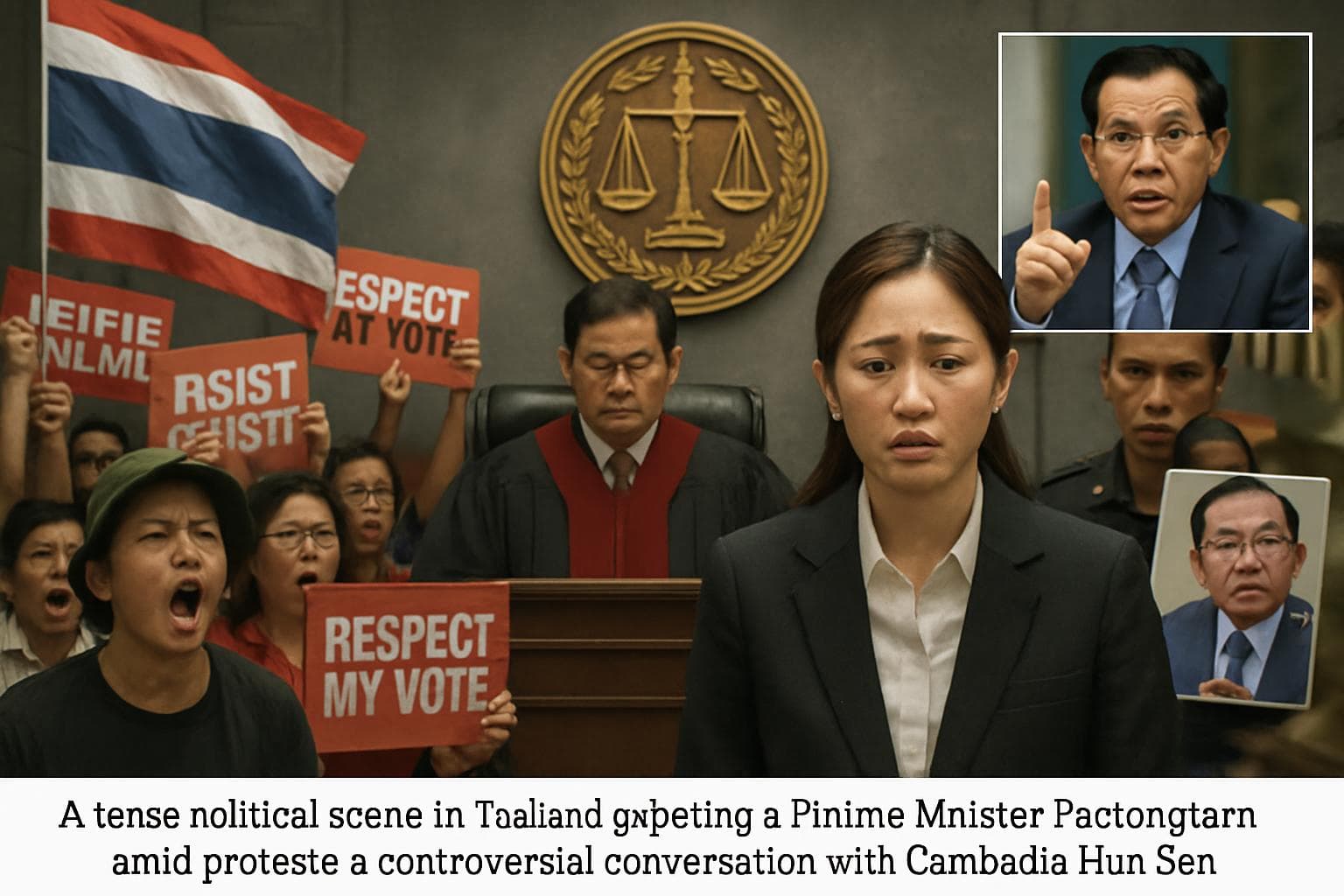
Thailand's political landscape has been thrown into turmoil following the suspension of Prime Minister Paetongtarn Shinawatra by the Constitutional Court. The decision, announced on Tuesday, comes as the court investigates allegations of ethical misconduct related to a leaked phone call with Cambodia's influential former leader, Hun Sen.
Controversial Call Sparks Outrage
The controversy erupted after a recording surfaced of Paetongtarn referring to Hun Sen as "uncle" and discussing a sensitive border dispute between Thailand and Cambodia. Critics have accused her of undermining national interests and appeasing Cambodia, leading to widespread public anger and a petition for her dismissal. The court, voting 7-2, has given Paetongtarn 15 days to present her defense while Deputy Prime Minister Suriya Juangroongruangkit assumes the role of acting leader.
Political Instability and Public Backlash
The leaked conversation has intensified political instability in Thailand, with Paetongtarn's coalition government already weakened by the recent defection of a key conservative ally. The prime minister's approval ratings have plummeted, and protests have erupted in Bangkok, with thousands demanding her resignation. The Shinawatra family, a dominant force in Thai politics, has faced repeated challenges from the conservative military establishment, with Paetongtarn's father, Thaksin Shinawatra, also embroiled in legal battles.
Historical Context and Family Legacy
The Shinawatra family has long been at the center of Thailand's political power struggles. Thaksin Shinawatra, a former prime minister, was ousted in a 2006 coup, and his sister Yingluck was removed by a court ruling in 2014. Paetongtarn's suspension marks another chapter in this ongoing saga, highlighting the constitutional court's significant influence in shaping the country's political landscape.
WHAT THIS MIGHT MEAN
The suspension of Paetongtarn Shinawatra could lead to significant political repercussions in Thailand. If the court rules against her, it may trigger a no-confidence vote, potentially leading to a change in leadership. The situation also underscores the ongoing tension between the Shinawatra family and the conservative military establishment, which could further polarize Thai politics. Experts suggest that the court's decision may set a precedent for future cases, influencing how political disputes are resolved in the country. As Thailand navigates this period of uncertainty, the outcome of Paetongtarn's case will likely have lasting implications for its political stability and governance.
Related Articles
Thailand's Pivotal Election: Reformists Challenge Conservative Stronghold
Thailand's Political Landscape Shifts as Parliament Dissolved Amid Border Tensions
Thailand's People's Party Leads Polls Amid Political Challenges
Myanmar's Controversial Elections Amidst Civil Unrest and International Criticism
Tragedy Strikes as Crane Collapse Derails Train in Thailand

Thailand and Cambodia Agree to Ceasefire Amidst Escalating Border Conflict
Thai Prime Minister Suspended Amid Controversy Over Leaked Call with Hun Sen
In This Article
 Alex Carter| Published
 HIGHLIGHTS
- Thailand's Constitutional Court has suspended Prime Minister Paetongtarn Shinawatra over a leaked phone call with Cambodia's former leader Hun Sen.
- The court is reviewing a petition by 36 senators accusing her of ethical violations and dishonesty, with a decision pending.
- The leaked conversation, which involved a border dispute, has sparked public outrage and political instability, with protests demanding her resignation.
- Paetongtarn's suspension comes as her ruling coalition faces a slim majority after losing a key ally, raising the possibility of a no-confidence vote.
- The Shinawatra family has been a central figure in Thai politics for two decades, often clashing with the conservative military establishment.
Thailand's political landscape has been thrown into turmoil following the suspension of Prime Minister Paetongtarn Shinawatra by the Constitutional Court. The decision, announced on Tuesday, comes as the court investigates allegations of ethical misconduct related to a leaked phone call with Cambodia's influential former leader, Hun Sen.
Controversial Call Sparks Outrage
The controversy erupted after a recording surfaced of Paetongtarn referring to Hun Sen as "uncle" and discussing a sensitive border dispute between Thailand and Cambodia. Critics have accused her of undermining national interests and appeasing Cambodia, leading to widespread public anger and a petition for her dismissal. The court, voting 7-2, has given Paetongtarn 15 days to present her defense while Deputy Prime Minister Suriya Juangroongruangkit assumes the role of acting leader.
Political Instability and Public Backlash
The leaked conversation has intensified political instability in Thailand, with Paetongtarn's coalition government already weakened by the recent defection of a key conservative ally. The prime minister's approval ratings have plummeted, and protests have erupted in Bangkok, with thousands demanding her resignation. The Shinawatra family, a dominant force in Thai politics, has faced repeated challenges from the conservative military establishment, with Paetongtarn's father, Thaksin Shinawatra, also embroiled in legal battles.
Historical Context and Family Legacy
The Shinawatra family has long been at the center of Thailand's political power struggles. Thaksin Shinawatra, a former prime minister, was ousted in a 2006 coup, and his sister Yingluck was removed by a court ruling in 2014. Paetongtarn's suspension marks another chapter in this ongoing saga, highlighting the constitutional court's significant influence in shaping the country's political landscape.
WHAT THIS MIGHT MEAN
The suspension of Paetongtarn Shinawatra could lead to significant political repercussions in Thailand. If the court rules against her, it may trigger a no-confidence vote, potentially leading to a change in leadership. The situation also underscores the ongoing tension between the Shinawatra family and the conservative military establishment, which could further polarize Thai politics. Experts suggest that the court's decision may set a precedent for future cases, influencing how political disputes are resolved in the country. As Thailand navigates this period of uncertainty, the outcome of Paetongtarn's case will likely have lasting implications for its political stability and governance.
Related Articles
Thailand's Pivotal Election: Reformists Challenge Conservative Stronghold
Thailand's Political Landscape Shifts as Parliament Dissolved Amid Border Tensions
Thailand's People's Party Leads Polls Amid Political Challenges
Myanmar's Controversial Elections Amidst Civil Unrest and International Criticism
Tragedy Strikes as Crane Collapse Derails Train in Thailand
Thailand and Cambodia Agree to Ceasefire Amidst Escalating Border Conflict