
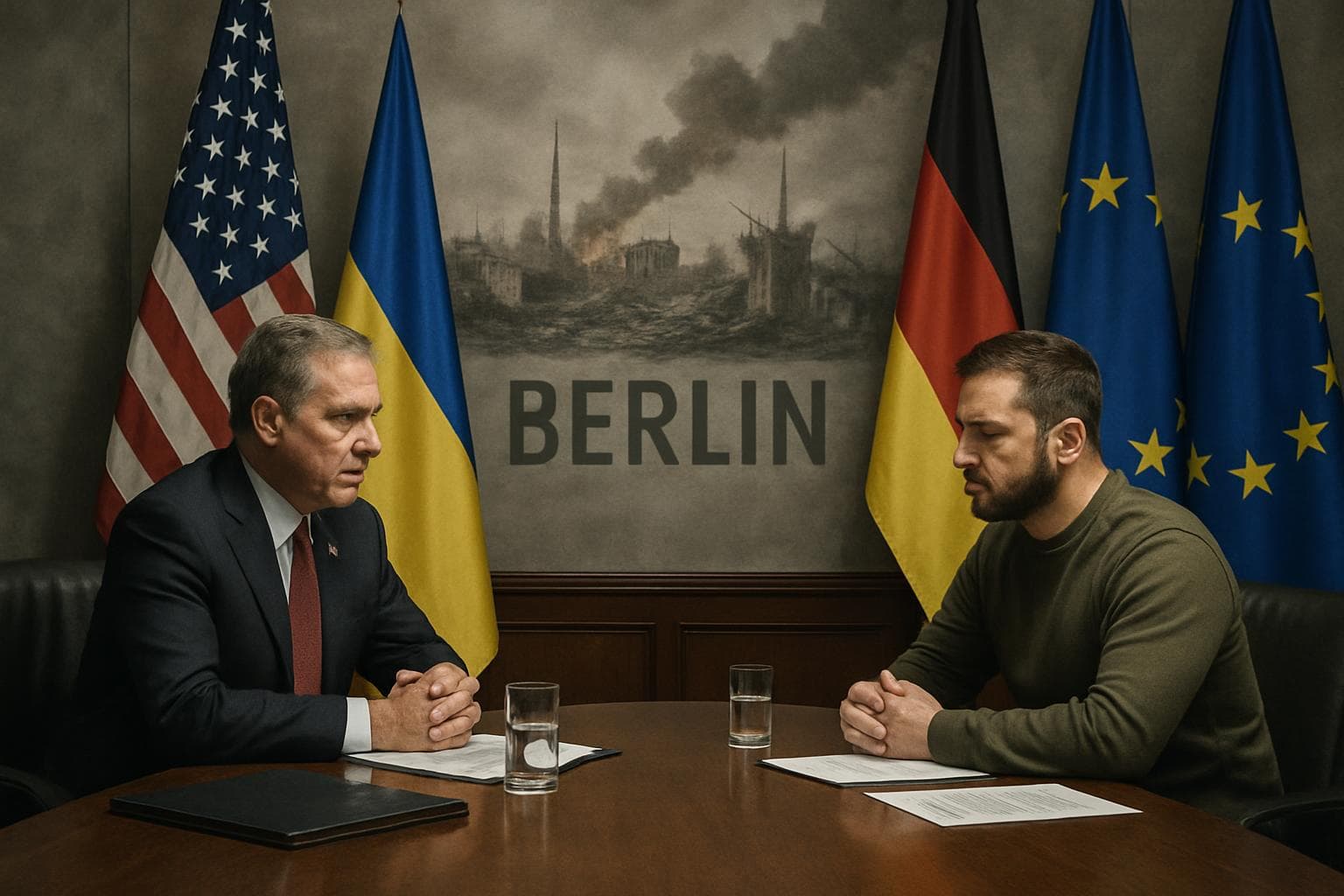
US Envoy to Meet Zelensky in Berlin Amid Ongoing Peace Negotiations
In This Article
HIGHLIGHTS
- US envoy Steve Witkoff will meet Ukrainian President Zelensky in Berlin for high-level talks on ending the Russia-Ukraine conflict.
- The Trump administration aims for a peace deal by Christmas, but territorial disputes remain a major hurdle.
- Zelensky is skeptical of the US proposal to create a "special economic zone" in the Donbas region.
- Belgium opposes using frozen Russian assets for Ukraine without EU guarantees, citing legal concerns.
- Ukraine could join the European Union by January 2027 under a proposed peace plan.
In a renewed diplomatic push to end the ongoing Russia-Ukraine conflict, US envoy Steve Witkoff is set to meet Ukrainian President Volodymyr Zelensky in Berlin this weekend. The high-level talks aim to advance a peace agreement, with the Trump administration pushing for a resolution by Christmas. However, significant challenges remain, particularly regarding territorial disputes in eastern Ukraine.
Diplomatic Efforts Intensify
Witkoff, representing the White House, will engage with Zelensky and European leaders, including UK Prime Minister Sir Keir Starmer, French President Emmanuel Macron, and German Chancellor Friedrich Merz. The discussions will focus on the latest version of a proposed peace agreement, which has seen several iterations since its inception in late November. Despite ongoing negotiations, a breakthrough remains elusive, with the fate of the Donbas region being a contentious issue.
Territorial Disputes and Skepticism
The US proposal suggests transforming the Donbas into a "special economic zone," with Ukraine withdrawing its forces and Russia agreeing not to advance further. However, Zelensky has expressed skepticism, questioning the enforceability of such terms. "What will restrain [Russia] from advancing?" he asked, highlighting concerns over potential Russian infiltration.
European Union Membership and Asset Debate
As part of the peace talks, Ukraine's potential accession to the European Union by January 2027 is under discussion. Meanwhile, Belgium's Prime Minister Bart De Wever has voiced opposition to using frozen Russian assets to fund Ukraine, citing legal risks and the need for EU guarantees. This debate underscores the complexities of international law and economic stability within the EU.
Continued Conflict and Security Concerns
The ongoing conflict saw further escalation with Russian drone and missile attacks on Ukrainian ports, underscoring Moscow's disregard for diplomatic efforts. Zelensky condemned the attacks, emphasizing the need for robust security guarantees in any peace agreement. As negotiations continue, European leaders are focused on ensuring Ukraine's security and economic stability in the event of a peace deal.
WHAT THIS MIGHT MEAN
The upcoming talks in Berlin could be pivotal in shaping the future of the Russia-Ukraine conflict. If a peace agreement is reached, it may pave the way for Ukraine's integration into the European Union, significantly altering the geopolitical landscape. However, unresolved territorial disputes and skepticism over proposed solutions could stall progress. Experts suggest that without enforceable security guarantees, any agreement may be fragile. The debate over frozen Russian assets also highlights the legal and financial complexities that could impact EU unity and economic stability. As negotiations unfold, the international community will be watching closely to see if a sustainable resolution can be achieved.
Related Articles
Spain's Sánchez Stands Firm Against Trump's Trade Threat Over Iran Stance
Russian LNG Tanker Sinks in Mediterranean Amid Accusations of Ukrainian Drone Attack
US-Iran Tensions Escalate Amid Renewed Nuclear Talks and Protests
Trump Raises Import Tariffs to 15% After Supreme Court Setback
Trump Criticizes Supreme Court After Tariff Ruling, Imposes New Global Tariff
US-Iran Tensions Escalate Amid Military Buildup and Diplomatic Deadlock
US Envoy to Meet Zelensky in Berlin Amid Ongoing Peace Negotiations
In This Article
 Ethan Brooks| Published
 HIGHLIGHTS
- US envoy Steve Witkoff will meet Ukrainian President Zelensky in Berlin for high-level talks on ending the Russia-Ukraine conflict.
- The Trump administration aims for a peace deal by Christmas, but territorial disputes remain a major hurdle.
- Zelensky is skeptical of the US proposal to create a "special economic zone" in the Donbas region.
- Belgium opposes using frozen Russian assets for Ukraine without EU guarantees, citing legal concerns.
- Ukraine could join the European Union by January 2027 under a proposed peace plan.
In a renewed diplomatic push to end the ongoing Russia-Ukraine conflict, US envoy Steve Witkoff is set to meet Ukrainian President Volodymyr Zelensky in Berlin this weekend. The high-level talks aim to advance a peace agreement, with the Trump administration pushing for a resolution by Christmas. However, significant challenges remain, particularly regarding territorial disputes in eastern Ukraine.
Diplomatic Efforts Intensify
Witkoff, representing the White House, will engage with Zelensky and European leaders, including UK Prime Minister Sir Keir Starmer, French President Emmanuel Macron, and German Chancellor Friedrich Merz. The discussions will focus on the latest version of a proposed peace agreement, which has seen several iterations since its inception in late November. Despite ongoing negotiations, a breakthrough remains elusive, with the fate of the Donbas region being a contentious issue.
Territorial Disputes and Skepticism
The US proposal suggests transforming the Donbas into a "special economic zone," with Ukraine withdrawing its forces and Russia agreeing not to advance further. However, Zelensky has expressed skepticism, questioning the enforceability of such terms. "What will restrain [Russia] from advancing?" he asked, highlighting concerns over potential Russian infiltration.
European Union Membership and Asset Debate
As part of the peace talks, Ukraine's potential accession to the European Union by January 2027 is under discussion. Meanwhile, Belgium's Prime Minister Bart De Wever has voiced opposition to using frozen Russian assets to fund Ukraine, citing legal risks and the need for EU guarantees. This debate underscores the complexities of international law and economic stability within the EU.
Continued Conflict and Security Concerns
The ongoing conflict saw further escalation with Russian drone and missile attacks on Ukrainian ports, underscoring Moscow's disregard for diplomatic efforts. Zelensky condemned the attacks, emphasizing the need for robust security guarantees in any peace agreement. As negotiations continue, European leaders are focused on ensuring Ukraine's security and economic stability in the event of a peace deal.
WHAT THIS MIGHT MEAN
The upcoming talks in Berlin could be pivotal in shaping the future of the Russia-Ukraine conflict. If a peace agreement is reached, it may pave the way for Ukraine's integration into the European Union, significantly altering the geopolitical landscape. However, unresolved territorial disputes and skepticism over proposed solutions could stall progress. Experts suggest that without enforceable security guarantees, any agreement may be fragile. The debate over frozen Russian assets also highlights the legal and financial complexities that could impact EU unity and economic stability. As negotiations unfold, the international community will be watching closely to see if a sustainable resolution can be achieved.
Related Articles
Spain's Sánchez Stands Firm Against Trump's Trade Threat Over Iran Stance
Russian LNG Tanker Sinks in Mediterranean Amid Accusations of Ukrainian Drone Attack
US-Iran Tensions Escalate Amid Renewed Nuclear Talks and Protests
Trump Raises Import Tariffs to 15% After Supreme Court Setback
Trump Criticizes Supreme Court After Tariff Ruling, Imposes New Global Tariff
US-Iran Tensions Escalate Amid Military Buildup and Diplomatic Deadlock