
Zelenskyy's Anti-Corruption Law Sparks Protests and International Concern
In This Article
HIGHLIGHTS
- President Zelenskyy signed a law reducing the independence of Ukraine's anti-corruption agencies, sparking widespread protests.
- The law places the National Anti-Corruption Bureau (Nabu) and the Specialised Anti-Corruption Prosecutor's Office (Sap) under the control of the prosecutor general.
- Thousands protested in Kyiv and other cities, fearing a return to past corruption and a setback in Ukraine's EU membership aspirations.
- Zelenskyy promised a new bill to address concerns, but details remain unclear, and protests continue.
- Western allies, including the EU, expressed concern, emphasizing the importance of anti-corruption efforts for Ukraine's EU integration.
Ukraine is witnessing significant unrest following President Volodymyr Zelenskyy's decision to sign a controversial law that curtails the independence of two key anti-corruption agencies. The legislation, which places the National Anti-Corruption Bureau (Nabu) and the Specialised Anti-Corruption Prosecutor's Office (Sap) under the control of the prosecutor general, has ignited protests across the country and drawn criticism from Western allies.
Public Outcry and Protests
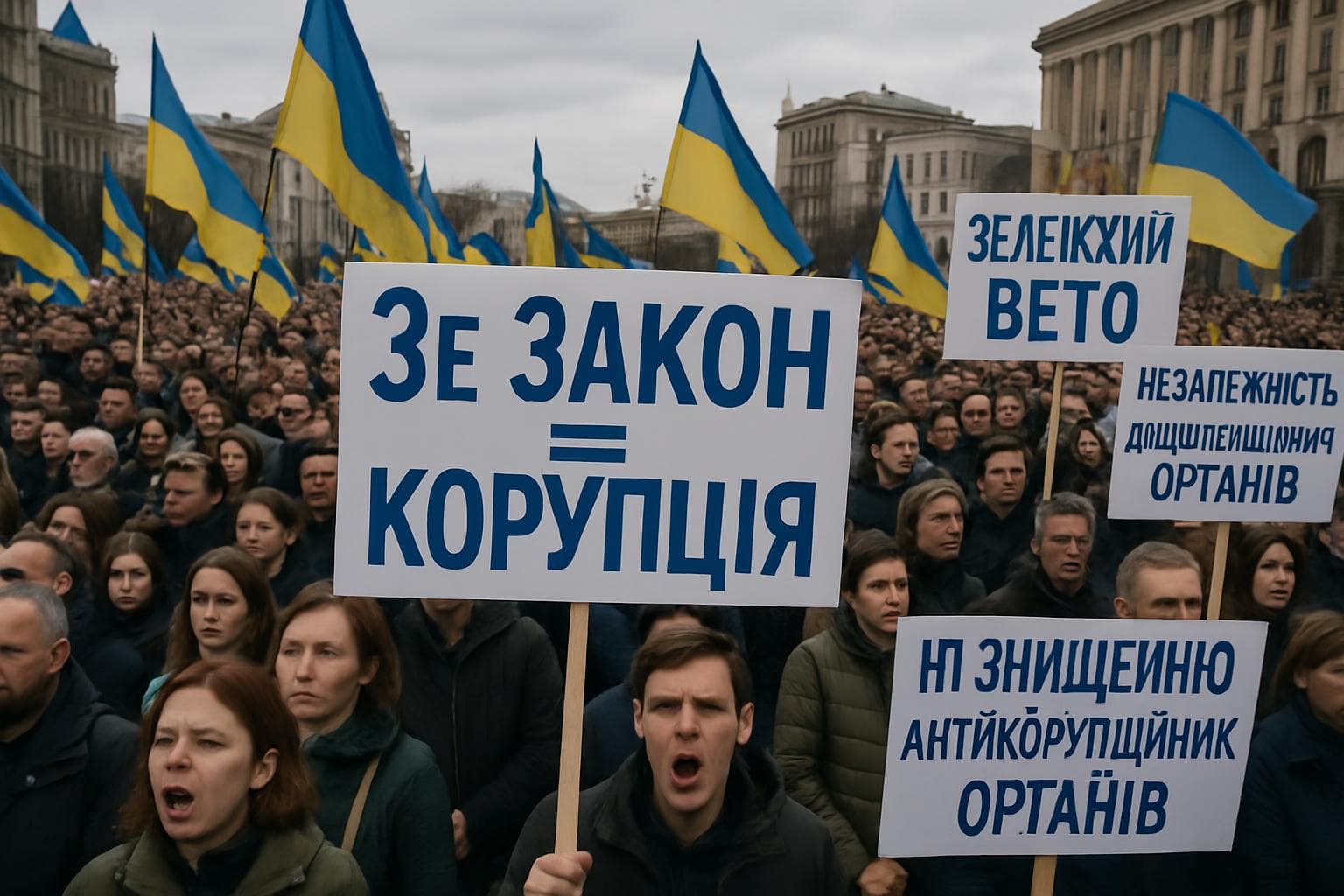
Thousands of Ukrainians have taken to the streets in Kyiv and other major cities, including Odesa, Dnipro, and Lviv, to voice their opposition to the new law. Demonstrators fear that the move signals a return to the corruption seen under former pro-Russian President Viktor Yanukovych. Protesters, including young army veterans, gathered in Kyiv's main squares, chanting slogans and holding placards that read "shame" and "12414 sounds like 1984," referencing the new law.
Zelenskyy's Response and Promised Reforms
In response to the backlash, President Zelenskyy has promised to introduce a new bill aimed at ensuring the independence of anti-corruption institutions while eliminating alleged Russian influence. However, details of the proposed legislation remain vague, and the Ukrainian parliament is on summer recess, leaving protesters skeptical about the government's intentions. Civil society activists argue that Zelenskyy's actions violate an informal social contract established since Russia's full-scale invasion in 2022, where criticism of the government was muted in favor of national unity.
International Reaction and EU Concerns
The international community, particularly the European Union, has expressed concern over the potential implications of the law on Ukraine's EU membership prospects. Ursula von der Leyen, President of the European Commission, has requested explanations from the Ukrainian government, emphasizing that the rule of law and anti-corruption efforts are essential for EU integration. The creation of Nabu and Sap was a critical requirement for Ukraine's visa liberalization with the EU, and any perceived weakening of these institutions could jeopardize Ukraine's path toward EU membership.
WHAT THIS MIGHT MEAN
The ongoing protests and international scrutiny place President Zelenskyy in a challenging position. If the promised new bill fails to address the concerns of both domestic and international stakeholders, Ukraine risks damaging its relationship with the EU and hindering its integration efforts. The protests also highlight the resilience of Ukraine's civil society, which remains vigilant in holding the government accountable. As the situation unfolds, Zelenskyy must navigate the delicate balance between maintaining national unity during wartime and upholding democratic principles to ensure Ukraine's future as a European nation.
Related Articles
Geneva Peace Talks Between Russia and Ukraine End Without Breakthrough
Rubio Reaffirms US Commitment to Europe Amid Criticisms at Munich Conference

France Releases Russian 'Shadow Fleet' Tanker Amid Rising Tensions
Munich Security Conference: A New Era in Transatlantic Relations
Russian LNG Tanker Sinks in Mediterranean Amid Accusations of Ukrainian Drone Attack
Geneva Talks See 'Meaningful Progress' Amid Tensions Over Ukraine-Russia Conflict
Zelenskyy's Anti-Corruption Law Sparks Protests and International Concern
In This Article
 Alex Carter| Published
 HIGHLIGHTS
- President Zelenskyy signed a law reducing the independence of Ukraine's anti-corruption agencies, sparking widespread protests.
- The law places the National Anti-Corruption Bureau (Nabu) and the Specialised Anti-Corruption Prosecutor's Office (Sap) under the control of the prosecutor general.
- Thousands protested in Kyiv and other cities, fearing a return to past corruption and a setback in Ukraine's EU membership aspirations.
- Zelenskyy promised a new bill to address concerns, but details remain unclear, and protests continue.
- Western allies, including the EU, expressed concern, emphasizing the importance of anti-corruption efforts for Ukraine's EU integration.
Ukraine is witnessing significant unrest following President Volodymyr Zelenskyy's decision to sign a controversial law that curtails the independence of two key anti-corruption agencies. The legislation, which places the National Anti-Corruption Bureau (Nabu) and the Specialised Anti-Corruption Prosecutor's Office (Sap) under the control of the prosecutor general, has ignited protests across the country and drawn criticism from Western allies.
Public Outcry and Protests
Thousands of Ukrainians have taken to the streets in Kyiv and other major cities, including Odesa, Dnipro, and Lviv, to voice their opposition to the new law. Demonstrators fear that the move signals a return to the corruption seen under former pro-Russian President Viktor Yanukovych. Protesters, including young army veterans, gathered in Kyiv's main squares, chanting slogans and holding placards that read "shame" and "12414 sounds like 1984," referencing the new law.
Zelenskyy's Response and Promised Reforms
In response to the backlash, President Zelenskyy has promised to introduce a new bill aimed at ensuring the independence of anti-corruption institutions while eliminating alleged Russian influence. However, details of the proposed legislation remain vague, and the Ukrainian parliament is on summer recess, leaving protesters skeptical about the government's intentions. Civil society activists argue that Zelenskyy's actions violate an informal social contract established since Russia's full-scale invasion in 2022, where criticism of the government was muted in favor of national unity.
International Reaction and EU Concerns
The international community, particularly the European Union, has expressed concern over the potential implications of the law on Ukraine's EU membership prospects. Ursula von der Leyen, President of the European Commission, has requested explanations from the Ukrainian government, emphasizing that the rule of law and anti-corruption efforts are essential for EU integration. The creation of Nabu and Sap was a critical requirement for Ukraine's visa liberalization with the EU, and any perceived weakening of these institutions could jeopardize Ukraine's path toward EU membership.
WHAT THIS MIGHT MEAN
The ongoing protests and international scrutiny place President Zelenskyy in a challenging position. If the promised new bill fails to address the concerns of both domestic and international stakeholders, Ukraine risks damaging its relationship with the EU and hindering its integration efforts. The protests also highlight the resilience of Ukraine's civil society, which remains vigilant in holding the government accountable. As the situation unfolds, Zelenskyy must navigate the delicate balance between maintaining national unity during wartime and upholding democratic principles to ensure Ukraine's future as a European nation.
Related Articles
Geneva Peace Talks Between Russia and Ukraine End Without Breakthrough
Rubio Reaffirms US Commitment to Europe Amid Criticisms at Munich Conference
France Releases Russian 'Shadow Fleet' Tanker Amid Rising Tensions
Munich Security Conference: A New Era in Transatlantic Relations
Russian LNG Tanker Sinks in Mediterranean Amid Accusations of Ukrainian Drone Attack
Geneva Talks See 'Meaningful Progress' Amid Tensions Over Ukraine-Russia Conflict